
The global streetwear market continues to grow rapidly as independent labels, startup brands, and established fashion companies search for reliable manufacturing partners with strong product development capabilities. Many fashion businesses are now choosing a Streetwear Manufacturer in China because China offers scalable production, flexible MOQs, advanced fabric sourcing, experienced garment development teams, and competitive production costs.
China is no longer only a “low-cost production country.” Modern Chinese streetwear factories now provide:
- OEM & ODM manufacturing
- Custom pattern development
- Fabric innovation
- Heavyweight garment production
- Vintage wash processing
- Private label services
- Fast sample development
- Export-ready quality control systems
For streetwear brands focused on oversized silhouettes, heavyweight cotton, washed garments, embroidery, puff printing, and private label branding, Chinese manufacturers often provide a more complete supply chain than many local suppliers.
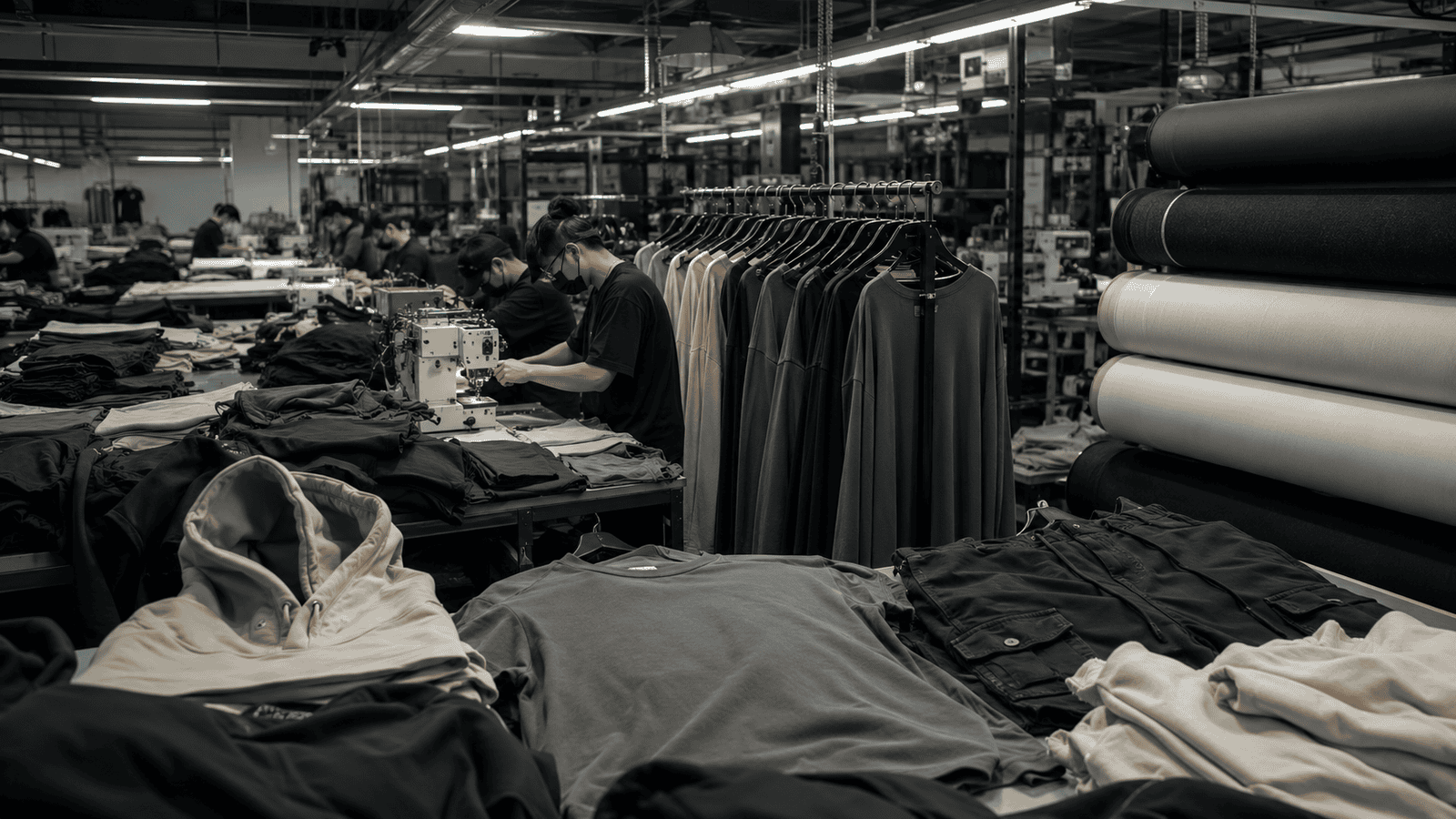
What Makes China a Leading Global Streetwear Manufacturing Hub?
China has become a leading global streetwear manufacturing hub because the country combines fabric supply chains, skilled labor, garment technology, washing facilities, printing factories, and export infrastructure within one ecosystem.
Unlike fragmented sourcing systems in some countries, Chinese apparel manufacturing regions are highly integrated.
Key Reasons Global Brands Choose China
| Factor | China Streetwear Manufacturing Advantage |
|---|---|
| Supply Chain | Fabric, trims, printing, washing, sewing, packaging all connected |
| MOQ Flexibility | Many factories support 100–300 pcs per style |
| Product Development | Professional tech pack & fit development |
| Fabric Availability | Heavyweight cotton, fleece, denim, French terry, washed fabrics |
| Production Speed | Faster sample and bulk production cycles |
| Customization | OEM, ODM, private label, custom trims |
| Scalability | Easy transition from startup to large-scale production |
| Export Experience | Factories familiar with US/EU/AU standards |
Common Streetwear Products Manufactured in China
- Oversized hoodies
- Graphic T-shirts
- Vintage washed sweatshirts
- Cargo pants
- Denim jackets
- Streetwear shorts
- Matching sets
- Heavyweight sweatpants
- Tank tops
- Utility jackets
Brands looking for full-package manufacturing often work with specialized suppliers such as a Custom Streetwear Manufacturer that supports design-to-production workflows.
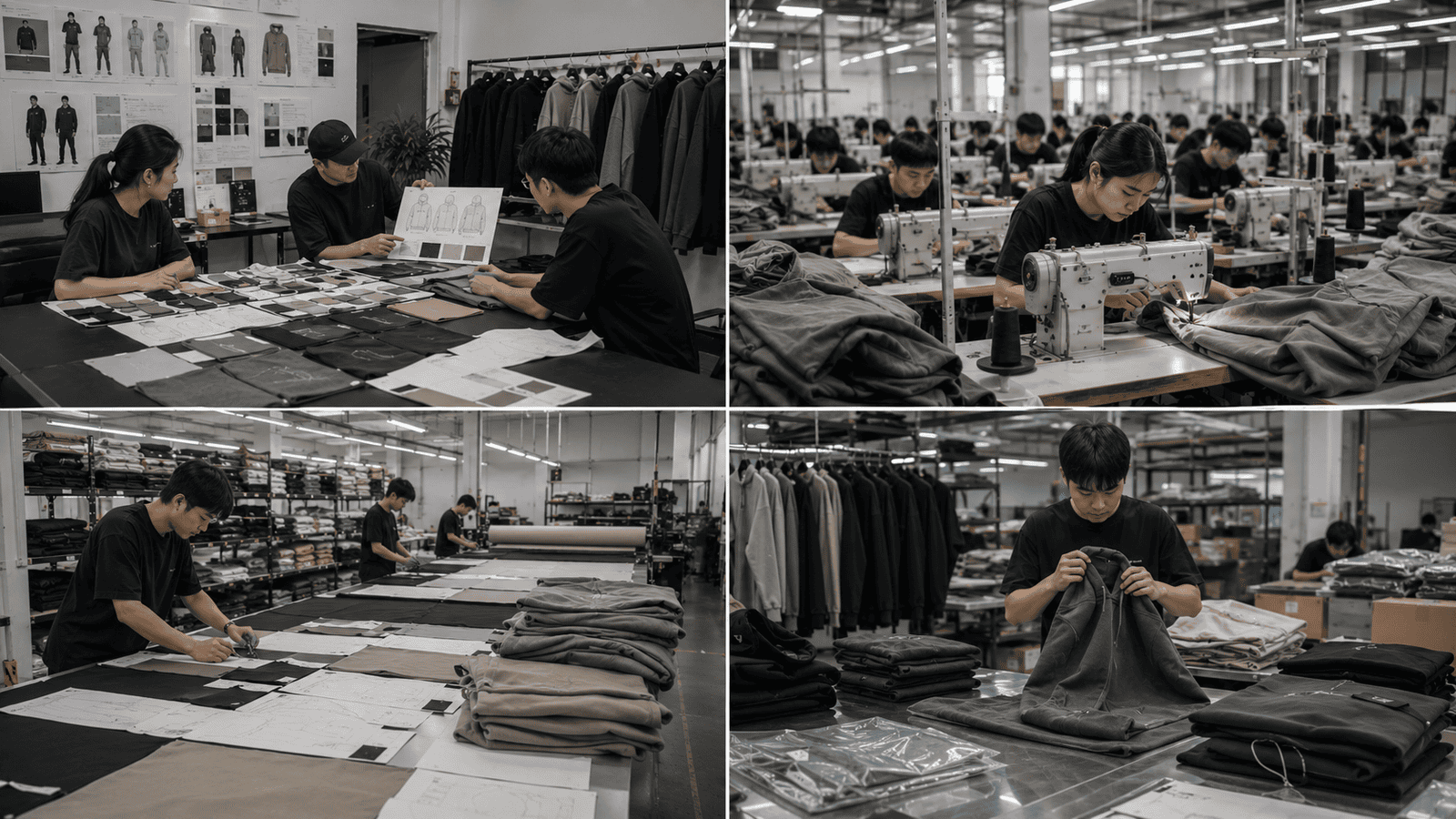
Why Are Startup Streetwear Brands Choosing China Instead of Local Suppliers?
Startup brands choose Chinese manufacturers because Chinese factories often provide lower MOQs, broader customization options, and stronger production support compared to local suppliers.
Many local manufacturers focus on large-volume production or basic blank garments. Chinese streetwear factories are more likely to support:
- Small batch development
- Custom fabrics
- Tech pack assistance
- Sampling services
- Brand packaging
- Label development
- Complex washing processes
Comparison: China vs Local Streetwear Suppliers
| Feature | China Manufacturer | Local Supplier |
|---|---|---|
| MOQ | 100–300 pcs | Often 500+ pcs |
| Fabric Options | Extensive | Limited |
| Private Label | Full support | Sometimes limited |
| Wash Techniques | Advanced | Basic |
| Printing Options | Puff, DTG, silicone, reflective | Limited |
| Development Support | Strong OEM/ODM | Often basic |
| Cost Efficiency | High | Lower efficiency |
| Production Capacity | Scalable | Limited scalability |
Common Startup Pain Points Solved by Chinese Factories
High MOQ Problems
Many startup brands cannot order 1,000 pieces initially. Chinese factories often support lower-risk production.
Sample-to-Bulk Inconsistency
Experienced factories create production standards before bulk manufacturing begins.
Poor Communication
Professional export factories now provide English-speaking merchandisers and production tracking systems.
Limited Fabric Access
China offers easier access to heavyweight cotton, brushed fleece, garment dye fabrics, and washed materials.
For example, brands producing oversized tops often work with suppliers specializing in Custom T-Shirt Manufacturing.
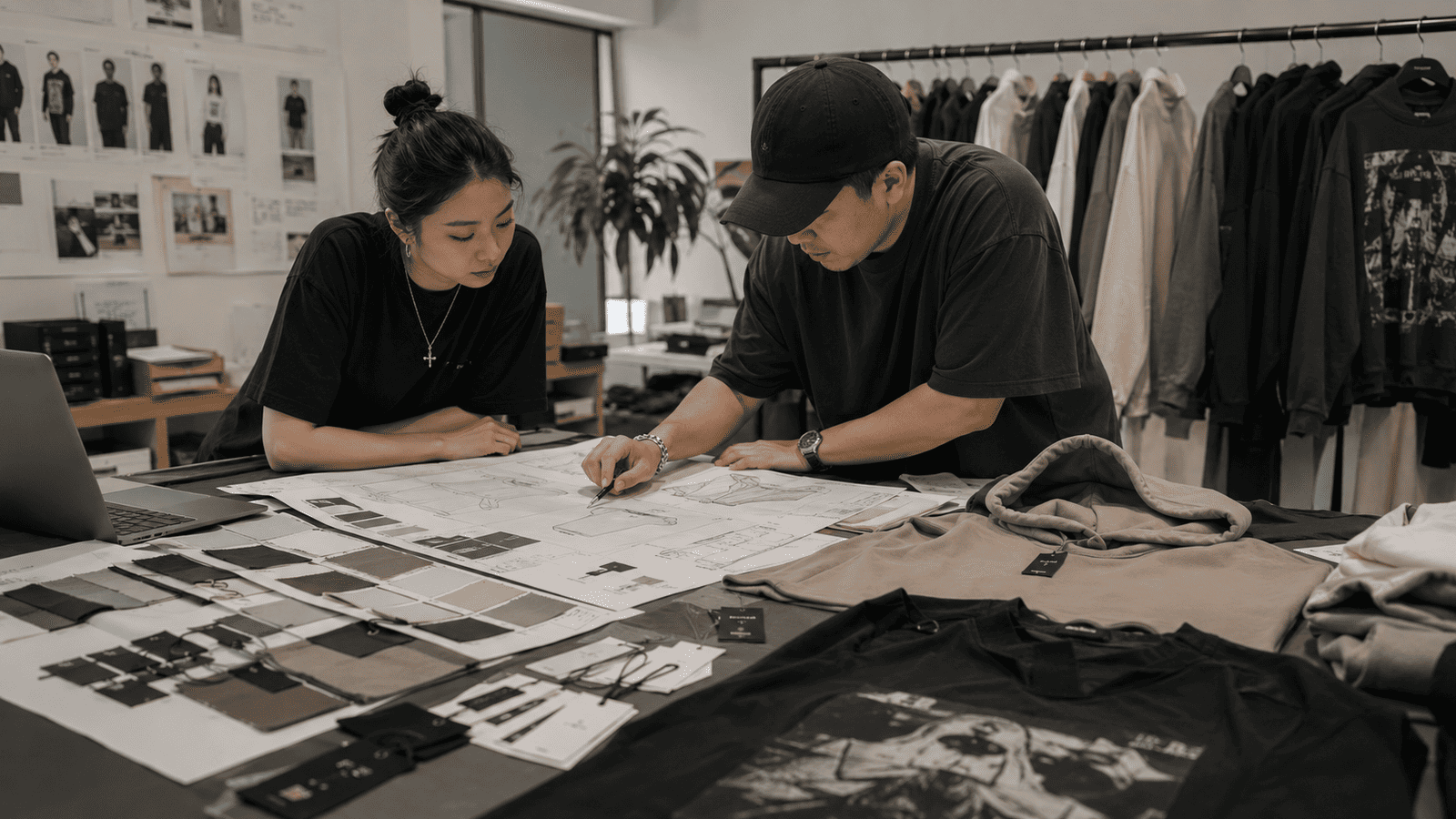
How Does China Offer Better Streetwear Supply Chain Efficiency?
China offers better supply chain efficiency because most manufacturing processes exist within connected industrial regions.
Streetwear production usually requires multiple specialized processes:
- Fabric knitting
- Dyeing
- Washing
- Pattern making
- Printing
- Embroidery
- Sewing
- QC inspection
- Packaging
- Export logistics
In China, many of these operations are located within short transportation distances.
Example of a Typical Streetwear Production Workflow
| Production Stage | Average Timeline |
|---|---|
| Tech Pack Review | 1–2 Days |
| Fabric Sourcing | 3–5 Days |
| Sample Development | 7–10 Days |
| Sample Revision | 3–7 Days |
| Bulk Production | 20–35 Days |
| Final QC Inspection | 1–3 Days |
| International Shipping | 5–15 Days |
Why Integrated Supply Chains Matter
Integrated supply chains help brands reduce:
- Production delays
- Communication errors
- Fabric inconsistency
- Shipping inefficiencies
- Sampling mistakes
This becomes especially important for complex products such as:
Why Is China Stronger at Streetwear Customization and OEM Production?
China is stronger at OEM streetwear manufacturing because Chinese factories typically support deeper garment customization.
Modern streetwear brands rarely want generic blank garments. Most brands now require:
- Oversized fit development
- GSM customization
- Custom Pantone colors
- Vintage wash effects
- Embroidery
- Puff print graphics
- Silicone logos
- Woven labels
- Branded packaging
Common Streetwear Customization Options
| Customization Area | Available Options |
|---|---|
| Fabric | Heavyweight cotton, fleece, French terry |
| Printing | Puff print, screen print, DTG |
| Washes | Acid wash, vintage wash, enzyme wash |
| Labels | Woven labels, neck labels, hang tags |
| Packaging | Zip bags, custom boxes, branded packaging |
| Fit | Oversized, boxy, relaxed, cropped |
| Trims | Custom zippers, drawcords, patches |
Manufacturing Experience Matters
Factories with real streetwear production experience understand:
- Drop shoulder construction
- Oversized grading
- Streetwear proportions
- Graphic placement
- Heavyweight fabric shrinkage
- Garment washing risks
This technical understanding helps brands avoid common production mistakes.
Brands manufacturing complete collections often source multiple categories together, including:
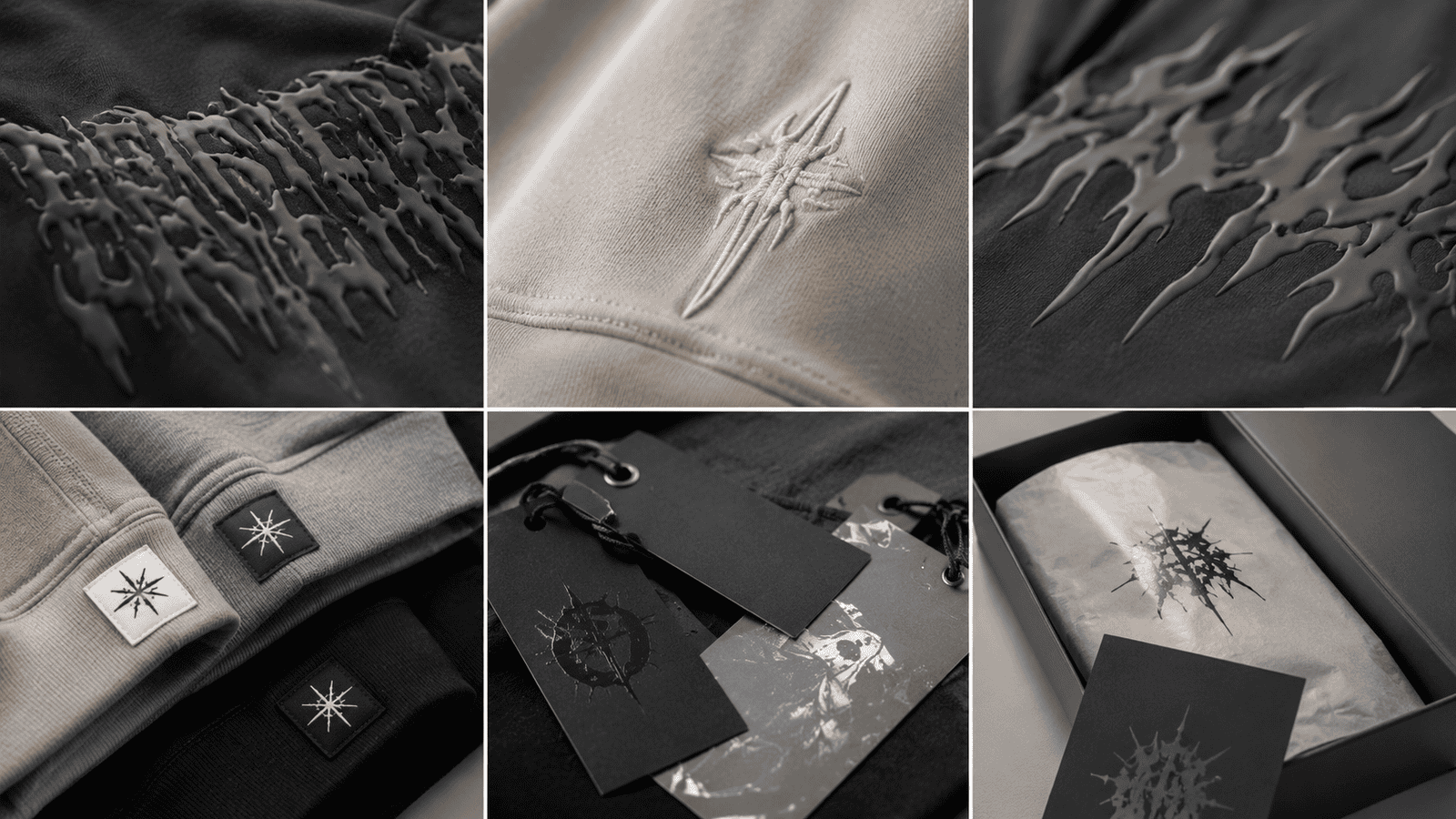
How Do Chinese Streetwear Factories Handle Quality Control?
Professional Chinese streetwear factories use structured quality control systems across multiple production stages.
Quality control is especially important in streetwear because oversized garments, washed fabrics, and heavyweight materials create additional production risks.
Typical Multi-Layer QC Workflow
Step 1 — Fabric Inspection
Factories inspect:
- Fabric GSM
- Shrinkage rate
- Color consistency
- Fabric defects
Step 2 — Sample Approval
Factories confirm:
- Fit measurements
- Graphic positioning
- Wash effects
- Construction details
Step 3 — Inline Production Inspection
Production teams inspect:
- Stitching quality
- Thread consistency
- Measurement tolerances
- Print quality
Step 4 — Final Inspection
Final QC includes:
- Packing verification
- Size ratio confirmation
- Label accuracy
- Export carton inspection
Common Streetwear QC Risk Areas
| Product Type | Common Risk |
|---|---|
| Oversized Hoodies | Shrinkage inconsistency |
| Washed Garments | Uneven wash effect |
| Puff Print Graphics | Cracking |
| Heavyweight Tees | Neckline deformation |
| Cargo Pants | Pocket alignment |
Factories with strong QC systems reduce these risks before shipment.
Why Are Global Streetwear Brands Moving Away From Basic Wholesale Suppliers?
Many brands are moving away from wholesale suppliers because wholesale models limit brand differentiation.
Wholesale suppliers typically sell pre-made products with minimal customization.
Streetwear brands increasingly need:
- Unique identity
- Exclusive products
- Better fit control
- Private label branding
- Long-term scalability
Wholesale vs OEM Streetwear Manufacturing
| Factor | Wholesale Supplier | OEM Manufacturer |
|---|---|---|
| Product Originality | Low | High |
| Brand Identity | Limited | Fully customizable |
| Fit Control | Minimal | Full control |
| Fabric Selection | Fixed | Custom |
| Long-Term Scalability | Limited | Strong |
| Profit Margin Potential | Lower | Higher |
Why OEM Manufacturing Helps Brand Growth
OEM production allows brands to:
- Build unique collections
- Improve perceived value
- Increase retail margins
- Control garment quality
- Create recognizable branding
This is why many modern brands prefer working directly with a Streetwear Manufacturer instead of buying wholesale blanks.
How Do Chinese Manufacturers Support Fast Fashion and Trend Adaptation?
Chinese factories support faster trend adaptation because they can source fabrics, develop samples, and launch production quickly.
Streetwear trends now change rapidly due to:
- TikTok
- Celebrity collaborations
- Music culture
- Sneaker releases
- Fashion influencers
Brands need manufacturing partners capable of responding quickly.
Fast Trend Response Advantages
- Faster fabric sourcing
- Rapid sample development
- Lower sampling costs
- Flexible MOQ production
- Faster graphic implementation
Example Trend Categories Chinese Factories Commonly Produce
| Trend Category | Production Capability |
|---|---|
| Vintage Washed Hoodies | Strong |
| Y2K Streetwear | Strong |
| Utility Cargo Styles | Strong |
| Heavyweight Essentials | Strong |
| Minimalist Luxury Streetwear | Strong |
Factories familiar with US and European fashion markets can often provide recommendations based on current manufacturing demand.
What Should Brands Look for When Choosing a Streetwear Manufacturer in China?
Brands should evaluate technical capability, communication systems, quality control, and product specialization before choosing a manufacturer.
Step-by-Step Factory Evaluation Process
Step 1 — Review Product Specialization
Check whether the factory actually specializes in streetwear.
Step 2 — Request Real Production Photos
Ask for:
- Production lines
- Fabric warehouse
- QC process
- Sample room
Step 3 — Evaluate Sample Quality
Review:
- Stitching
- Fabric quality
- Fit accuracy
- Printing details
Step 4 — Confirm MOQ and Lead Times
Typical industry ranges:
| Production Item | Common Range |
|---|---|
| MOQ | 100–300 pcs |
| Sample Time | 7–10 Days |
| Bulk Production | 20–35 Days |
Step 5 — Test Communication Quality
Strong manufacturers provide:
- Clear timelines
- Technical feedback
- Fast responses
- Production updates
Red Flags to Avoid
- Unrealistically low prices
- No real factory photos
- Poor communication
- No sample process
- No QC explanation
- No export experience
Brands often begin by reviewing a factory’s OEM Services and product categories before starting development.
Why Are More Premium Streetwear Brands Working With Chinese Factories?
Premium brands increasingly work with Chinese factories because many Chinese manufacturers now produce higher-quality garments comparable to premium global standards.
Modern Chinese factories can manufacture:
- 400–500 GSM hoodies
- Luxury heavyweight T-shirts
- Complex washed garments
- Technical outerwear
- High-density embroidery
- Premium trims and packaging
Premium Manufacturing Capabilities
| Premium Feature | Capability in China |
|---|---|
| Heavyweight Fabric | Excellent |
| Complex Washes | Excellent |
| Custom Dyeing | Strong |
| Luxury Packaging | Strong |
| Detailed Embroidery | Strong |
| Low Defect Production | Possible with strong QC |
Quality now depends more on factory specialization than country alone.
Experienced factories producing for international markets often understand:
- US sizing standards
- EU compliance requirements
- Fabric testing expectations
- Retail packaging standards
Key Takeaways
Why Global Brands Choose Chinese Streetwear Manufacturers
- China provides integrated apparel supply chains
- OEM customization capabilities are stronger
- MOQ flexibility supports startup brands
- Production scalability supports brand growth
- Fabric sourcing options are extensive
- Sampling and production timelines are faster
- Streetwear-specific manufacturing expertise is widely available
- Professional factories understand global export standards
Best Use Cases for China Streetwear Manufacturing
China is especially suitable for brands producing:
- Oversized hoodies
- Heavyweight T-shirts
- Washed streetwear
- Cargo pants
- Matching sets
- Denim collections
FAQ
Why do so many streetwear brands manufacture in China?
Many streetwear brands manufacture in China because Chinese factories provide lower MOQs, stronger customization, integrated supply chains, and competitive pricing.
What is the typical MOQ for streetwear manufacturing in China?
Most professional streetwear manufacturers offer MOQs starting around 100–300 pieces per style depending on fabric and customization complexity.
How long does streetwear production take in China?
Typical timelines include 7–10 days for samples and 20–35 days for bulk production.
Can Chinese factories produce premium-quality streetwear?
Yes. Many Chinese factories now produce premium heavyweight garments, complex washes, embroidery, and luxury private label packaging for international brands.
What products are commonly produced by Chinese streetwear manufacturers?
Common products include oversized hoodies, graphic T-shirts, cargo pants, sweatshirts, jackets, denim apparel, and matching sets.
Is OEM streetwear manufacturing better than wholesale?
OEM manufacturing provides stronger brand differentiation, better customization, and improved long-term scalability compared to wholesale purchasing.
Final Thoughts
The global streetwear industry increasingly depends on flexible, technically capable manufacturing partners. China continues to lead because the country combines supply chain depth, scalable production, advanced customization, and experienced garment development within one manufacturing ecosystem.
For brands building long-term collections instead of short-term products, working with an experienced Chinese OEM partner often provides better control over quality, branding, fit development, and production scalability.
Brands looking to develop custom collections can explore: