
Vintage wash graphic T-shirts have become a strong product category for modern streetwear brands. They combine faded colors, soft hand feel, oversized silhouettes, and bold graphics to create a worn-in look that feels authentic and premium.
However, producing vintage wash graphic tees is more complex than making standard printed T-shirts. Brands need to consider fabric type, GSM, wash method, shrinkage control, print compatibility, fit development, and sample-to-bulk consistency.
This guide explains how to work with a vintage wash custom graphic streetwear T-shirts manufacturer and what brands should check before production.
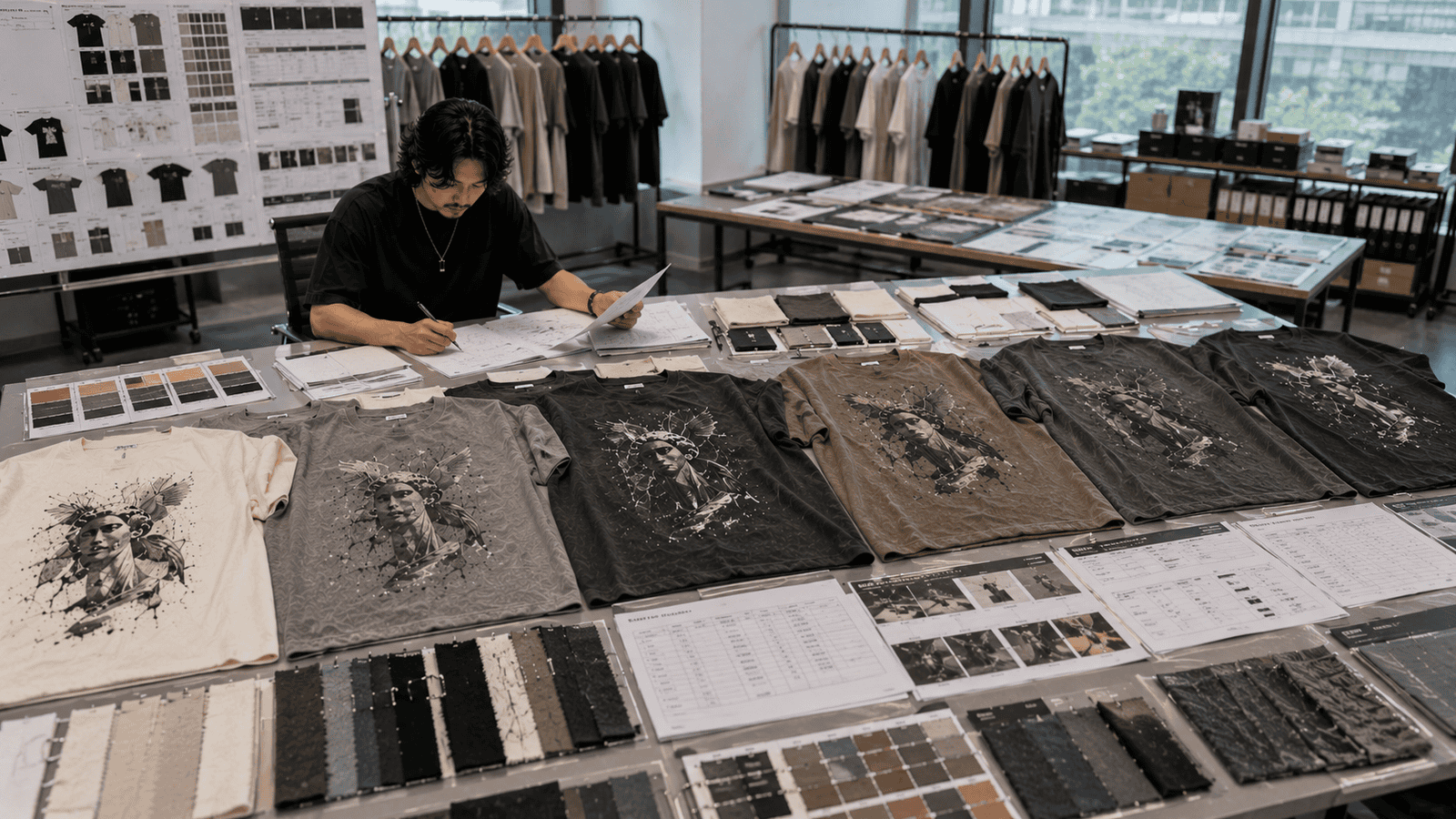
What Is a Vintage Wash Custom Graphic Streetwear T Shirts Manufacturer?
What Does Vintage Wash Mean?
Vintage wash is a garment treatment that creates a faded, aged, or worn-in appearance.
Common effects include:
- Washed black
- Pigment wash
- Acid wash
- Enzyme wash
- Stone wash
What Does the Manufacturer Provide?
A professional manufacturer should support:
- Fabric sourcing
- Wash development
- Graphic printing
- Fit development
- Private label branding
- Bulk production
Why Do Brands Need a Specialized Manufacturer?
Vintage wash requires control over color fading, shrinkage, hand feel, and print durability.
Many brands work with a professional Custom Streetwear Manufacturer to develop custom washed graphic T-shirt collections.
Why Are Vintage Wash Graphic T-Shirts Popular in Streetwear?
What Makes Vintage Wash Appealing?
Vintage wash gives T-shirts:
- Aged color tones
- Soft hand feel
- Retro appearance
- Unique garment character
Why Do Customers Like Washed Graphic Tees?
Customers often associate washed garments with:
- Comfort
- Authenticity
- Premium quality
- Lifestyle fashion
Which Brands Use Vintage Wash Styles?
Vintage wash styles are common in:
- Luxury streetwear
- Skatewear
- Music merchandise
- Oversized streetwear collections
Which Vintage Wash Techniques Are Commonly Used?
What Are the Main Wash Methods?
| Wash Method | Visual Effect | Best For |
|---|---|---|
| Pigment Wash | Soft faded color | Premium streetwear basics |
| Acid Wash | Irregular contrast | Bold graphic tees |
| Enzyme Wash | Soft worn-in feel | Everyday vintage tees |
| Stone Wash | Aged texture | Retro collections |
| Washed Black | Faded black tone | Luxury streetwear |
Which Wash Is Best for Graphic T-Shirts?
Pigment wash and enzyme wash are widely used because they create vintage effects while maintaining better graphic clarity.
Can Brands Customize Wash Effects?
Yes. Brands can customize:
- Wash intensity
- Final color tone
- Hand feel
- Fading level
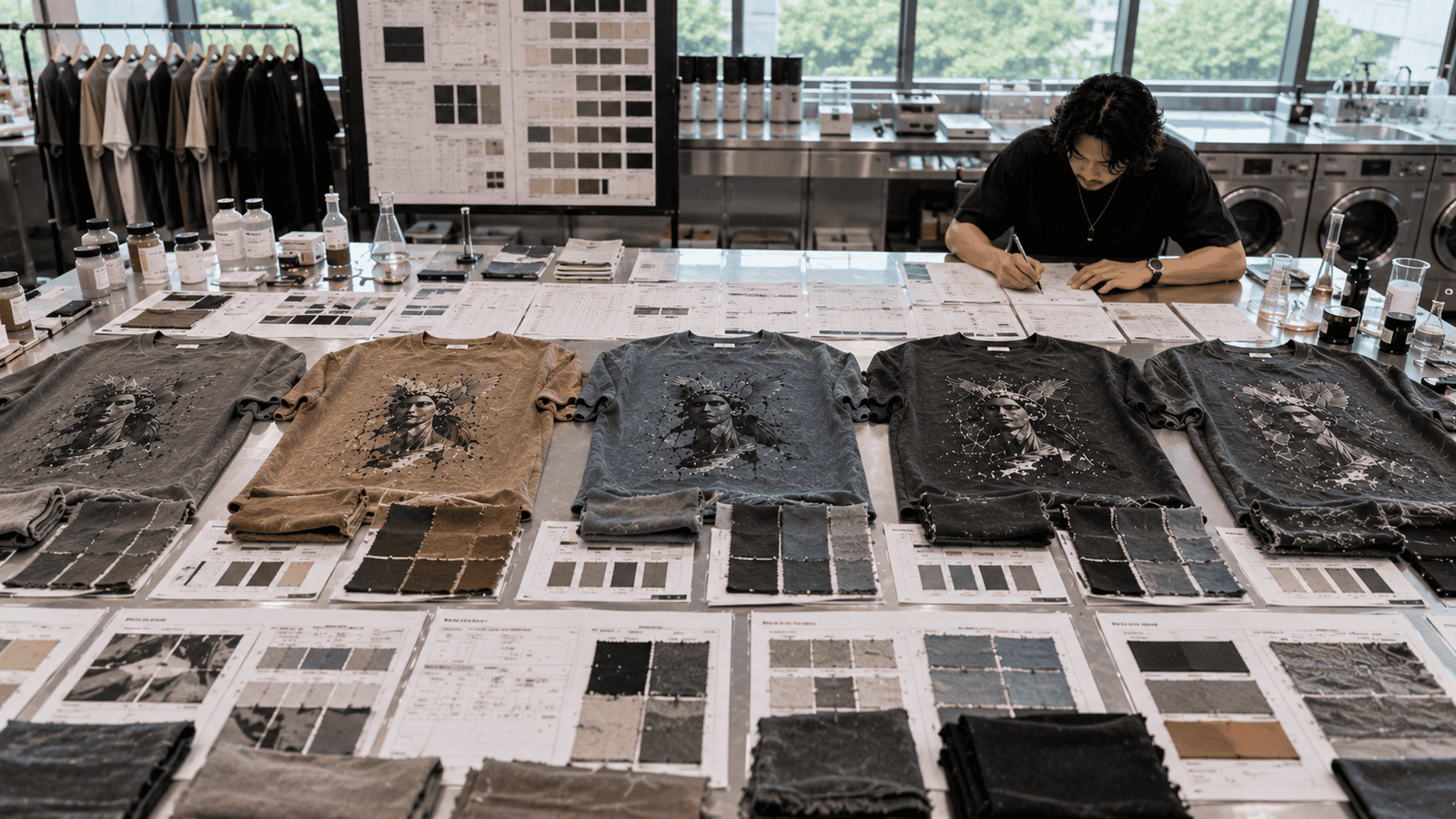
What Fabrics Work Best for Vintage Wash Graphic T-Shirts?
Why Is Fabric Selection Important?
Fabric affects:
- Wash result
- Shrinkage
- Print quality
- Garment structure
Which Fabrics Are Common?
| Fabric Type | Typical GSM | Best For |
|---|---|---|
| 100% Cotton | 220–260 GSM | Classic vintage tees |
| Combed Cotton | 220–280 GSM | Premium washed graphic tees |
| Heavyweight Cotton | 240–320 GSM | Oversized vintage streetwear |
| Compact Cotton | 240–300 GSM | Luxury washed collections |
Which Fabric Should Brands Choose?
Most streetwear brands choose 240–280 GSM cotton because it balances structure, softness, and wash performance.
Brands often work with a specialized Custom T-Shirts Manufacturer to test fabric, wash, and print compatibility.
How Does Vintage Wash Affect Graphic Printing?
Why Is Print Planning Important?
Washing can affect:
- Graphic color
- Print texture
- Print sharpness
- Print durability
Which Printing Methods Work Best?
| Printing Method | Vintage Wash Compatibility | Best Use |
|---|---|---|
| Screen Printing | Excellent | Large graphics |
| Water-Based Printing | Excellent | Soft vintage effects |
| Puff Printing | Good | Bold logos |
| Embroidery | Excellent | Premium details |
| Silicone Printing | Medium | Modern branding |
Should Printing Happen Before or After Washing?
It depends on the desired effect.
Printing before washing creates a faded vintage look. Printing after washing keeps the graphic sharper and cleaner.
Why Is Color Control Difficult With Vintage Wash?
Why Do Washed Colors Vary?
Color variation can happen because of:
- Fabric composition
- Dye absorption
- Wash time
- Water temperature
- Batch differences
How Can Manufacturers Control Color?
Reliable factories use:
- Lab dips
- Wash tests
- Approved samples
- Bulk color standards
What Should Brands Approve?
Brands should approve:
- Fabric color
- Wash effect
- Graphic color
- Final sample appearance
How Does Vintage Wash Affect Fit and Shrinkage?
Why Does Washing Change Fit?
Garment washing can cause shrinkage, twisting, and slight shape changes.
Which Fits Are Popular for Vintage Wash Streetwear?
Common styles include:
- Oversized fit
- Boxy fit
- Drop shoulder fit
- Relaxed fit
How Can Manufacturers Control Fit?
Factories should adjust:
- Pattern measurements
- Shrinkage allowance
- Size grading
- Sample revisions
Why Is Sampling Essential Before Bulk Production?
What Does Sampling Verify?
Sampling confirms:
- Wash effect
- Fabric hand feel
- Shrinkage
- Print result
- Fit accuracy
How Many Sample Rounds Are Typical?
Most vintage wash projects require:
- First sample
- Wash revision sample
- Final approval sample
What Should Brands Check?
Review:
- Color tone
- Graphic result
- Measurements
- Fabric softness
- Stitching quality
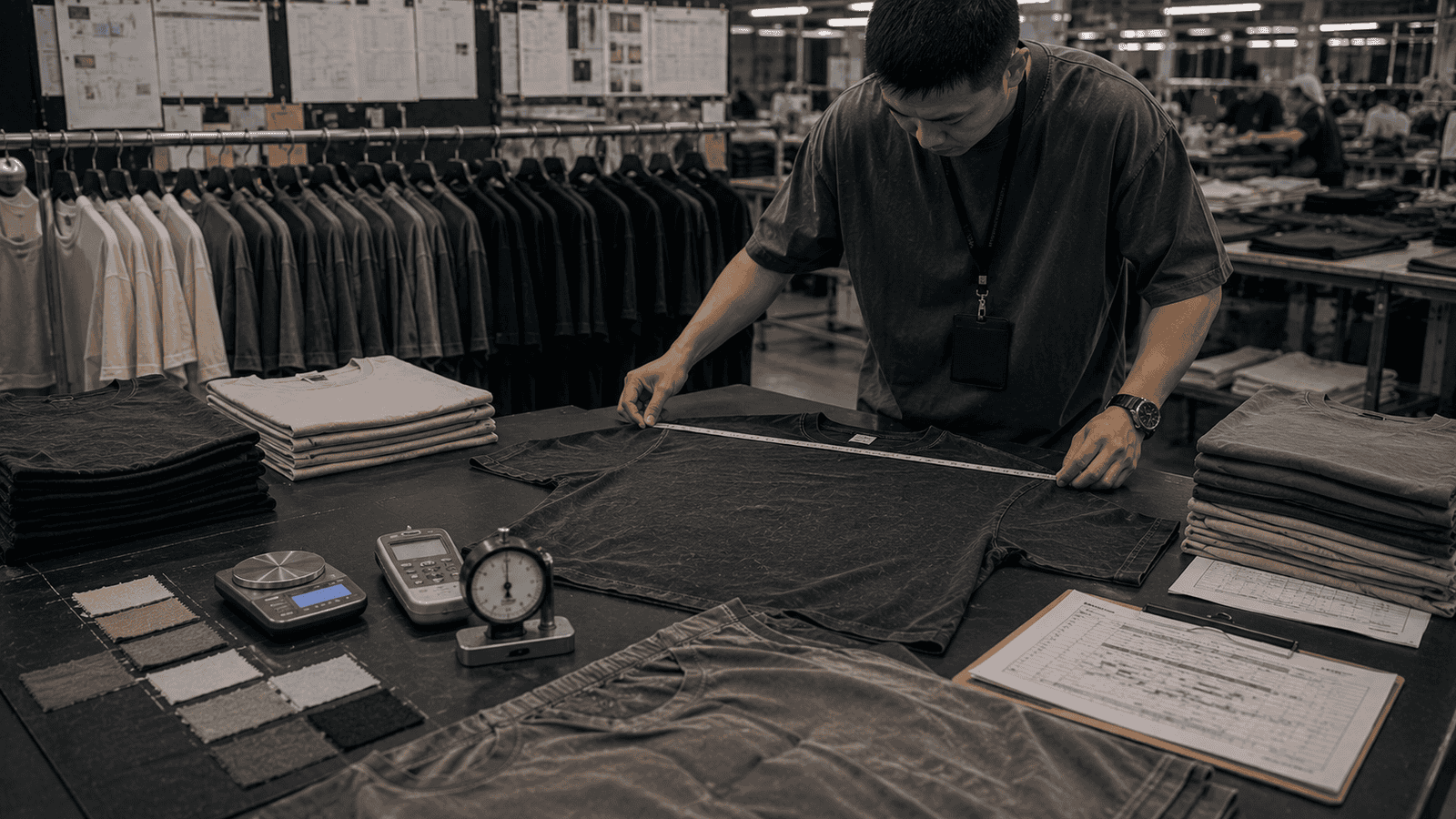
What Quality Control Standards Are Needed for Vintage Wash T-Shirts?
What Should QC Inspect?
Quality control should check:
- Wash consistency
- Color difference
- Print durability
- Measurements
- Stitching
- Packaging
Why Is QC More Important for Washed Garments?
Vintage wash products can have more natural variation than standard T-shirts, so inspection is critical.
What QC Documents Should Brands Request?
Ask for:
- QC reports
- Measurement records
- Wash approval photos
- Final inspection photos
Professional OEM Services should include fabric, wash, print, and final garment inspections.
What MOQ Should Brands Expect for Vintage Wash Graphic T-Shirts?
What Is a Typical MOQ?
| Product Type | Typical MOQ |
|---|---|
| Vintage Wash T-Shirts | 100 pcs |
| Washed Graphic T-Shirts | 100 pcs |
| Acid Wash Graphic Tees | 100 pcs |
| Fully Custom Washed Tees | 100 pcs |
Why Does Vintage Wash Require MOQ?
MOQ helps cover:
- Dyeing setup
- Wash testing
- Fabric sourcing
- Production preparation
How Can Startups Reduce Risk?
Start with:
- Fewer colors
- One core wash effect
- Limited graphics
- Small launch collections
Can One Manufacturer Produce a Complete Vintage Streetwear Collection?
What Other Products Can Be Developed?
A professional factory can manufacture:
- Custom T-Shirts
- Streetwear Hoodies
- Streetwear Sweatshirts
- Streetwear Jackets
- Streetwear Tank Tops
- Streetwear Pants
- Streetwear Shorts
- Streetwear Sets
- Streetwear Denim Apparel
Why Is One-Stop Manufacturing Useful?
Benefits include:
- Consistent wash standards
- Faster product development
- Easier communication
- Better collection control
How Does It Support Brand Growth?
One manufacturing partner can help brands expand from vintage wash T-shirts into full washed streetwear collections.
How Do You Choose the Right Vintage Wash Graphic T-Shirt Manufacturer?
What Should Brands Prioritize?
Focus on:
- Wash development experience
- Fabric expertise
- Print compatibility
- Shrinkage control
- Quality control
What Questions Should You Ask?
Ask:
- Which wash techniques do you offer?
- Can you provide wash samples?
- How do you control shrinkage?
- What fabrics work best for vintage wash?
- How do you inspect bulk color consistency?
What Is the Long-Term Advantage?
Working with an experienced Streetwear Manufacturer helps brands develop vintage wash products with better quality, consistency, and long-term production stability.
Conclusion
Vintage wash custom graphic streetwear T-shirts are popular because they offer a unique worn-in look, premium softness, and strong lifestyle appeal.
However, successful production requires expertise in fabric selection, wash development, graphic printing, shrinkage control, sampling, and quality inspection.
By choosing the right vintage wash custom graphic streetwear T-shirts manufacturer, brands can create distinctive products that feel authentic, look premium, and support long-term brand growth.