
Many new and growing streetwear brands struggle with one important question:
Should you work with a Private Label manufacturer or an OEM streetwear T-shirts manufacturer?
While both manufacturing models help brands bring products to market, they serve different business goals, budgets, timelines, and customization requirements.
Understanding the differences between Private Label and OEM manufacturing can help brands choose the right production strategy and avoid costly mistakes.
This guide explains the key differences, advantages, disadvantages, and ideal use cases for each manufacturing model.

What Is a Private Label Streetwear T Shirts Manufacturer?
What Does Private Label Mean?
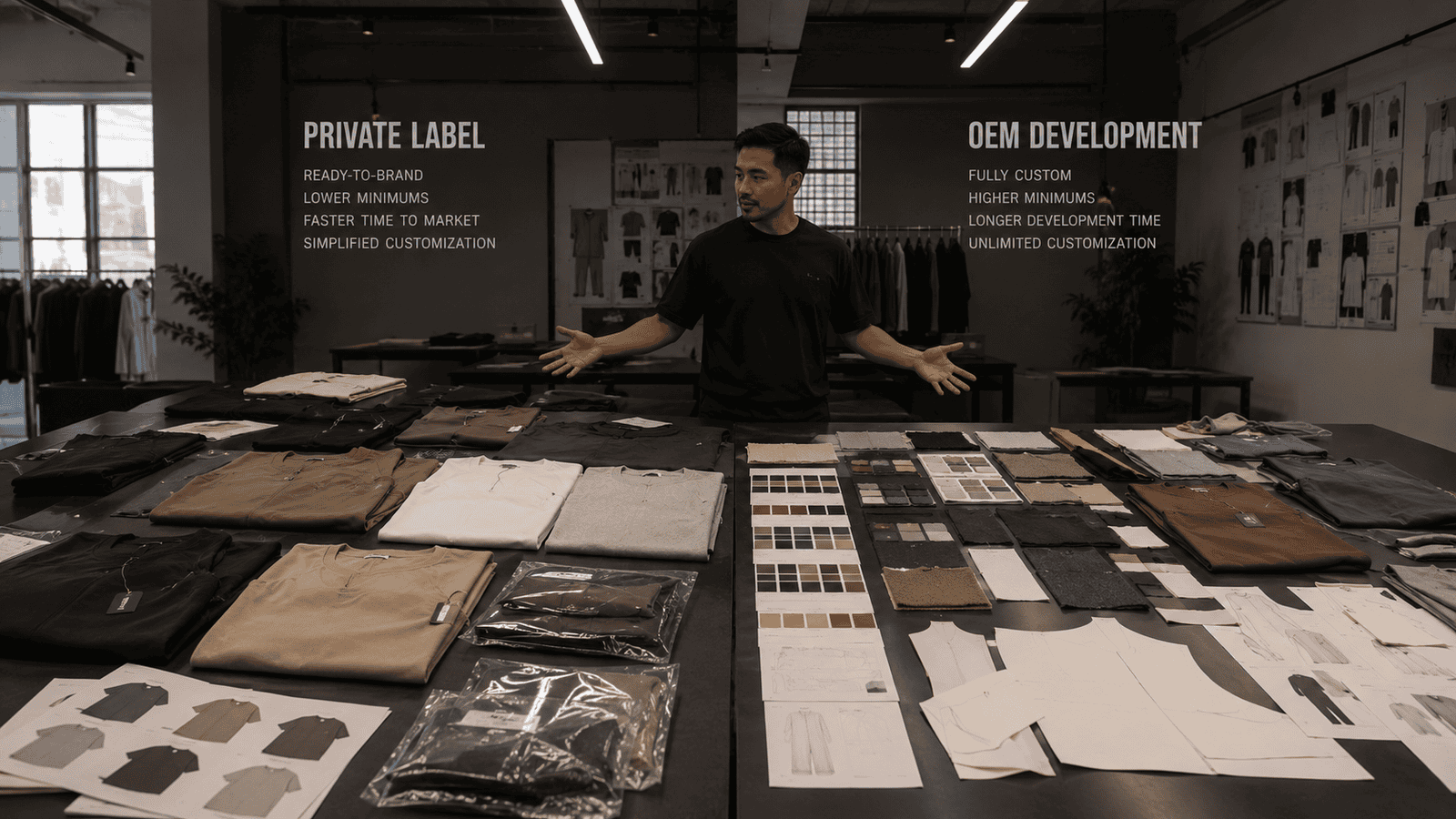
Private Label manufacturing allows brands to customize existing garment styles developed by the factory.
Brands can typically customize:
- Labels
- Hang tags
- Packaging
- Colors
- Basic graphics
Why Is Private Label Popular?
Private Label offers:
- Faster development
- Lower investment
- Simpler production process
Who Typically Uses Private Label Manufacturing?
Common users include:
- Startup brands
- E-commerce sellers
- Small collections
- Market testing projects
Many startups begin with a trusted Custom Streetwear Manufacturer that offers both Private Label and OEM solutions.
What Is an OEM Streetwear T Shirts Manufacturer?
What Does OEM Mean?
OEM stands for Original Equipment Manufacturer.
OEM factories produce garments according to the brand's specifications.
What Can Be Customized?
OEM manufacturing allows customization of:
- Fabrics
- Patterns
- Measurements
- Printing methods
- Labels
- Packaging
Why Do Established Brands Choose OEM?
OEM offers:
- Full creative control
- Stronger brand differentiation
- Premium product positioning
What Is the Main Difference Between Private Label and OEM?
How Do the Two Models Compare?
| Feature | Private Label | OEM Manufacturing |
|---|---|---|
| Product Development | Existing Styles | Fully Custom |
| Fabric Selection | Limited | Fully Custom |
| Fit Development | Limited | Fully Custom |
| Branding | Customizable | Fully Custom |
| Development Time | Faster | Longer |
| Investment Required | Lower | Higher |
| Brand Exclusivity | Limited | High |
Which Offers More Customization?
OEM manufacturing provides significantly more flexibility.
Which Is Easier for Beginners?
Private Label is usually easier for first-time brand owners.
Which Option Requires Less Investment?
Why Is Private Label More Affordable?
Private Label manufacturers already have:
- Existing patterns
- Existing production processes
- Existing fabric programs
Why Does OEM Cost More?
OEM development often requires:
- Custom patterns
- Sample revisions
- Fabric sourcing
- Product testing
Which Model Has Lower Risk?
Private Label generally has lower upfront costs and lower development risk.
Which Model Offers Better Brand Differentiation?
Why Is Differentiation Important?
The streetwear market is highly competitive.
How Does OEM Create Unique Products?
OEM allows brands to develop:
- Exclusive fits
- Custom fabrics
- Unique graphics
- Signature silhouettes
What Are the Limitations of Private Label?
Private Label products may resemble products sold by other brands.
Brands seeking long-term uniqueness often choose a professional Custom T-Shirts Manufacturer for OEM development.
Which Manufacturing Model Is Faster?
Why Is Private Label Faster?
Factories already have:
- Approved patterns
- Production-ready fabrics
- Existing specifications
What Is a Typical Timeline?
| Stage | Private Label | OEM |
|---|---|---|
| Sampling | 3–7 Days | 7–14 Days |
| Development | Minimal | Multiple Revisions |
| Bulk Production | 20–30 Days | 25–35 Days |
Which Is Better for Fast Launches?
Private Label is often the fastest option.
How Does Fabric Selection Differ?
What Fabric Options Are Available?
Private Label typically offers:
- Pre-selected fabrics
- Limited customization
OEM allows:
- Custom GSM
- Custom compositions
- Custom sourcing
Why Does Fabric Matter?
Fabric impacts:
- Comfort
- Durability
- Product value
Which Option Is Better for Premium Brands?
OEM provides greater control over material quality.
Which Model Is Better for Startup Streetwear Brands?
Should Startups Begin With Private Label?
Private Label is ideal for:
- Testing concepts
- Validating demand
- Reducing startup costs
When Should Startups Choose OEM?
OEM becomes attractive when:
- Brand identity is clear
- Budget increases
- Product differentiation becomes important
Can Brands Transition Later?
Yes. Many successful brands begin with Private Label and later move to OEM production.
How Does Branding Work in Private Label and OEM?
What Branding Elements Can Be Customized?
Both options often support:
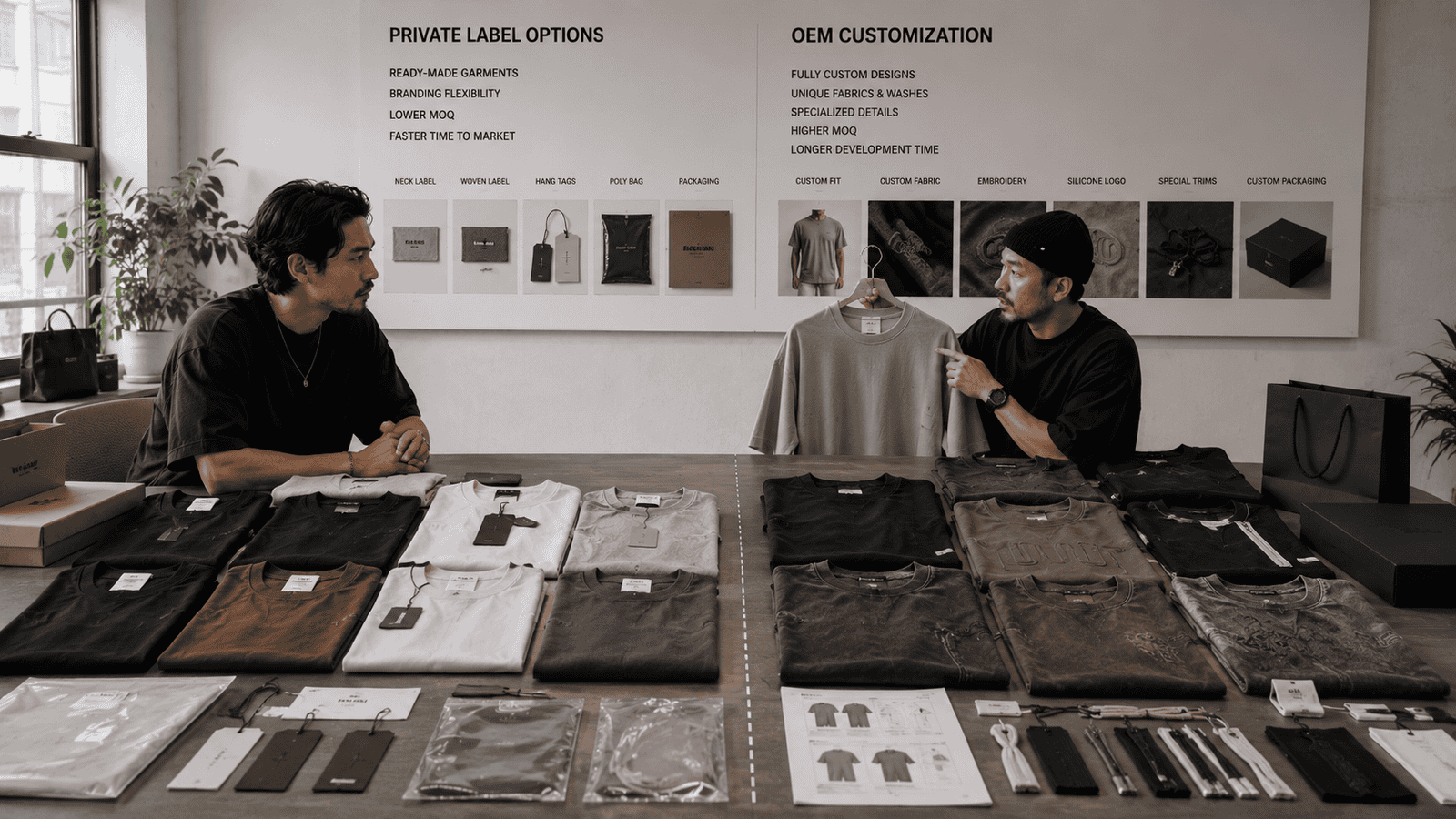
- Woven labels
- Hang tags
- Packaging
What Does OEM Add?
OEM allows brands to customize:
- Garment construction
- Product details
- Fabric specifications
Why Is Branding Important?
Strong branding helps:
- Build recognition
- Increase customer trust
- Support premium pricing
What MOQ Differences Should Brands Expect?
What Is MOQ?
MOQ stands for Minimum Order Quantity.
How Do MOQ Requirements Compare?
| Manufacturing Model | Typical MOQ |
|---|---|
| Private Label | Lower |
| OEM Manufacturing | Higher |
Why Does OEM Often Require Higher MOQ?
OEM projects require:
- Custom sourcing
- Development work
- Production setup
Can One Manufacturer Offer Both Services?
Do Many Factories Support Both Models?
Yes.
Many manufacturers provide:
- Private Label services
- OEM services
- Product development support
Why Is This Valuable?
Brands can:
- Start with Private Label
- Transition to OEM later
What Should Brands Look For?
Choose manufacturers with:
- Development capabilities
- Quality control systems
- Strong communication
Professional OEM Services can support brands as they move from simple products to fully customized collections.
Which Option Is Right for Your Brand?
Choose Private Label If:
- You want a faster launch
- You have a limited budget
- You want lower risk
Choose OEM If:
- You want unique products
- You need custom fabrics and fits
- You plan long-term brand growth
What Is the Best Long-Term Strategy?
Many successful brands eventually move toward OEM manufacturing as their brand matures.
Working with an experienced Streetwear Manufacturer can help brands evaluate both approaches and choose the right production strategy.
Conclusion
Private Label and OEM manufacturing both offer valuable opportunities for streetwear brands.
Private Label provides speed, simplicity, and lower investment, while OEM offers complete customization, stronger brand differentiation, and greater long-term growth potential.
The best choice depends on your budget, business goals, product strategy, and stage of brand development.