
Choosing between a private label streetwear t shirts manufacturer and a local supplier is one of the most important decisions for growing fashion brands in 2026.
Many startup and established streetwear brands struggle with issues like inconsistent quality, limited customization, unstable fabric sourcing, and high production costs.
So which option is actually better for your brand — working with a private label manufacturer overseas or sourcing locally?
This guide compares both models in detail, including quality, MOQ, customization, production speed, branding control, scalability, and long-term profitability.
What Is the Difference Between a Private Label Streetwear Manufacturer and a Local Supplier?
What Does a Private Label Streetwear Manufacturer Do?
A private label streetwear manufacturer develops and produces apparel under your brand name. These factories usually provide:
- Custom fabric sourcing
- Pattern development
- Oversized fit adjustments
- OEM & ODM production
- Printing and washing
- Branding customization
- Bulk manufacturing
Most professional factories also support:
- Heavyweight cotton development
- Vintage wash processing
- Puff print and DTG
- Woven labels and packaging
You can explore a professional Custom Streetwear Manufacturer solution for full-package apparel development.
What Does a Local Supplier Usually Provide?
Local suppliers typically:
- Resell blank garments
- Offer limited customization
- Focus on small inventory distribution
- Have faster local shipping
- Carry fewer fabric and fit options
Many local suppliers do not provide:
- Custom pattern making
- Exclusive fabric development
- Advanced washing
- Full private label branding
Comparison Table
| Feature | Private Label Manufacturer | Local Supplier |
|---|---|---|
| Custom Branding | Full Support | Limited |
| Fabric Development | Yes | Rare |
| Pattern Development | Yes | No |
| MOQ Flexibility | Medium | Small |
| Production Cost | Lower Per Unit | Higher |
| Scalability | Excellent | Limited |
| Printing Options | Advanced | Basic |
| Fit Customization | Full | Minimal |
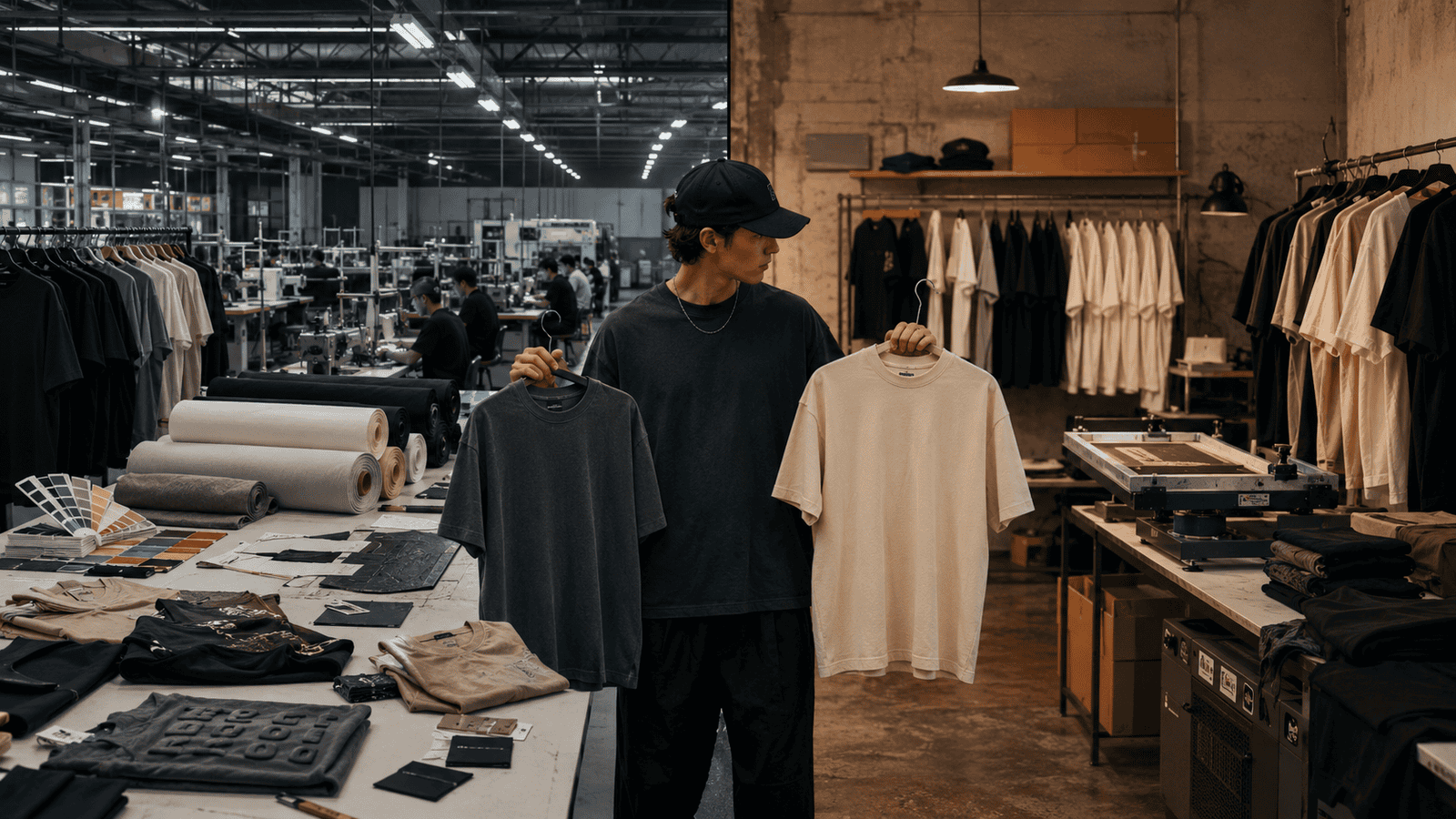
Recommended Image: Streetwear manufacturer comparing oversized t-shirt development, fabric sourcing, and private label production workflow inside modern OEM apparel factory.
Why Do Streetwear Brands Choose Private Label Manufacturers?
How Does Private Label Manufacturing Improve Brand Identity?
Streetwear brands rely heavily on:
- Unique silhouettes
- Fabric quality
- Wash aesthetics
- Graphic execution
- Brand storytelling
A private label manufacturer allows brands to control:
- GSM
- Fabric texture
- Oversized proportions
- Vintage wash depth
- Printing techniques
For example, many brands develop custom products through:
Why Is Fit Development Important for Streetwear?
Modern streetwear is heavily focused on:
- Boxy silhouettes
- Drop shoulders
- Cropped proportions
- Heavyweight drape
Factories specializing in streetwear understand:
- US/EU sizing
- Shrinkage control
- Oversized grading
- Sleeve balance
Local suppliers usually provide standard blank fits only.
Why Do Larger Brands Prefer OEM Factories?
Growing brands need:
- Consistent production
- Stable lead times
- Scalable capacity
- Quality control systems
Professional factories can support:
- Sample development
- Bulk production
- Multi-layer QC
- Global shipping
Are Local Suppliers Better for Startup Streetwear Brands?
When Is a Local Supplier a Good Option?
Local suppliers may work well if:
- You are testing designs
- You need ultra-low quantities
- You want immediate stock
- You need very fast local fulfillment
They are often useful for:
- Small drops
- Event merchandise
- Initial market testing
What Are the Limitations of Local Suppliers?
Most local suppliers cannot support:
- Custom fabrics
- Vintage washes
- Oversized fit engineering
- Premium branding
- Long-term scaling
This becomes a problem when brands start growing.
Cost Comparison Table
| Cost Factor | Local Supplier | Private Label Manufacturer |
|---|---|---|
| Blank Garment Cost | High | Lower |
| Printing Cost | Medium | Lower at Scale |
| Shipping | Lower Local | International |
| Sampling Cost | Low | Medium |
| Long-Term Profit Margin | Lower | Higher |
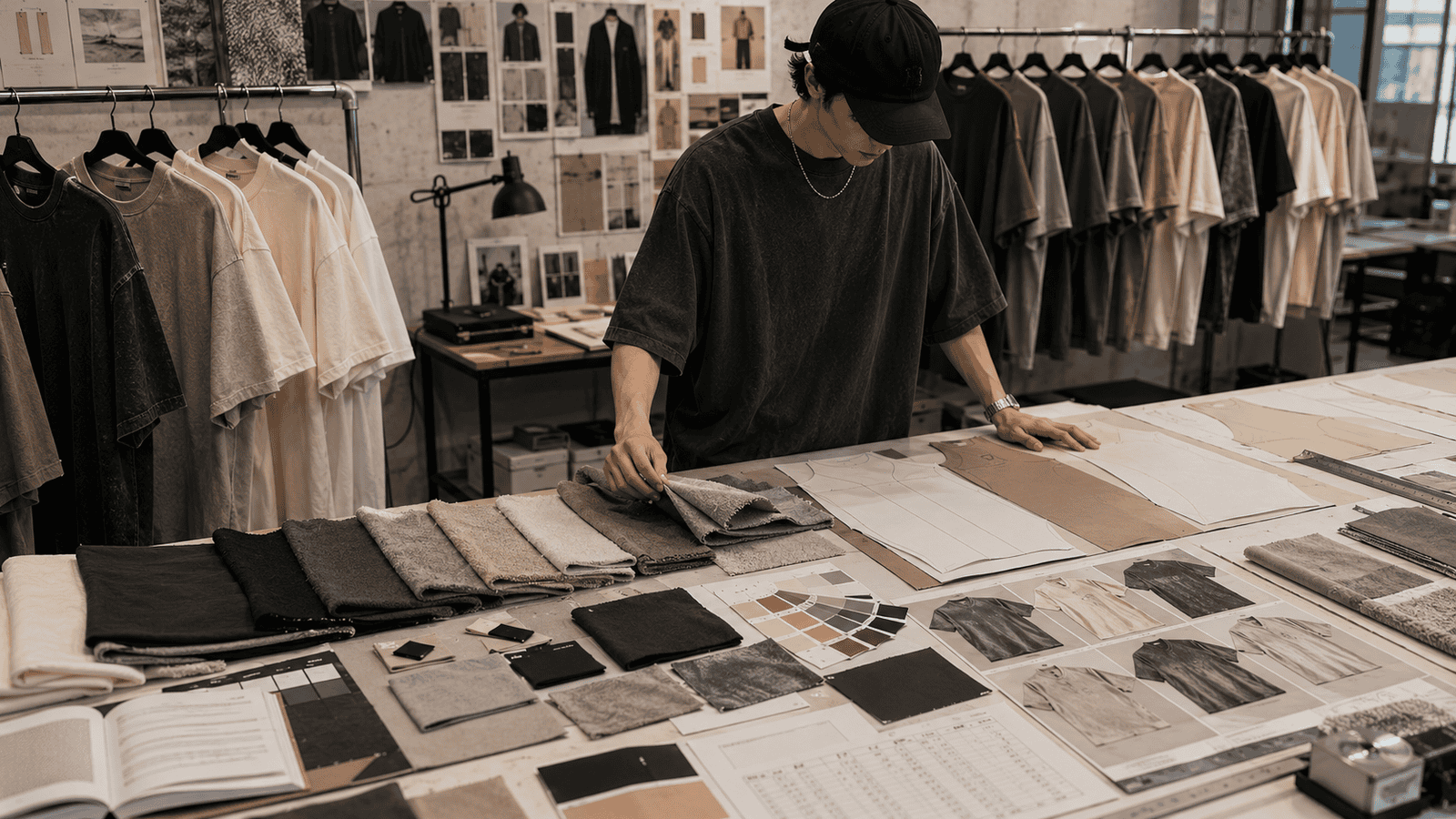
Recommended Image: Heavyweight cotton fabric swatches, Pantone cards, oversized t-shirt samples, and vintage wash references displayed on professional streetwear development table.
Which Option Offers Better Customization for Streetwear Apparel?
Can Local Suppliers Handle Advanced Streetwear Details?
Usually not.
Most local suppliers are limited to:
- Basic screen printing
- Standard blanks
- Simple embroidery
Advanced streetwear production often requires:
- Acid wash
- Enzyme wash
- Puff print
- Silicone logo
- DTG graphics
- Custom trims
What Can Private Label Manufacturers Customize?
Professional factories can customize:
| Customization Area | Available |
|---|---|
| Heavyweight Fabric GSM | Yes |
| Oversized Fit | Yes |
| Vintage Washing | Yes |
| Puff Printing | Yes |
| Woven Labels | Yes |
| Packaging | Yes |
| Custom Dyeing | Yes |
| Fabric Texture | Yes |
Brands developing complete collections often combine:
- Streetwear Jacket Manufacturer
- Streetwear Pants Manufacturer
- Streetwear Shorts Manufacturer
- Streetwear Sets Manufacturer
Why Does Customization Matter in 2026?
The streetwear market is becoming increasingly saturated.
Brands now compete through:
- Fabric quality
- Fit uniqueness
- Wash texture
- Premium details
- Brand consistency
Customization creates stronger product differentiation.
How Do Production Quality and QC Compare?
Why Is QC Important for Streetwear?
Streetwear products require consistency in:
- Measurements
- Shrinkage
- Print durability
- Color matching
- Wash consistency
Poor QC can destroy brand trust.
How Do Professional Manufacturers Control Quality?
Experienced factories often use:
- Fabric inspection
- Pre-production approval
- Inline production checks
- Final inspection
This ensures:
- Sample = Bulk consistency
- Accurate sizing
- Stable quality
Do Local Suppliers Have the Same QC Systems?
Usually not.
Most local suppliers:
- Buy finished blanks
- Outsource printing
- Have limited production oversight
This creates:
- Color inconsistencies
- Print variation
- Sizing issues
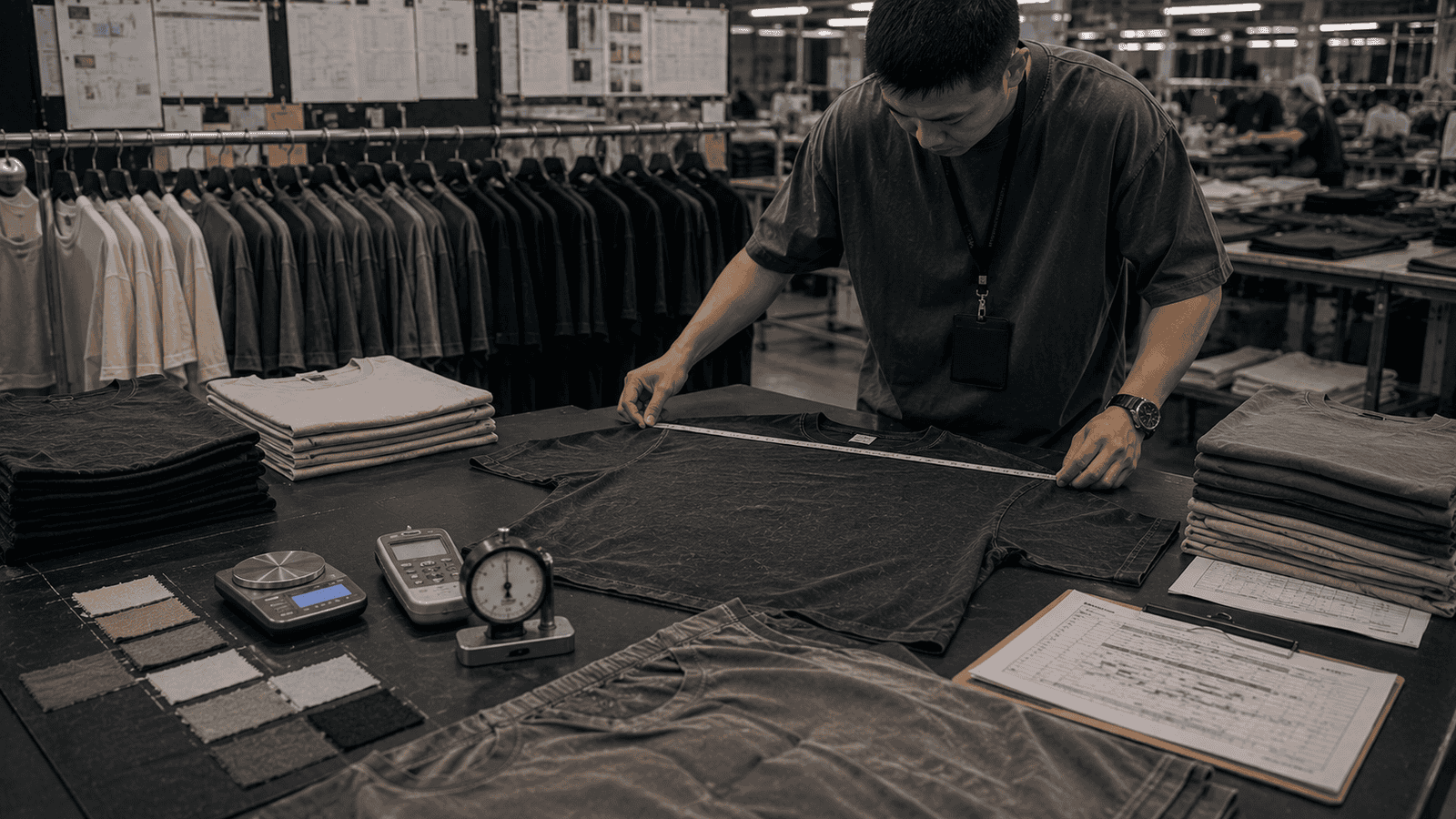
Recommended Image: Professional QC worker inspecting oversized streetwear t-shirts, checking stitching, measurements, puff print quality, garment wash consistency, and fabric texture inside modern OEM factory.
Which Option Is More Cost-Effective Long Term?
Why Are Overseas Manufacturers Often Cheaper?
Professional factories benefit from:
- Supply chain integration
- Bulk material purchasing
- Specialized machinery
- Lower manufacturing costs
This reduces:
- Unit cost
- Fabric cost
- Printing cost
Are Shipping Costs Still a Concern in 2026?
Shipping matters, but many brands offset costs through:
- Better margins
- Lower production pricing
- Higher scalability
For larger orders, overseas manufacturing is often significantly more profitable.
Profitability Comparison Table
| Factor | Local Supplier | Private Label Manufacturer |
|---|---|---|
| Margin Potential | Medium | High |
| Product Exclusivity | Low | High |
| Scalability | Limited | Excellent |
| Branding Control | Limited | Full |
| Long-Term Growth | Slower | Faster |
Which Is Better for Building a Serious Streetwear Brand?
What Do Successful Streetwear Brands Usually Choose?
Most successful brands eventually move toward:
- OEM manufacturing
- Private label production
- Custom fabric development
- Dedicated fit engineering
This allows them to:
- Build unique identity
- Improve margins
- Scale globally
When Should You Switch From Local Suppliers?
Brands usually switch when they need:
- Better consistency
- Better margins
- Better customization
- Larger production capacity
Final Recommendation
If you are:
- Testing ideas → local suppliers may work initially
- Building a serious scalable brand → private label manufacturing is usually the better long-term solution
Professional manufacturers provide:
- Better customization
- Better scalability
- Better pricing
- Better brand control
You can explore complete OEM streetwear production services through:
Conclusion
Both local suppliers and private label streetwear manufacturers have advantages depending on your brand stage.
However, for brands focused on:
- Long-term growth
- Premium positioning
- Better margins
- Unique products
- Global scalability
A professional private label streetwear manufacturer is usually the stronger option in 2026.
The key is choosing a factory that understands:
- Streetwear culture
- Oversized fit development
- Heavyweight fabrics
- Vintage washing
- Quality control
- Reliable communication
That combination is what helps transform ideas into successful streetwear collections.