
Starting a streetwear brand in 2026 is easier than ever — but finding the right manufacturing partner is still one of the biggest challenges for beginners.
Many new fashion brands hear terms like:
- OEM
- Private Label
- Cut and Sew
- MOQ
- Sampling
- Bulk Production
But what do these actually mean?
This beginner-friendly guide explains how OEM private label streetwear t shirts manufacturers work, how the production process operates, and what startup brands should know before launching their first collection.
What Is an OEM Private Label Streetwear T Shirts Manufacturer?
What Does OEM Mean in Streetwear Manufacturing?
OEM stands for “Original Equipment Manufacturer.”
In apparel manufacturing, OEM means a factory produces clothing based on your custom brand requirements.
This usually includes:
- Custom fabrics
- Custom sizing
- Private label branding
- Printing
- Packaging
- Bulk production
Unlike buying blank apparel, OEM manufacturing allows brands to create completely unique products.
Many brands start by working with a professional Custom Streetwear Manufacturer.
What Does Private Label Mean?
Private label means products are manufactured under your own brand name instead of the factory’s brand.
This includes:
- Custom woven labels
- Hang tags
- Packaging
- Brand logos
- Brand sizing labels
OEM vs Blank Apparel Table
| Feature | OEM Private Label | Blank Apparel |
|---|---|---|
| Custom Fit | Yes | No |
| Custom Fabric | Yes | Limited |
| Private Branding | Full | Minimal |
| Unique Design | Yes | No |
| Long-Term Scalability | Excellent | Limited |
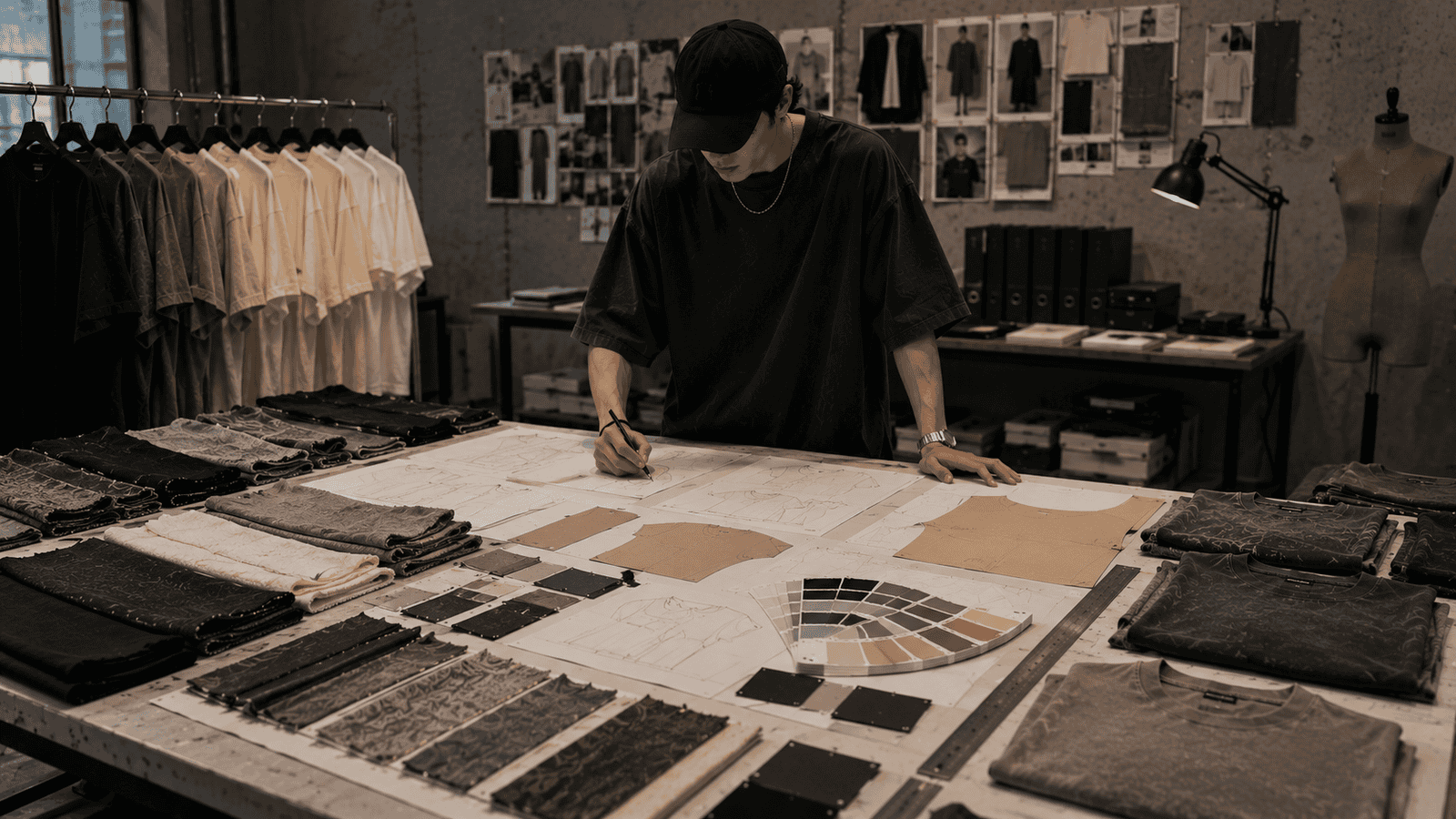
Recommended Image: Professional OEM streetwear t-shirt product development process with heavyweight cotton fabric swatches, Pantone cards, oversized fit patterns, and garment development workflow inside modern apparel studio.
Why Do Streetwear Brands Use OEM Manufacturers?
Why Is OEM Better for Building a Real Brand?
Streetwear brands compete through:
- Unique fit
- Fabric quality
- Vintage washing
- Graphic execution
- Brand identity
OEM manufacturing helps brands create:
- Exclusive silhouettes
- Better product quality
- Stronger brand positioning
Why Don’t Serious Brands Use Basic Blank T Shirts?
Blank garments limit:
- Fit customization
- Fabric selection
- Branding opportunities
- Product uniqueness
Most successful streetwear brands eventually move toward:
- Cut and sew production
- Custom oversized fits
- Heavyweight fabrics
- Advanced washing
What Products Can OEM Factories Produce?
Professional factories usually support:
- Custom T Shirts Manufacturer
- Streetwear Hoodie Manufacturer
- Streetwear Sweatshirt Manufacturer
- Streetwear Jacket Manufacturer
How Does the Streetwear Product Development Process Work?
What Happens Before Sampling Starts?
Before production begins, brands usually provide:
- Tech packs
- Reference photos
- Logo files
- Measurement charts
- Fabric ideas
- Printing requirements
If beginners don’t have complete tech packs, many OEM factories help with development.
What Happens During Sample Development?
The factory typically develops:
- Fabric sourcing
- Pattern making
- Size grading
- Sample sewing
- Printing
- Washing
The first sample helps brands review:
- Fit
- Fabric feel
- Construction
- Graphic placement
Product Development Workflow Table
| Development Stage | Purpose |
|---|---|
| Concept Discussion | Define product direction |
| Fabric Sourcing | Choose material and GSM |
| Pattern Making | Create garment structure |
| Sample Production | Build first prototype |
| Revision Process | Improve fit and details |
| Bulk Approval | Confirm production standard |
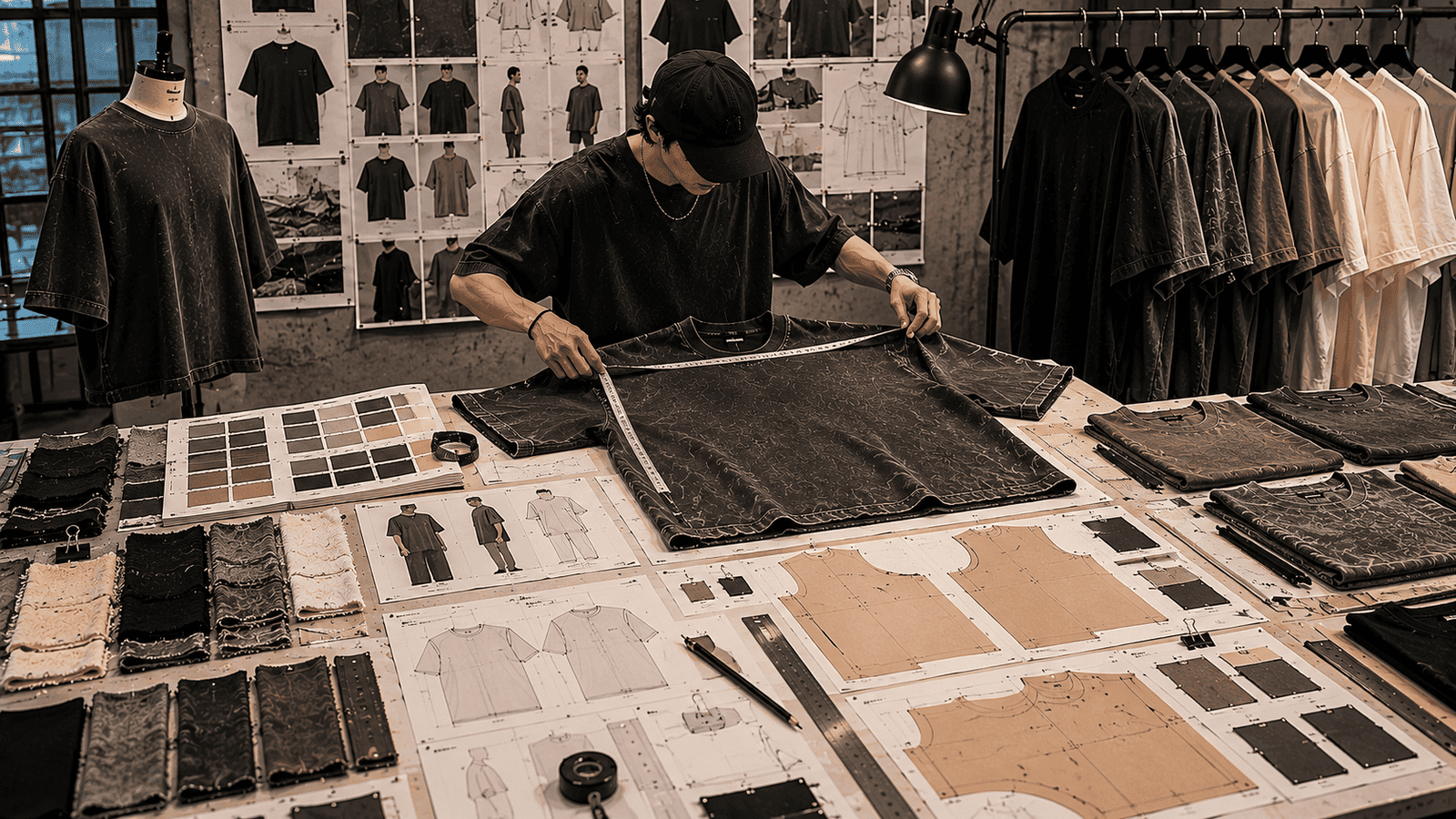
Recommended Image: Oversized heavyweight streetwear t-shirt fit development process with boxy fit paper patterns, grading rulers, drop shoulder measurements, and sewn garment samples inside modern fashion studio.
What Fabrics Are Commonly Used for Streetwear T Shirts?
Why Do Streetwear Brands Prefer Heavyweight Fabrics?
Heavyweight fabrics create:
- Better drape
- Premium texture
- Stronger structure
- Luxury oversized silhouette
Modern streetwear brands commonly use:
- 240 GSM cotton
- 280 GSM heavyweight jersey
- 300 GSM washed cotton
- French Terry fabrics
What Is GSM in Streetwear Manufacturing?
GSM means “grams per square meter.”
Higher GSM fabrics are:
- Thicker
- Heavier
- More structured
Common Streetwear Fabric Table
| Fabric Type | Typical GSM | Features |
|---|---|---|
| Cotton Jersey | 220–320 GSM | Soft and versatile |
| Heavyweight Cotton | 260–350 GSM | Premium oversized fit |
| French Terry | 300–450 GSM | Thick luxury feel |
| Garment Dyed Cotton | 260–320 GSM | Vintage aesthetic |
Many brands also expand collections into:
What Printing and Washing Options Do OEM Factories Offer?
What Printing Methods Are Popular in Streetwear?
Professional OEM factories often provide:
- Screen printing
- Puff printing
- DTG printing
- Silicone heat transfer
- Embroidery
Each technique creates different visual effects.
Why Are Washing Techniques Important?
Washing creates the premium vintage appearance many streetwear brands want.
Popular wash techniques include:
- Acid wash
- Enzyme wash
- Vintage wash
- Stone wash
- Garment dye
Printing & Washing Comparison Table
| Technique | Effect |
|---|---|
| Puff Print | Raised texture |
| DTG Print | Detailed graphics |
| Acid Wash | Vintage fading |
| Enzyme Wash | Softer hand feel |
| Garment Dye | Rich color tone |
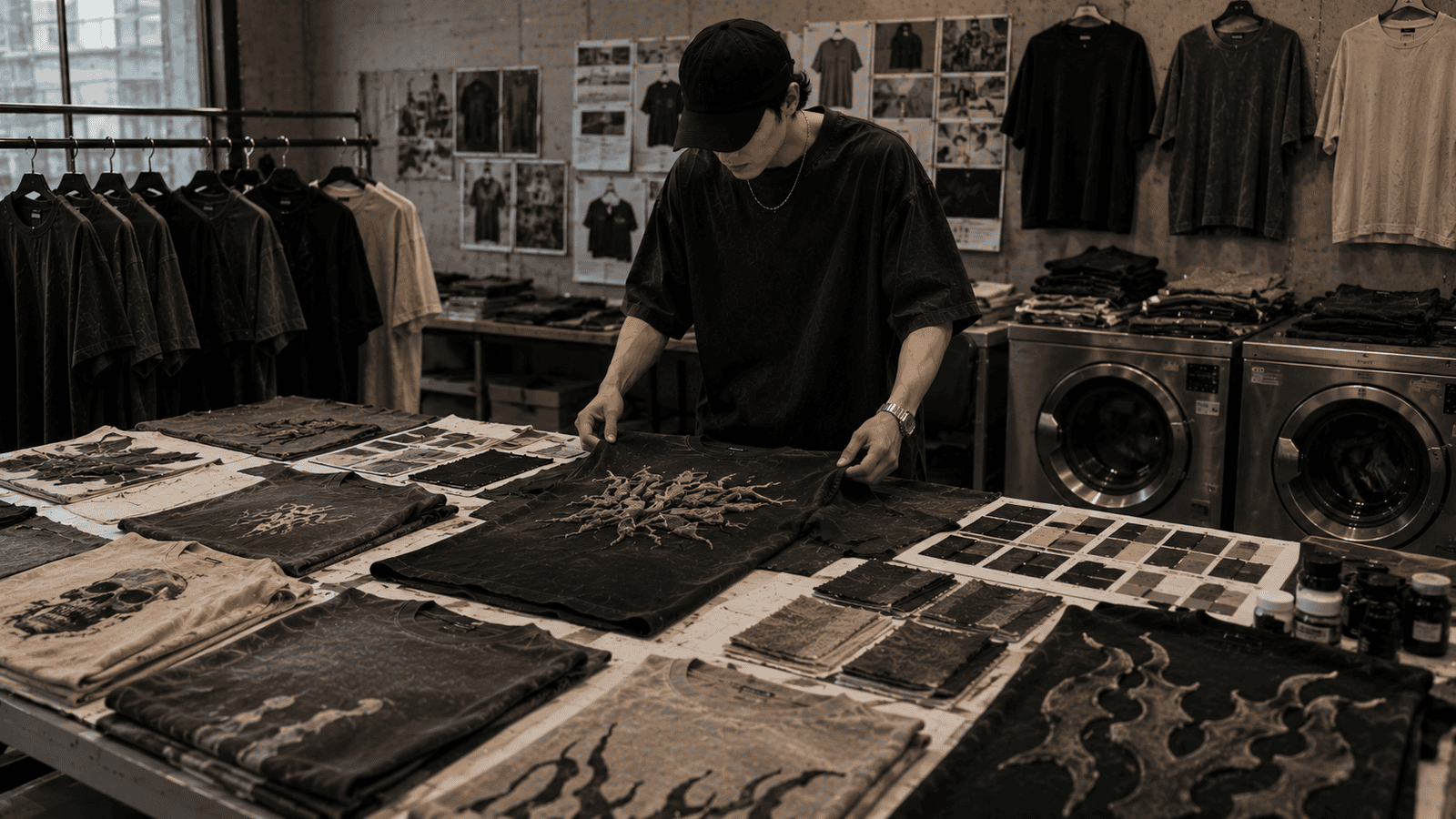
Recommended Image: Professional streetwear t-shirt printing and garment washing process with puff print graphics, acid wash samples, DTG artwork, vintage washed heavyweight t-shirts, and OEM apparel production environment.
How Does Bulk Production Work Inside an OEM Factory?
What Happens Before Bulk Production?
Factories confirm:
- Final sample approval
- Fabric approval
- Print approval
- Size specifications
- Packaging details
This helps avoid production mistakes.
What Are the Main Bulk Production Steps?
Bulk production usually includes:
- Fabric cutting
- Sewing
- Printing
- Washing
- Ironing
- Packaging
- Final QC
How Long Does Production Usually Take?
Average timelines:
- Sample development: 7–14 days
- Bulk production: 25–35 days
Production time depends on:
- Quantity
- Fabric availability
- Washing complexity
- Printing requirements
Professional factories with strong OEM Services usually provide more stable lead times.
What Should Beginners Look for in a Streetwear Manufacturer?
Why Is Communication Important?
Good communication helps brands:
- Avoid production errors
- Improve development speed
- Understand timelines
- Solve issues quickly
What Questions Should Beginners Ask Factories?
Important questions include:
- What is your MOQ?
- Do you support oversized fits?
- Can you customize fabrics?
- What printing methods do you offer?
- How long is sampling?
- How do you control quality?
Manufacturer Evaluation Table
| Evaluation Area | Why It Matters |
|---|---|
| Streetwear Experience | Better fit understanding |
| Fabric Capability | Higher product quality |
| QC System | More consistent products |
| Communication | Faster workflow |
| Production Capacity | Better scalability |
Many experienced manufacturers also support:
Conclusion
OEM private label streetwear t shirts manufacturing may seem complicated at first, but understanding the process helps brands make better long-term decisions.
Professional OEM factories support:
- Product development
- Fabric sourcing
- Oversized fit engineering
- Printing
- Washing
- Quality control
- Bulk production
For beginners who want to build:
- Premium products
- Strong brand identity
- Better quality
- Scalable collections
Working with an experienced OEM streetwear manufacturer is often the best starting point.
You can explore complete streetwear manufacturing solutions through: