
Vintage streetwear t-shirts have become a staple product for modern fashion brands. From oversized silhouettes and heavyweight cotton fabrics to garment dyeing and vintage wash treatments, today's consumers expect authenticity, quality, and unique aesthetics.
But what actually happens inside a vintage streetwear t shirts manufacturer? How does a blank cotton garment transform into a retail-ready vintage streetwear product?
In this guide, we'll take you inside the manufacturing process, from garment dye development to bulk production, quality control, and private label customization.
Whether you're launching a startup brand or expanding an existing collection, working with an experienced Custom Streetwear Manufacturer can help ensure consistent quality and scalable production.
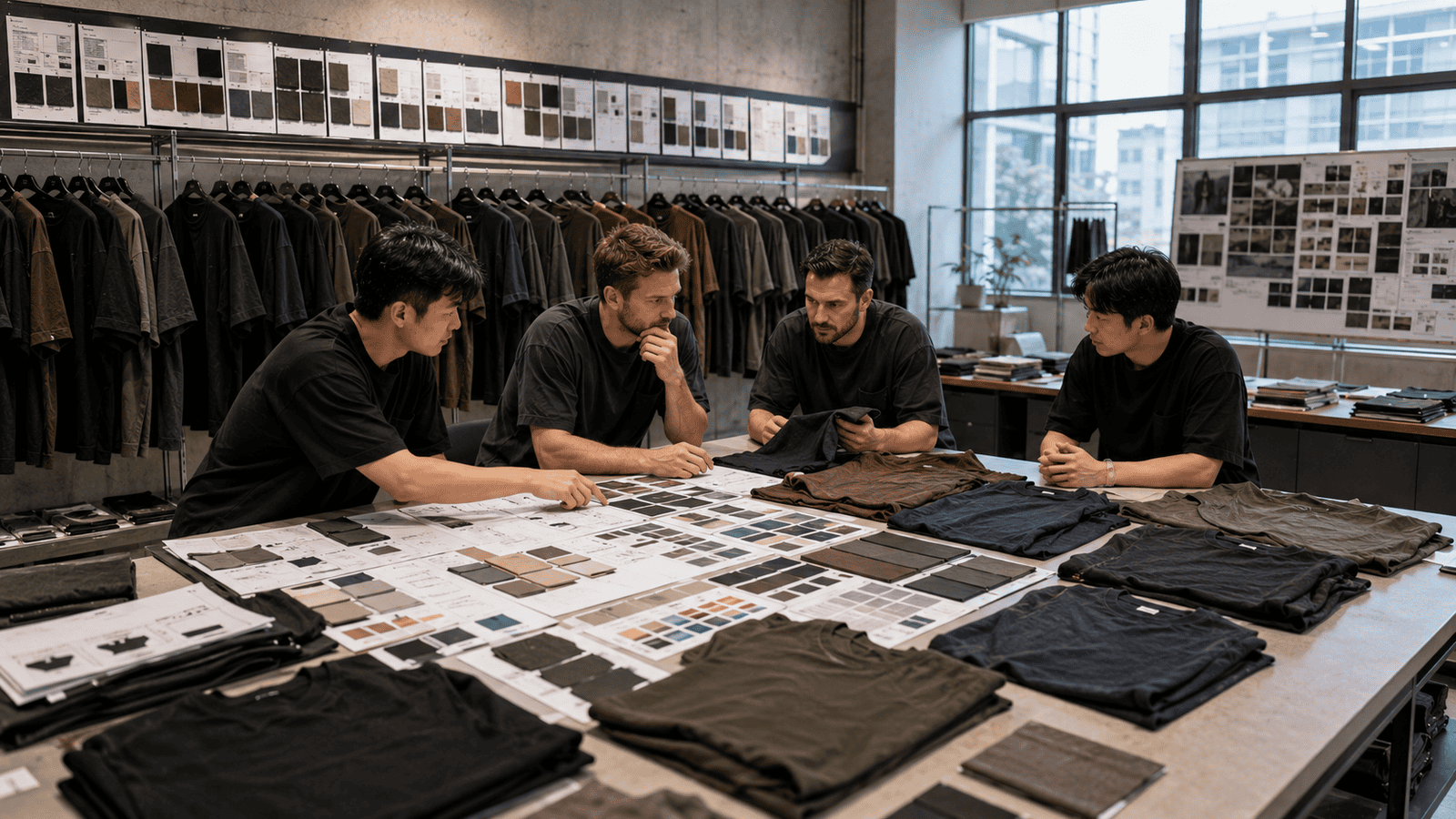
What Makes Vintage Streetwear T-Shirts Different from Regular T-Shirts?
Vintage streetwear t-shirts are specifically designed to achieve a worn-in, aged appearance while maintaining premium construction and durability.
What Defines a Vintage Streetwear T-Shirt?
Common characteristics include:
- Garment dyed colors
- Vintage wash effects
- Heavyweight cotton fabrics
- Oversized silhouettes
- Soft hand feel
- Faded color appearance
Why Are Vintage Styles So Popular?
Consumers appreciate vintage garments because they offer:
- Unique appearance
- Premium feel
- Authentic streetwear aesthetic
- Better visual depth
| Feature | Regular T-Shirt | Vintage Streetwear T-Shirt |
|---|---|---|
| Color Appearance | Uniform | Faded & Aged |
| Fabric Feel | Standard | Softened |
| Fashion Appeal | Basic | Premium |
| Streetwear Relevance | Medium | High |
How Does a Manufacturer Develop Vintage Streetwear T-Shirt Fabrics?
Fabric selection is the foundation of every successful vintage garment.
Why Is Heavyweight Cotton Preferred?
Heavyweight cotton provides:
- Better drape
- Enhanced durability
- Premium appearance
- Improved wash performance
What Fabric Weights Are Most Common?
| Fabric Weight | Application |
|---|---|
| 180gsm | Basic Vintage Tee |
| 220gsm | Standard Streetwear |
| 260gsm | Premium Oversized Tee |
| 300gsm+ | Luxury Streetwear Collections |
Which Fabrics Work Best for Garment Dyeing?
Popular options include:
- 100% Combed Cotton
- Ring-Spun Cotton
- Organic Cotton
- Cotton Blends
Many brands source premium materials through a professional Custom T-Shirts Manufacturer.
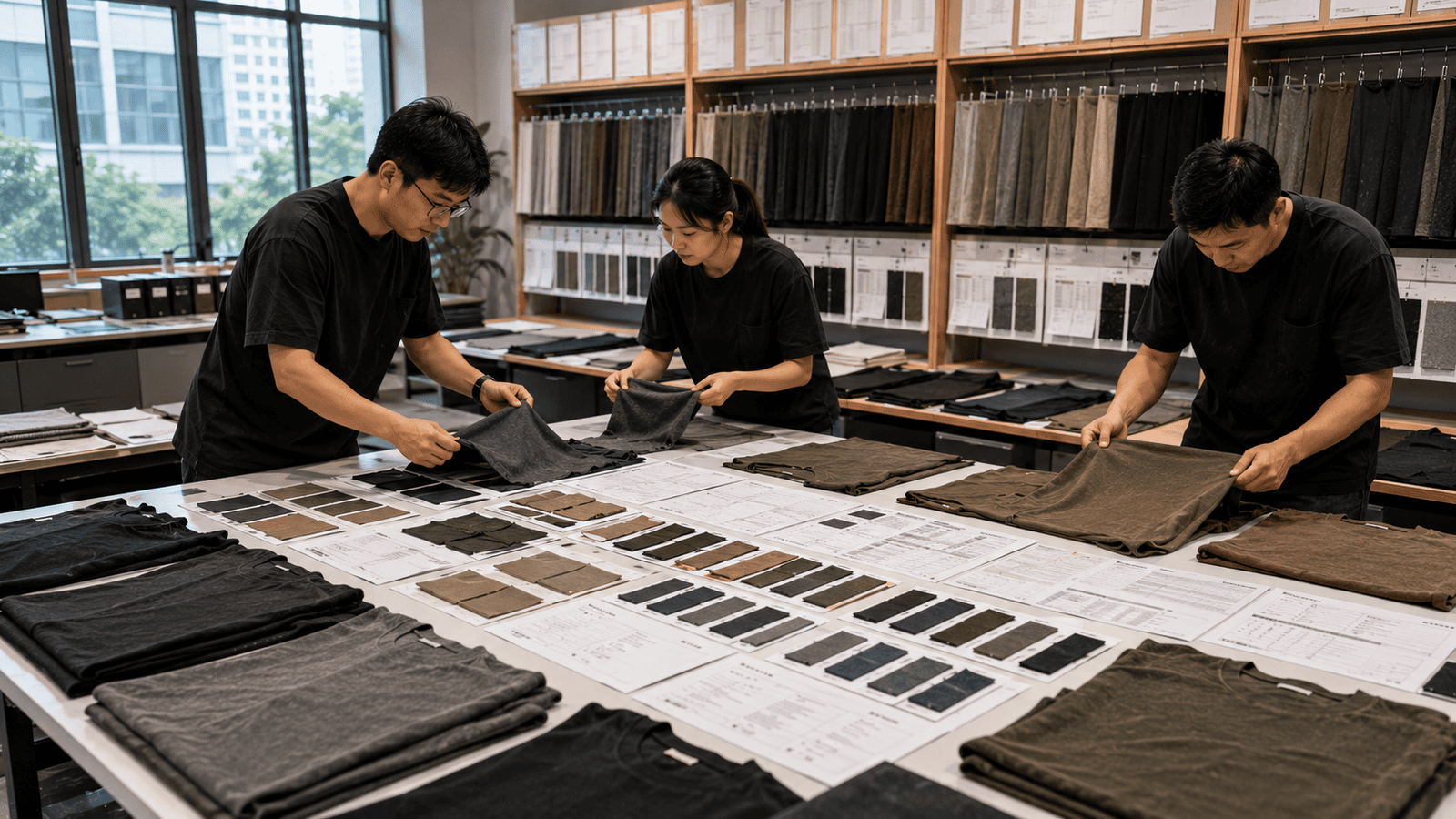
How Does Garment Dyeing Work Inside a Vintage Streetwear T Shirts Manufacturer?
Garment dyeing is one of the most important steps in vintage garment production.
What Is Garment Dyeing?
Unlike traditional fabric dyeing, garment dyeing occurs after the garment has been sewn.
This process creates:
- Richer colors
- Unique fading effects
- Better vintage aesthetics
What Colors Are Most Popular?
Common streetwear colors include:
- Washed Black
- Charcoal Grey
- Vintage Brown
- Faded Olive
- Vintage Navy
Why Is Garment Dyeing Preferred by Streetwear Brands?
Benefits include:
- Softer hand feel
- Authentic appearance
- Fashion-forward aesthetic
- Higher perceived value
What Vintage Wash Techniques Are Used During Production?
Vintage effects require specialized wash development expertise.
What Are the Most Common Wash Methods?
Manufacturers typically use:
- Enzyme Wash
- Stone Wash
- Pigment Wash
- Mineral Wash
- Acid Wash
How Does Each Wash Method Compare?
| Wash Type | Softness | Fading Level | Popularity |
|---|---|---|---|
| Enzyme Wash | High | Low | High |
| Stone Wash | Medium | High | High |
| Mineral Wash | High | Medium | Very High |
| Pigment Wash | Medium | High | Very High |
| Acid Wash | Medium | Very High | High |
How Do Manufacturers Maintain Consistency?
Professional wash teams monitor:
- Temperature
- Chemical ratios
- Processing time
- Wash formulas
What Happens During Sample Development?
Before mass production begins, manufacturers create development samples.
What Is Included in Sample Development?
The process generally includes:
- Pattern making
- Fabric sourcing
- Garment construction
- Dye testing
- Wash testing
- Branding application
How Long Does Sampling Take?
| Stage | Timeline |
|---|---|
| Fabric Sourcing | 2-4 Days |
| Pattern Development | 1-2 Days |
| Sample Sewing | 3-5 Days |
| Wash Development | 2-3 Days |
| Total Sample Lead Time | 7-10 Days |
Why Are Samples Important?
Samples help brands verify:
- Fit
- Fabric quality
- Wash effects
- Printing quality
- Branding details
How Are Vintage Streetwear Graphics and Branding Added?
Modern streetwear requires more than basic garment construction.
What Decoration Methods Are Available?
Popular options include:
- Screen Printing
- Puff Printing
- DTG Printing
- Embroidery
- Chenille Embroidery
- Silicone Printing
What Private Label Options Are Available?
Manufacturers can provide:
- Woven Labels
- Printed Neck Labels
- Hang Tags
- Custom Packaging
- Branded Poly Bags
Can Manufacturers Offer Complete OEM Services?
Yes. Many brands utilize comprehensive OEM Services for product development and private label customization.
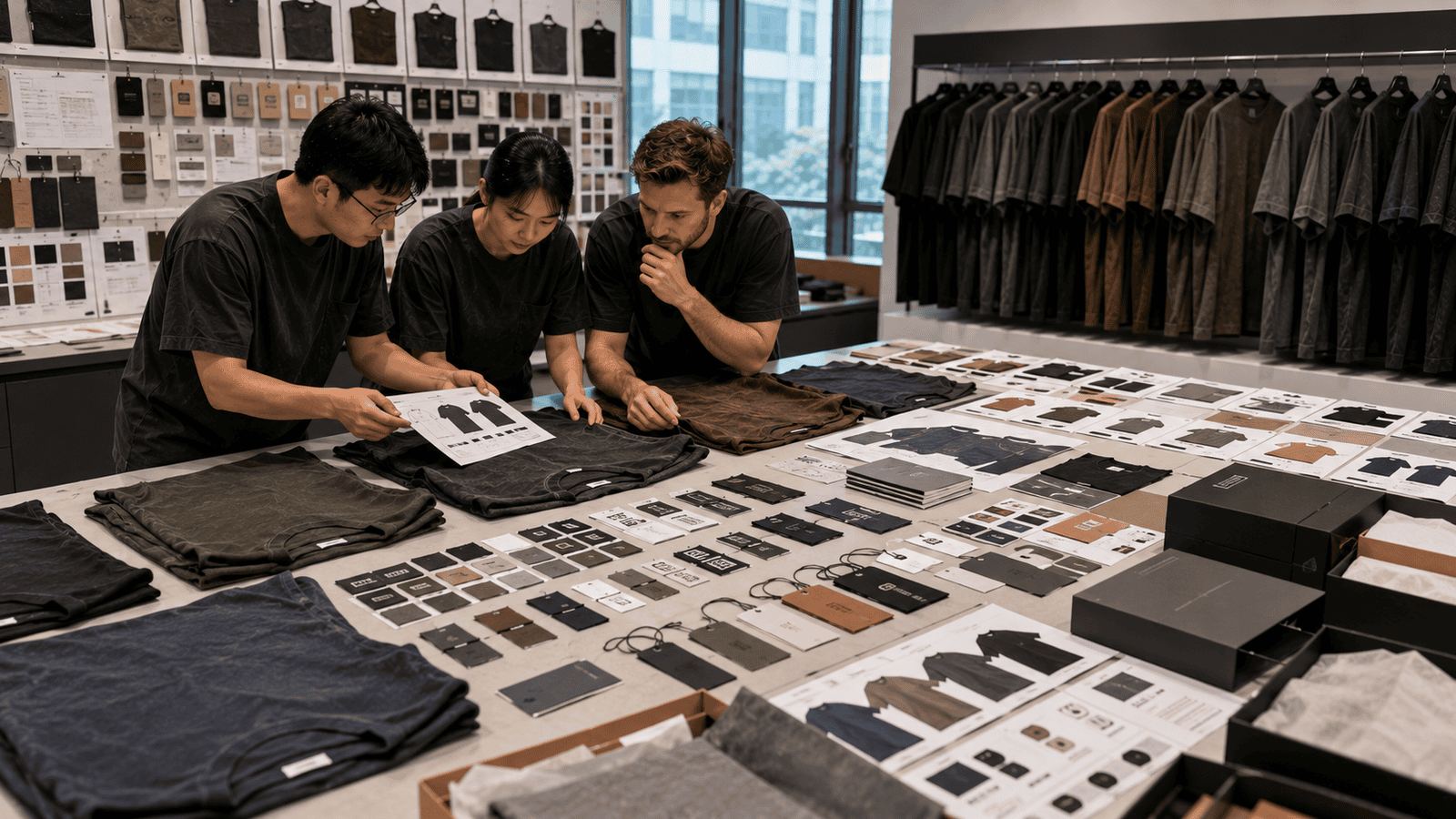
How Does Bulk Production Work?
After sample approval, manufacturers begin mass production.
What Are the Main Production Stages?
Production generally includes:
- Fabric Preparation
- Cutting
- Sewing
- Garment Dyeing
- Washing
- Printing
- Quality Inspection
- Packing
How Long Does Bulk Production Take?
| Production Stage | Timeline |
|---|---|
| Material Preparation | 3-5 Days |
| Cutting & Sewing | 7-10 Days |
| Dye & Wash Process | 5-7 Days |
| Printing & Finishing | 3-5 Days |
| Quality Control & Packing | 2-3 Days |
| Total Lead Time | 25-35 Days |
What Factors Influence Production Speed?
Factors include:
- Order quantity
- Fabric availability
- Wash complexity
- Decoration methods
How Do Manufacturers Control Quality Throughout Production?
Vintage garments require strict quality control due to wash variations.
What Is Checked During Fabric Inspection?
Factories review:
- Fabric defects
- GSM accuracy
- Color consistency
- Shrinkage performance
What Happens During Final Inspection?
Quality teams inspect:
- Measurements
- Wash consistency
- Printing quality
- Label placement
- Packaging
What Quality Control Stages Are Common?
| QC Stage | Purpose |
|---|---|
| Fabric Inspection | Material Verification |
| In-Line QC | Production Monitoring |
| Final QC | Product Approval |
| Packing QC | Shipment Verification |
Can One Manufacturer Produce an Entire Streetwear Collection?
Many fashion brands prefer working with one manufacturing partner.
What Other Products Can Be Developed?
A professional manufacturer can also produce:
- Streetwear Hoodies
- Streetwear Sweatshirts
- Streetwear Jackets
- Streetwear Pants
- Streetwear Shorts
- Streetwear Sets
- Streetwear Tank Tops
- Streetwear Denim Apparel
Why Do Brands Prefer One Supplier?
Benefits include:
- Consistent sizing
- Unified quality standards
- Faster development
- Simplified logistics
Why Are More Brands Working with Chinese Vintage Streetwear Manufacturers?
China continues to be a leading destination for streetwear production.
What Advantages Do Chinese Manufacturers Offer?
Key advantages include:
- Advanced garment dye facilities
- Skilled wash technicians
- Competitive production costs
- Strong supply chain networks
- Large production capacity
What Services Are Typically Included?
Most manufacturers provide:
- Product Development
- Sampling
- Bulk Production
- Quality Control
- Private Label Solutions
- Logistics Support
How Can Brands Choose the Right Manufacturing Partner?
Look for:
- Streetwear specialization
- In-house sample room
- Garment dye expertise
- Transparent communication
- Reliable QC systems
Explore more manufacturing capabilities at Ohsure Apparel and browse the complete Streetwear Product Collection.
Conclusion
A vintage streetwear t shirts manufacturer does much more than simply sew garments. From fabric development and garment dyeing to wash treatments, private label customization, quality control, and bulk production, every stage plays a crucial role in creating premium streetwear products.
Understanding the complete manufacturing process helps fashion brands make better sourcing decisions, improve product quality, and build successful collections that resonate with today's streetwear consumers.