
Many fashion brands see the finished product, but few understand what happens behind the scenes inside a premium streetwear T shirts manufacturer. From fabric sourcing and fit development to sampling, quality control, and bulk production, every stage plays a critical role in creating premium streetwear products.
Understanding the manufacturing process can help clothing brands make better sourcing decisions, improve product quality, and build stronger partnerships with their suppliers.
In this guide, we'll take you inside a premium streetwear T-shirt factory and explore the complete journey from fabric sourcing to bulk production.
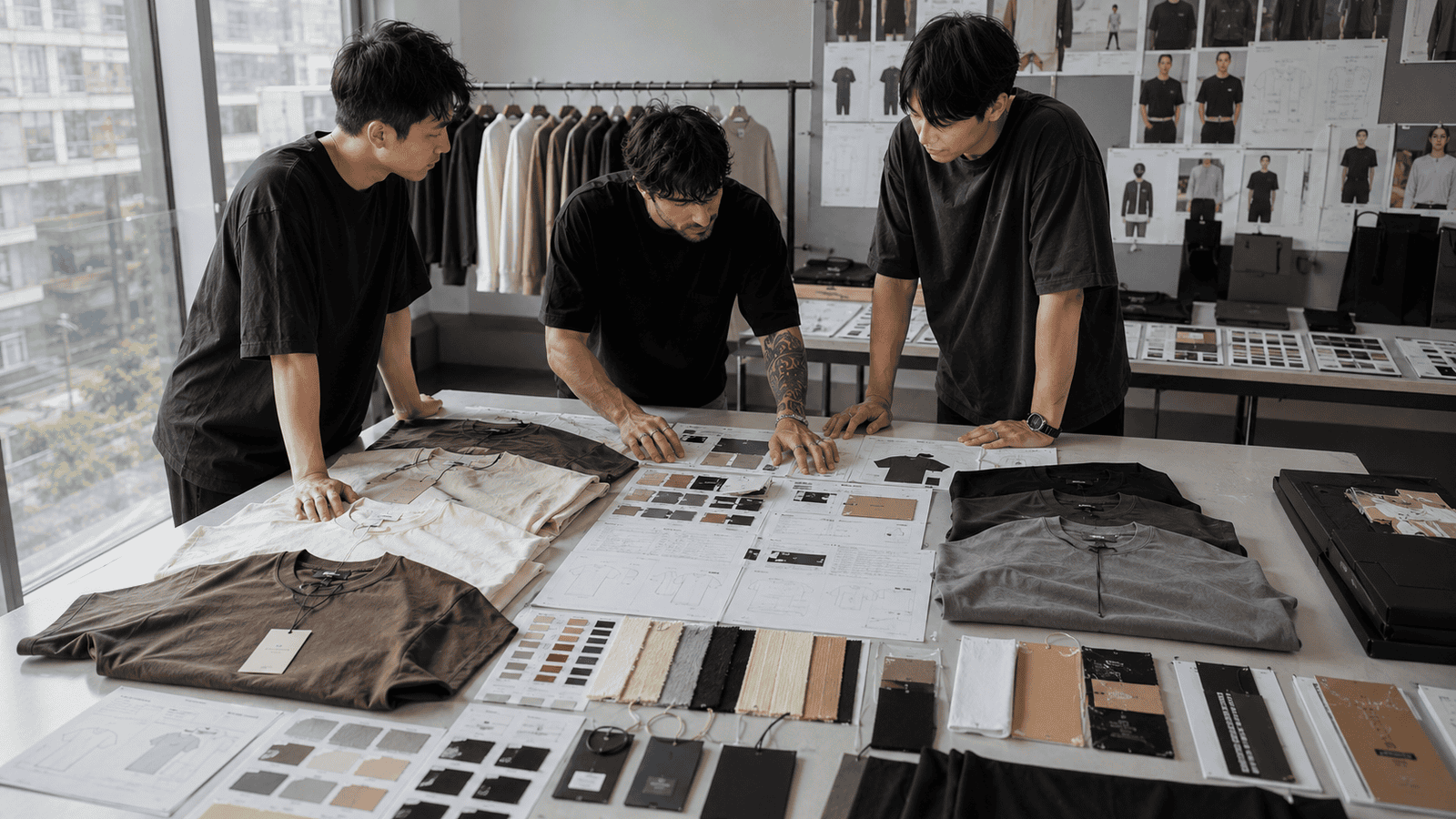
What Happens Before Production Begins?
Every successful streetwear collection starts long before production.
Why Is Product Planning Important?
Proper planning helps manufacturers:
- Understand design requirements
- Select suitable fabrics
- Estimate costs accurately
- Avoid production errors
What Information Should Brands Provide?
Most manufacturers require:
- Tech packs
- Artwork files
- Measurement charts
- Branding requirements
Product Development Checklist
| Item | Purpose |
|---|---|
| Tech Pack | Production reference |
| Artwork | Graphic development |
| Size Chart | Fit development |
| Pantone Colors | Color matching |
| Branding Files | Label production |
Many brands work directly with a professional Custom Streetwear Manufacturer to streamline product development.
How Does Fabric Sourcing Work?
Fabric sourcing is one of the most important stages of premium apparel manufacturing.
Why Is Fabric Selection Critical?
Fabric affects:
- Comfort
- Durability
- Appearance
- Customer satisfaction
Common Fabrics Used in Premium Streetwear
| Fabric Type | Features | Best Use |
|---|---|---|
| Combed Cotton | Soft and durable | Premium T-shirts |
| Organic Cotton | Sustainable | Eco-friendly collections |
| Cotton-Spandex | Added stretch | Fashion styles |
| Heavyweight Cotton | Structured feel | Luxury streetwear |
What Fabric Tests Are Performed?
Manufacturers often evaluate:
- GSM consistency
- Shrinkage rates
- Colorfastness
- Fabric durability
For fabric development support, visit our Custom T-Shirts Manufacturer page.
How Do Manufacturers Develop Custom Streetwear Fits?
Fit development is a major part of premium streetwear production.
Why Is Fit Development Important?
The right fit creates:
- Brand identity
- Customer loyalty
- Better product reviews
Popular Streetwear Fits
Oversized Fit
- Dropped shoulders
- Relaxed silhouette
Boxy Fit
- Cropped length
- Wider chest
Relaxed Fit
- Everyday versatility
How Are Patterns Created?
Manufacturers typically:
- Develop base patterns
- Create sample garments
- Adjust measurements
- Finalize grading
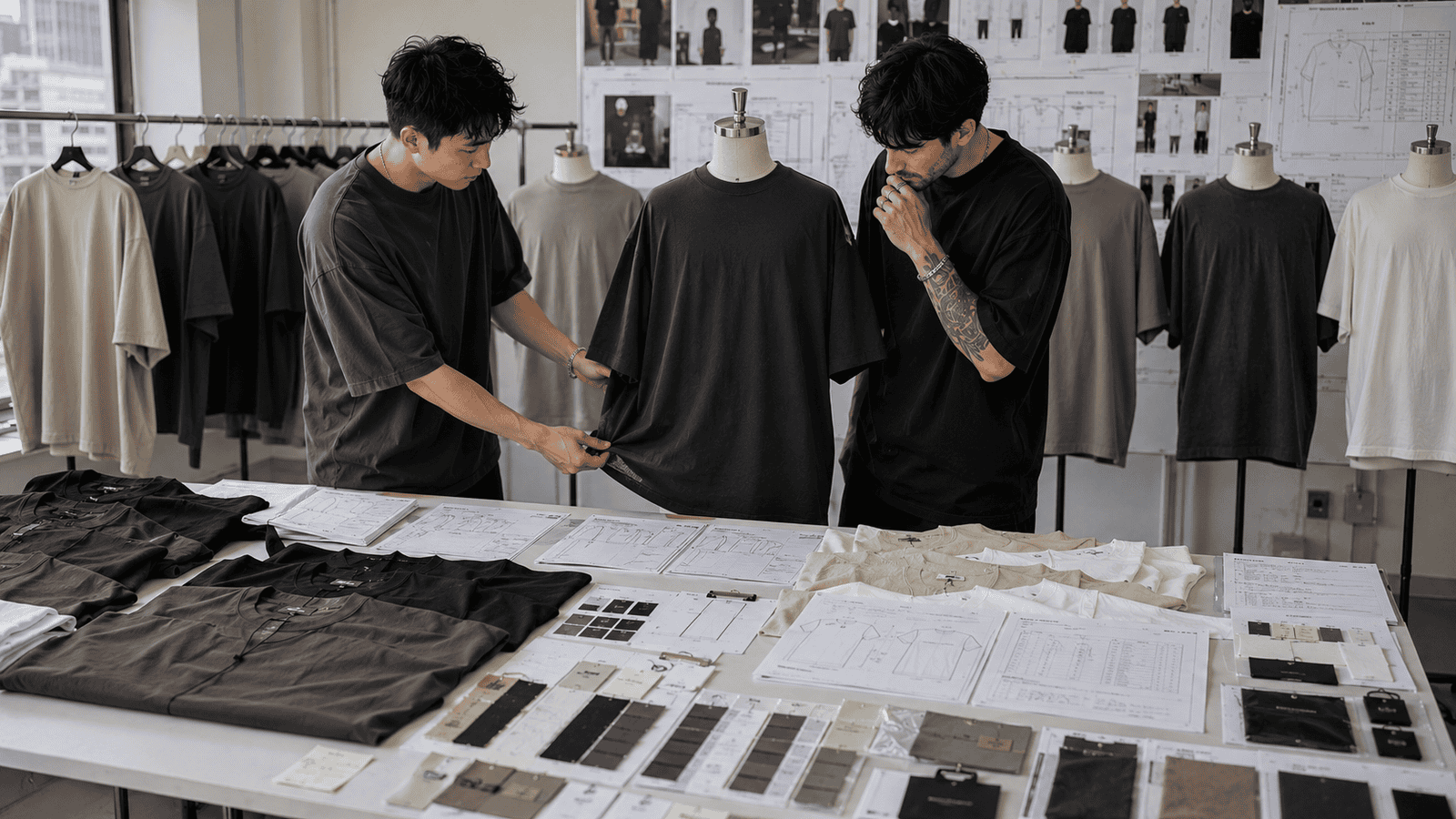
What Happens During Sample Development?
Sampling helps identify issues before bulk production.
Why Is Sampling Necessary?
Sampling allows brands to review:
- Fit
- Fabric
- Print quality
- Construction
Typical Sampling Process
First Sample
Tests basic construction.
Revision Sample
Implements corrections.
Approval Sample
Final version before production.
Sample Development Timeline
| Stage | Typical Time |
|---|---|
| Pattern Making | 1–3 Days |
| Sample Sewing | 3–5 Days |
| Revision | 2–5 Days |
| Approval | Customer Review |
How Are Graphics and Branding Applied?
Premium streetwear often relies heavily on branding and graphics.
Popular Decoration Methods
Screen Printing
Ideal for large artwork.
Puff Printing
Creates raised effects.
High Density Printing
Provides luxury texture.
Embroidery
Creates premium branding.
Private Label Branding Options
Manufacturers often provide:
- Woven labels
- Printed neck labels
- Hang tags
- Custom packaging
Brands seeking complete branding solutions often choose full OEM Services.
How Does Quality Control Work Before Bulk Production?
Quality control begins before large-scale production starts.
Pre-Production Inspection
Manufacturers verify:
- Fabric quality
- Pattern accuracy
- Print consistency
Sample Approval Process
Brands should review:
- Measurements
- Graphics
- Labels
- Packaging
Pre-Production Checklist
| Inspection Area | Key Focus |
|---|---|
| Fabric | GSM & defects |
| Fit | Measurement accuracy |
| Printing | Artwork consistency |
| Branding | Label placement |
What Happens During Bulk Production?
Bulk production transforms approved samples into finished products.
Cutting Department
Responsibilities include:
- Fabric spreading
- Marker planning
- Cutting accuracy
Sewing Department
Responsibilities include:
- Assembly
- Stitch quality
- Construction consistency
Printing Department
Responsibilities include:
- Graphic application
- Quality verification
Production Flow
| Stage | Purpose |
|---|---|
| Fabric Inspection | Material approval |
| Cutting | Component preparation |
| Sewing | Garment construction |
| Printing | Graphic application |
| Finishing | Final preparation |
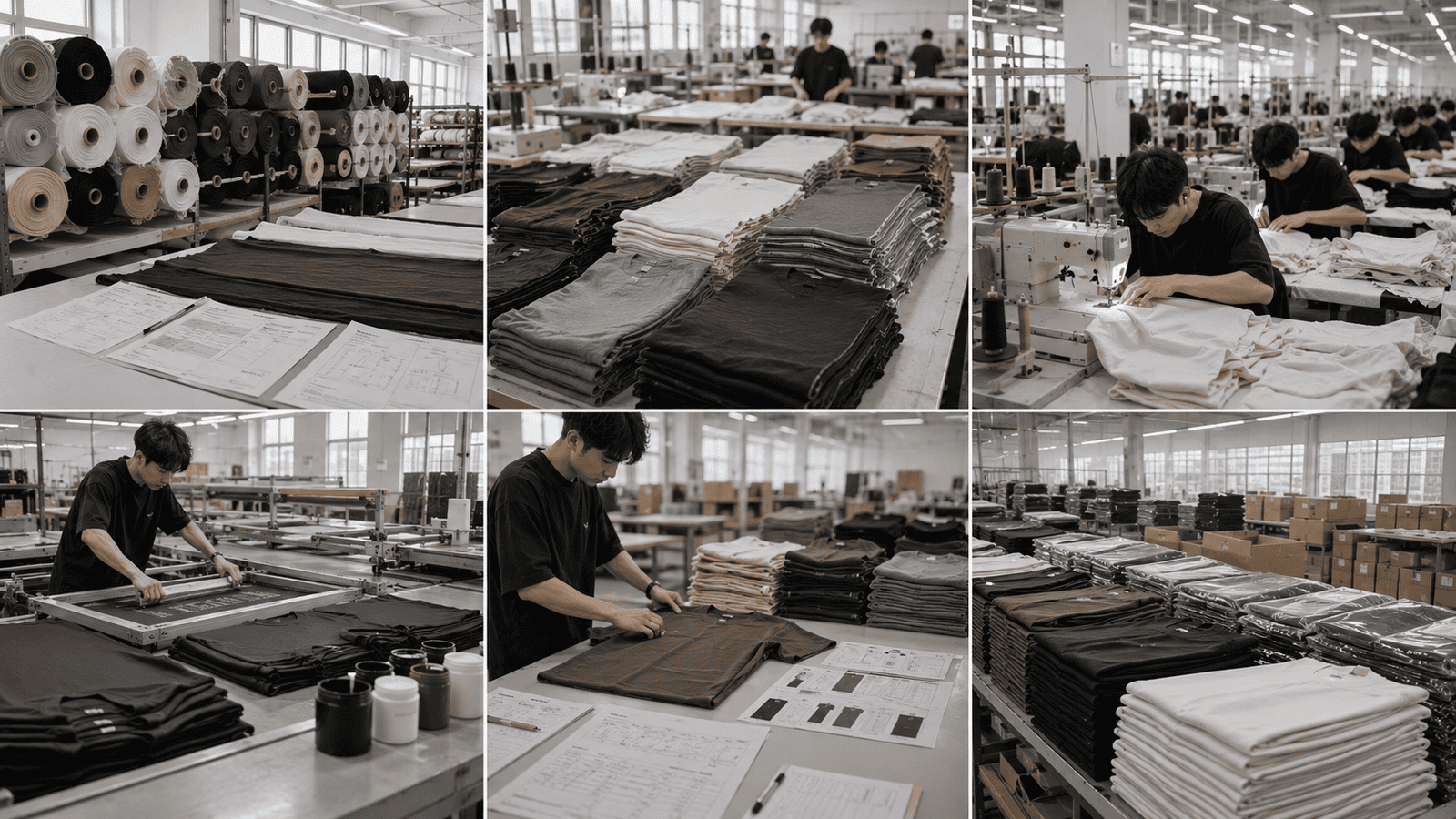
How Is Quality Control Performed During Production?
Quality control continues throughout production.
In-Line Inspection
Inspectors verify:
- Measurements
- Stitching
- Construction
Final Inspection
Inspectors verify:
- Appearance
- Packaging
- Label placement
Common Quality Control Standards
| Area | Inspection Focus |
|---|---|
| Fabric | Defects |
| Sewing | Stitch consistency |
| Printing | Alignment |
| Packaging | Accuracy |
Why Is Continuous QC Important?
Continuous inspection helps:
- Reduce defects
- Improve consistency
- Protect brand reputation
How Are Orders Packed and Prepared for Shipping?
The final stage ensures products arrive safely.
Packing Process
Manufacturers typically:
- Fold garments
- Insert labels
- Package products
- Prepare cartons
Shipping Options
Air Freight
Fast but expensive.
Express Courier
Ideal for samples.
Ocean Freight
Cost-effective for bulk orders.
Logistics Considerations
Brands should evaluate:
- Shipping cost
- Delivery time
- Destination requirements
Can One Manufacturer Produce an Entire Streetwear Collection?
Many brands prefer a single manufacturing partner.
Product Categories Beyond T-Shirts
A capable supplier should also offer:
- Streetwear Hoodie Manufacturer
- Streetwear Sweatshirt Manufacturer
- Streetwear Jacket Manufacturer
- Streetwear Pants Manufacturer
- Streetwear Shorts Manufacturer
- Streetwear Sets Manufacturer
- Streetwear Denim Apparel Manufacturer
- Streetwear Tank Top Manufacturer
Browse additional categories on our Products page.
Benefits of Consolidated Manufacturing
- Consistent quality
- Easier communication
- Faster development
- Better production management
Why Should Brands Understand the Manufacturing Process?
Brands that understand manufacturing often make better decisions.
Benefits of Manufacturing Knowledge
Better Product Development
Improves communication.
More Accurate Expectations
Reduces misunderstandings.
Stronger Supplier Relationships
Creates long-term partnerships.
Long-Term Impact
| Benefit | Result |
|---|---|
| Better Planning | Faster launches |
| Improved Quality | Higher customer satisfaction |
| Better Communication | Fewer mistakes |
| Stronger Partnerships | Long-term growth |
Conclusion
Inside every premium streetwear T-shirt is a carefully managed process involving fabric sourcing, fit development, sampling, quality control, and bulk production.
By understanding how a premium streetwear T shirts manufacturer operates, fashion brands can make more informed sourcing decisions and build stronger products that customers love.
The best manufacturers don't simply produce garments—they become long-term partners in helping brands grow, scale, and succeed.