
Many fashion brands focus on the final product, but few truly understand what happens behind the scenes inside a blank streetwear t shirts manufacturer. From fabric sourcing and pattern development to sample approval and bulk production, every step plays a crucial role in determining garment quality, fit consistency, and overall customer satisfaction.
For startup brands, established labels, and wholesalers alike, understanding the manufacturing process can help improve sourcing decisions, reduce production risks, and build stronger relationships with suppliers. In this guide, we'll take you inside a professional blank streetwear t-shirts manufacturer and explore how premium streetwear garments are developed from fabric selection to finished bulk production.

If you're looking for a reliable production partner, explore our professional Custom Streetwear Manufacturer services.
What Happens Before A Blank Streetwear T-Shirt Is Produced?
Why Is Product Planning Important?
Before production begins, manufacturers must determine:
- Target market
- Fit profile
- Fabric selection
- Branding requirements
- Production budget
What Information Do Brands Need To Provide?
Most manufacturers require:
- Tech packs
- Reference samples
- Artwork files
- Size specifications
- Branding instructions
How Does OEM Development Work?
OEM production allows brands to create:
- Unique fits
- Custom fabrics
- Private label products
- Exclusive collections
Learn more about our complete OEM Services.
How Do Manufacturers Source Fabric For Blank Streetwear T-Shirts?
Why Is Fabric Selection So Important?
Fabric affects:
- Comfort
- Durability
- Appearance
- Print performance
What Fabrics Are Commonly Used?
| Fabric Type | Application |
|---|---|
| Carded Cotton | Budget Collections |
| Combed Cotton | Premium Basics |
| Ring-Spun Cotton | Luxury Streetwear |
| Organic Cotton | Sustainable Collections |
| Cotton Blend | Performance Products |
How Do Manufacturers Verify Fabric Quality?
Factories often perform:
- GSM testing
- Shrinkage testing
- Color fastness testing
- Fabric inspection
Many brands later expand these fabrics into products such as Streetwear Hoodies and Streetwear Sweatshirts.
How Is A Streetwear T-Shirt Pattern Developed?
Why Does Pattern Development Matter?
Pattern development determines:
- Garment fit
- Sizing consistency
- Customer satisfaction
What Fit Types Are Most Common?
Manufacturers often develop:
- Oversized fit
- Boxy fit
- Relaxed fit
- Drop shoulder fit
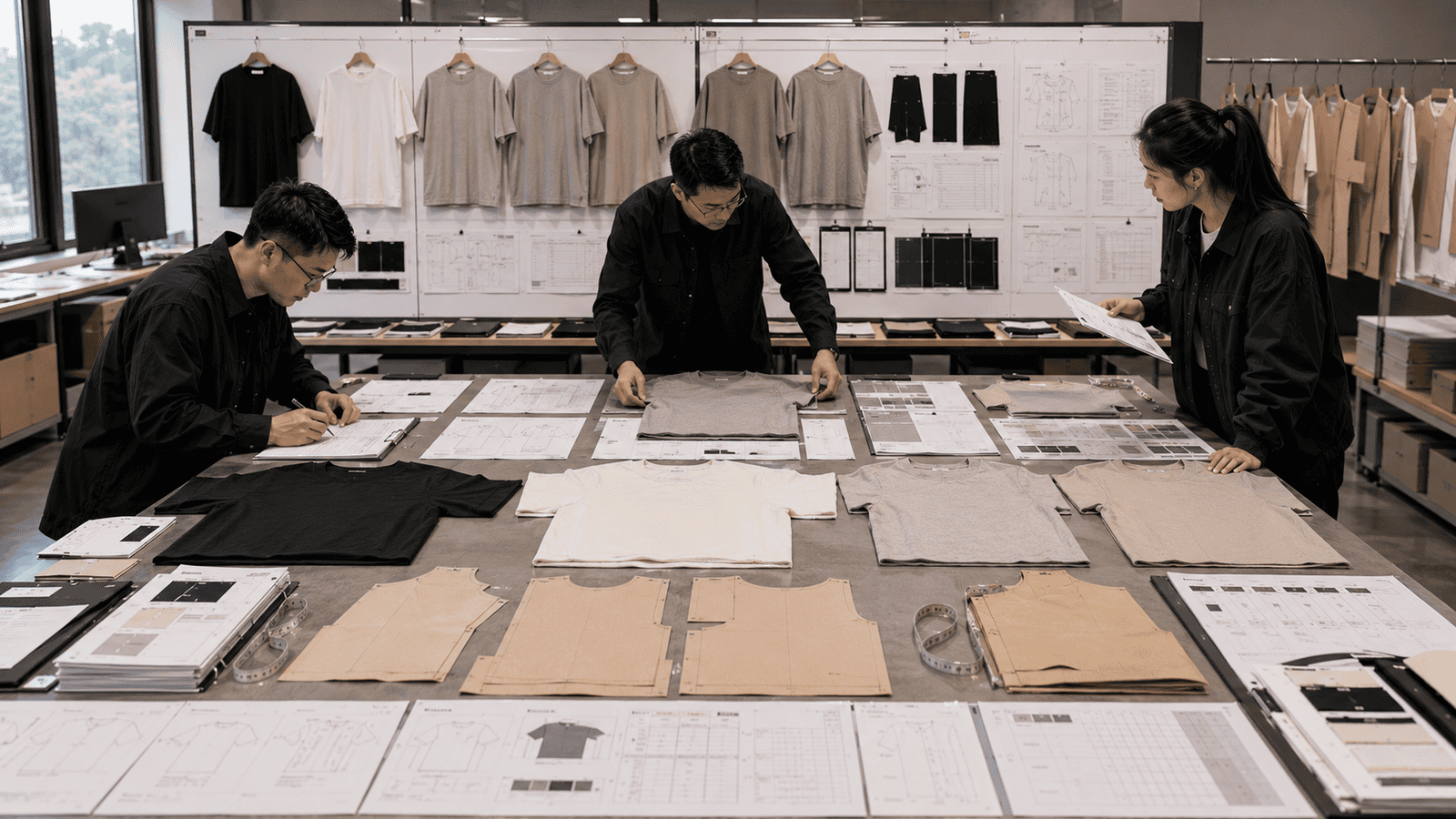
What Happens During Sample Development?
The process usually includes:
- Initial sample creation
- Fit evaluation
- Revision rounds
- Final approval
How Are Fabric And Samples Tested Before Production?
What Tests Are Performed Before Bulk Production?
Manufacturers commonly conduct:
| Test Type | Purpose |
|---|---|
| GSM Testing | Verify Fabric Weight |
| Shrinkage Testing | Verify Stability |
| Color Fastness Testing | Prevent Fading |
| Wash Testing | Check Performance |
| Measurement Testing | Confirm Sizing |
Why Is Sample Approval Important?
Sample approval ensures:
- Correct fit
- Fabric confirmation
- Branding accuracy
- Construction consistency
How Many Sample Revisions Are Typically Needed?
Most projects require:
- 1-3 revisions for basic products
- 2-5 revisions for custom developments
How Is Fabric Prepared For Bulk Production?
What Happens Before Cutting?
Fabric preparation often includes:
- Fabric relaxation
- Inspection
- Shade matching
- Defect identification
Why Is Fabric Relaxation Necessary?
Relaxation helps:
- Prevent shrinkage issues
- Improve cutting accuracy
- Maintain consistency
How Do Manufacturers Control Fabric Quality?
Quality teams inspect:
- Fabric rolls
- Color consistency
- Fabric defects
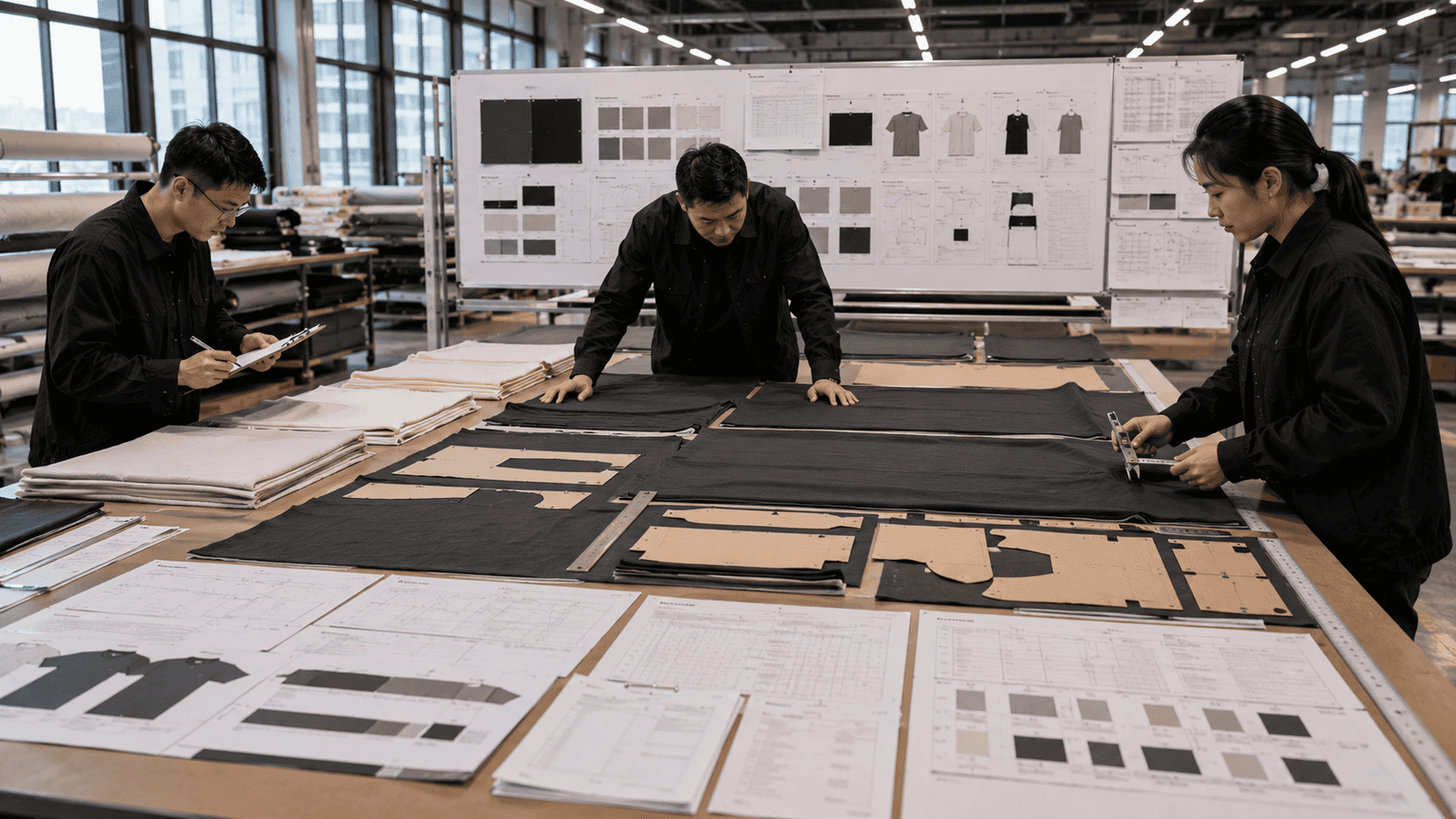
How Does The Cutting Process Work?
Why Is Cutting Accuracy Important?
Accurate cutting ensures:
- Consistent sizing
- Better assembly
- Lower material waste
What Equipment Is Commonly Used?
Manufacturers may use:
- Automatic cutting machines
- Manual cutting tables
- Fabric spreading systems
How Is Cutting Quality Verified?
Inspectors review:
- Measurement accuracy
- Pattern alignment
- Fabric consistency
How Are Blank Streetwear T-Shirts Constructed?
What Sewing Operations Are Involved?
Typical operations include:
- Shoulder assembly
- Sleeve attachment
- Side seam construction
- Neck rib attachment
- Hem finishing
Why Is Stitch Quality Important?
Good stitching improves:
- Durability
- Appearance
- Product lifespan
How Do Manufacturers Maintain Consistency?
Factories implement:
- Standard operating procedures
- In-line inspections
- Production monitoring
How Are Branding And Customization Added?
What Printing Methods Are Available?
Popular options include:
- Screen printing
- Puff printing
- DTG printing
- Reflective printing
- Silicone transfers
What Private Label Options Can Be Added?
Manufacturers can provide:
- Woven labels
- Printed neck labels
- Hang tags
- Packaging
- Silicone patches
Why Is Branding Important?
Branding helps:
- Increase recognition
- Improve perceived value
- Differentiate products
For advanced customization, many brands choose a dedicated Custom T-Shirts Manufacturer.
How Do Manufacturers Perform Quality Control?
What Happens During In-Line Inspection?
Inspectors monitor:
- Stitching quality
- Measurements
- Fabric issues
- Construction defects
What Is Checked During Final Inspection?
| Inspection Area | Verification |
|---|---|
| Measurements | Size Accuracy |
| Fabric | Defects |
| Printing | Placement |
| Labels | Correct Application |
| Packaging | Shipping Readiness |
Why Is Final Quality Control Critical?
Final inspections help:
- Reduce defects
- Improve customer satisfaction
- Protect brand reputation
How Are Products Packed And Prepared For Shipment?
What Packaging Options Are Available?
Common options include:
- Poly bags
- Hang tags
- Custom boxes
- Tissue paper
- Brand inserts
How Are Cartons Organized?
Products are packed based on:
- Size breakdown
- Color grouping
- Customer requirements
How Are Bulk Orders Shipped?
Manufacturers typically offer:
- Express shipping
- Air freight
- Sea freight
- DDP solutions
How Can Brands Expand Beyond Blank T-Shirts?
What Products Are Commonly Added Next?
Brands often expand into:
Why Is Product Expansion Important?
Benefits include:
- Higher revenue
- Stronger brand identity
- Improved customer retention
How Can Manufacturers Support Growth?
Factories help with:
- Product development
- Fabric coordination
- Collection planning
- Production scaling
Browse our complete Streetwear Products Collection for more manufacturing options.
Conclusion
Understanding what happens inside a blank streetwear t shirts manufacturer helps brands make more informed sourcing decisions and appreciate the complexity behind premium garment production. From fabric sourcing and pattern development to quality control and shipping, every stage contributes to the final product's success.
Whether you're launching your first collection or scaling an established streetwear label, partnering with an experienced manufacturer can help ensure quality, consistency, and long-term growth.
Visit Ohsure Apparel to learn more about our manufacturing capabilities and start your next project today.