
Choosing the right streetwear t-shirts manufacturer in China can determine whether your brand succeeds or struggles. The best manufacturer should offer premium fabric sourcing, custom fit development, advanced graphic printing, reliable quality control, transparent communication, and scalable production capacity. Instead of focusing only on price, brands should evaluate suppliers based on long-term value, product quality, and development capabilities.
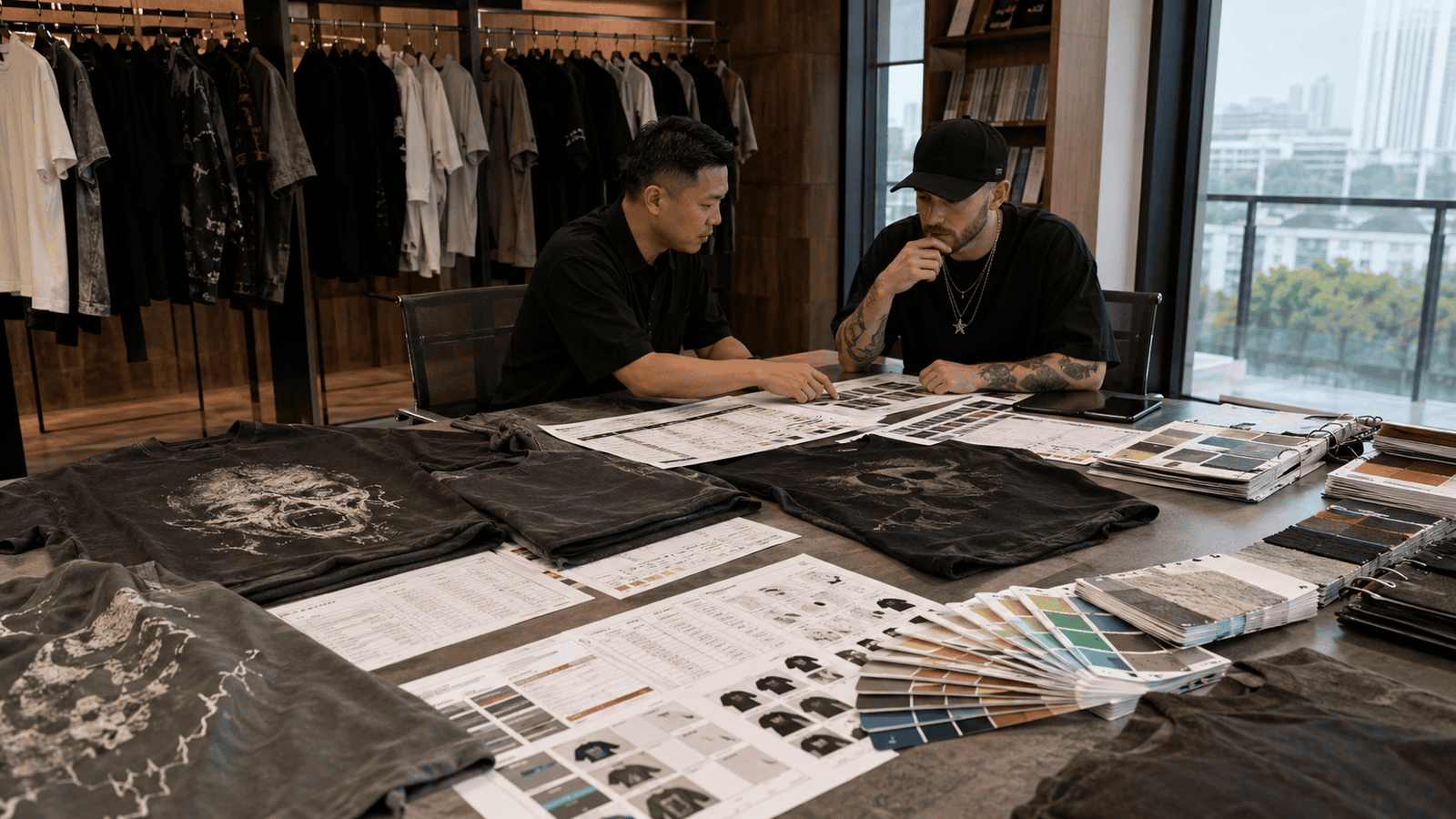
What Should You Look for in a Streetwear T Shirts Manufacturer in China?
Why Manufacturer Selection Matters
Your manufacturer directly affects:
- Product quality
- Customer satisfaction
- Brand reputation
- Production consistency
- Profit margins
Essential Capabilities to Evaluate
Look for manufacturers that offer:
- OEM development
- Private label services
- Graphic printing expertise
- Sample development
- Quality control systems
Manufacturer Evaluation Checklist
| Criteria | Importance |
|---|---|
| Fabric Quality | High |
| Printing Capability | High |
| Communication | High |
| Sampling Process | High |
| MOQ Flexibility | Medium |
| Quality Control | High |
Brands seeking long-term growth often partner with an experienced Custom Streetwear Manufacturer rather than choosing suppliers based solely on price.
Why Is Fabric Quality One of the Most Important Factors?
How Fabric Impacts Product Value
Fabric quality influences:
- Comfort
- Durability
- Garment drape
- Customer perception
Popular Streetwear Fabric Options
| Fabric Type | Application |
|---|---|
| 100% Combed Cotton | Premium Tees |
| Ringspun Cotton | Luxury Streetwear |
| Organic Cotton | Sustainable Collections |
| Heavyweight Cotton | Oversized Streetwear |
| Cotton Blends | Performance Products |
Recommended Fabric Weights
| GSM | Typical Use |
|---|---|
| 180 GSM | Basic Streetwear |
| 220 GSM | Premium Tees |
| 240 GSM | Heavyweight T-Shirts |
| 260 GSM | Luxury Streetwear |
| 300 GSM+ | Designer Collections |
Manufacturers specializing in Custom T Shirts Manufacturing typically provide fabric recommendations based on your brand positioning.
How Important Is Custom Fit Development for Streetwear Brands?
Why Fit Defines Streetwear Products
Many successful brands are recognized by their fit before their logo.
Popular Streetwear Fits
- Oversized Fit
- Boxy Fit
- Relaxed Fit
- Cropped Oversized Fit
- Drop Shoulder Fit
What Should Manufacturers Offer?
Professional suppliers should provide:
- Pattern development
- Size grading
- Fit correction
- Multiple sample revisions
Fit Development Workflow
- Initial pattern creation
- First sample
- Fit evaluation
- Corrections
- Final approval
Which Graphic Printing Capabilities Should a Manufacturer Have?
Why Printing Quality Matters
Graphics are often the most important feature of a streetwear t-shirt.
Common Graphic Applications
| Printing Method | Best For |
|---|---|
| Screen Printing | Bulk Production |
| Puff Printing | Premium Graphics |
| DTG Printing | Detailed Artwork |
| Embroidery | Luxury Branding |
| Silicone Print | Modern Streetwear |
| High Density Print | Elevated Designs |
How Printing Influences Brand Perception
Premium printing techniques help:
- Increase perceived value
- Improve product differentiation
- Support higher retail pricing
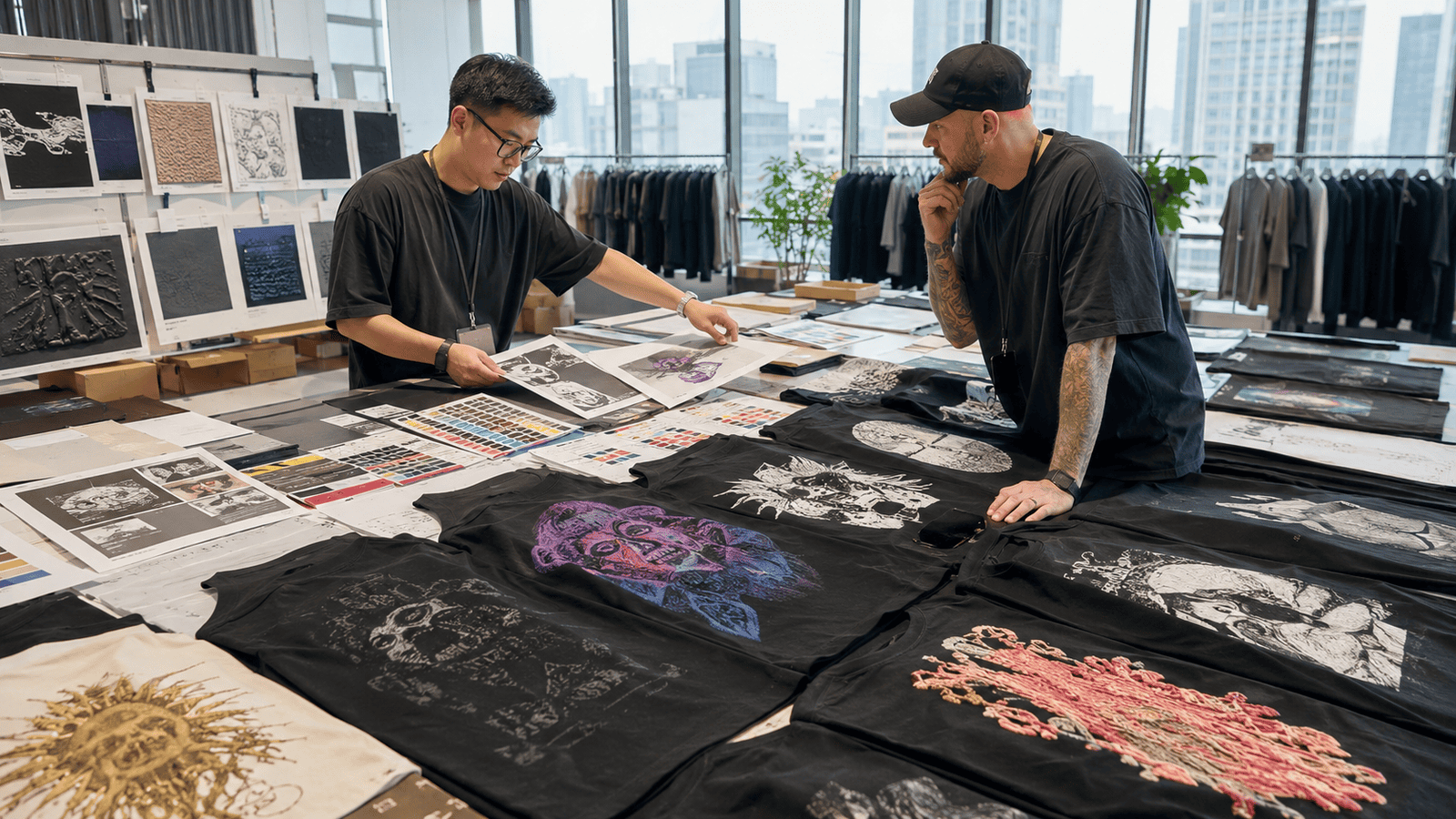
Why Is the Sampling Process Critical Before Bulk Production?
What Can Sampling Prevent?
Sampling helps identify:
- Fit issues
- Fabric problems
- Graphic errors
- Construction defects
What Should You Review?
Evaluate:
- Measurements
- Print quality
- Fabric texture
- Stitching quality
- Label placement
Sample Approval Checklist
| Inspection Area | Verification |
|---|---|
| Fabric | Correct GSM |
| Fit | Accurate Measurements |
| Graphics | Proper Placement |
| Stitching | Consistent Quality |
| Labels | Brand Accuracy |
Working with experienced OEM Manufacturing Services reduces the risk of production mistakes.
How Can You Evaluate a Manufacturer's Quality Control System?
Why Quality Control Matters
Poor quality can damage customer trust and increase return rates.
Standard Quality Control Stages
| QC Stage | Purpose |
|---|---|
| Fabric Inspection | Material Verification |
| Cutting Inspection | Measurement Accuracy |
| In-Line Inspection | Sewing Quality |
| Final Inspection | Product Review |
| Packaging Inspection | Shipping Accuracy |
Questions to Ask About QC
- How many inspections are performed?
- Are measurements checked before shipment?
- How are printing defects handled?
Signs of a Reliable QC System
- Written inspection reports
- Consistent production standards
- Dedicated QC team
Why Is Communication Often Overlooked When Choosing a Manufacturer?
How Communication Impacts Production
Poor communication often causes:
- Delays
- Incorrect samples
- Production mistakes
- Missed deadlines
What Good Communication Looks Like
Professional manufacturers should provide:
- Fast responses
- Clear updates
- Technical guidance
- Production progress reports
Communication Evaluation Checklist
| Factor | Ideal Standard |
|---|---|
| Response Time | Within 24 Hours |
| Technical Knowledge | Strong |
| English Communication | Professional |
| Project Updates | Consistent |
What MOQ and Production Capacity Should You Expect?
Why MOQ Matters
MOQ directly affects startup risk and inventory investment.
Typical MOQ Levels
| Brand Type | Recommended MOQ |
|---|---|
| Startup Brand | 100–300 pcs |
| Growing Brand | 300–1000 pcs |
| Established Brand | 1000+ pcs |
Why Capacity Matters
A reliable manufacturer should scale with your business growth.
Look for suppliers capable of:
- Sample development
- Small batch production
- Large volume orders
What Private Label Services Should a Streetwear Manufacturer Offer?
Why Branding Matters
Branding transforms a t-shirt into a premium product.
Essential Private Label Components
| Branding Element | Purpose |
|---|---|
| Woven Labels | Brand Identity |
| Neck Labels | Product Recognition |
| Hang Tags | Product Presentation |
| Custom Packaging | Customer Experience |
| Stickers | Marketing Support |
Benefits of Private Label Manufacturing
- Stronger brand recognition
- Higher perceived value
- Better customer retention
Can the Manufacturer Support Future Product Expansion?
Why Expansion Planning Is Important
Most successful brands eventually move beyond t-shirts.
Common Expansion Categories
Many brands expand into:
Long-Term Collection Roadmap
| Phase | Product Focus |
|---|---|
| Phase 1 | Graphic T-Shirts |
| Phase 2 | Hoodies & Sweatshirts |
| Phase 3 | Pants & Shorts |
| Phase 4 | Jackets & Denim |
Additional opportunities include:
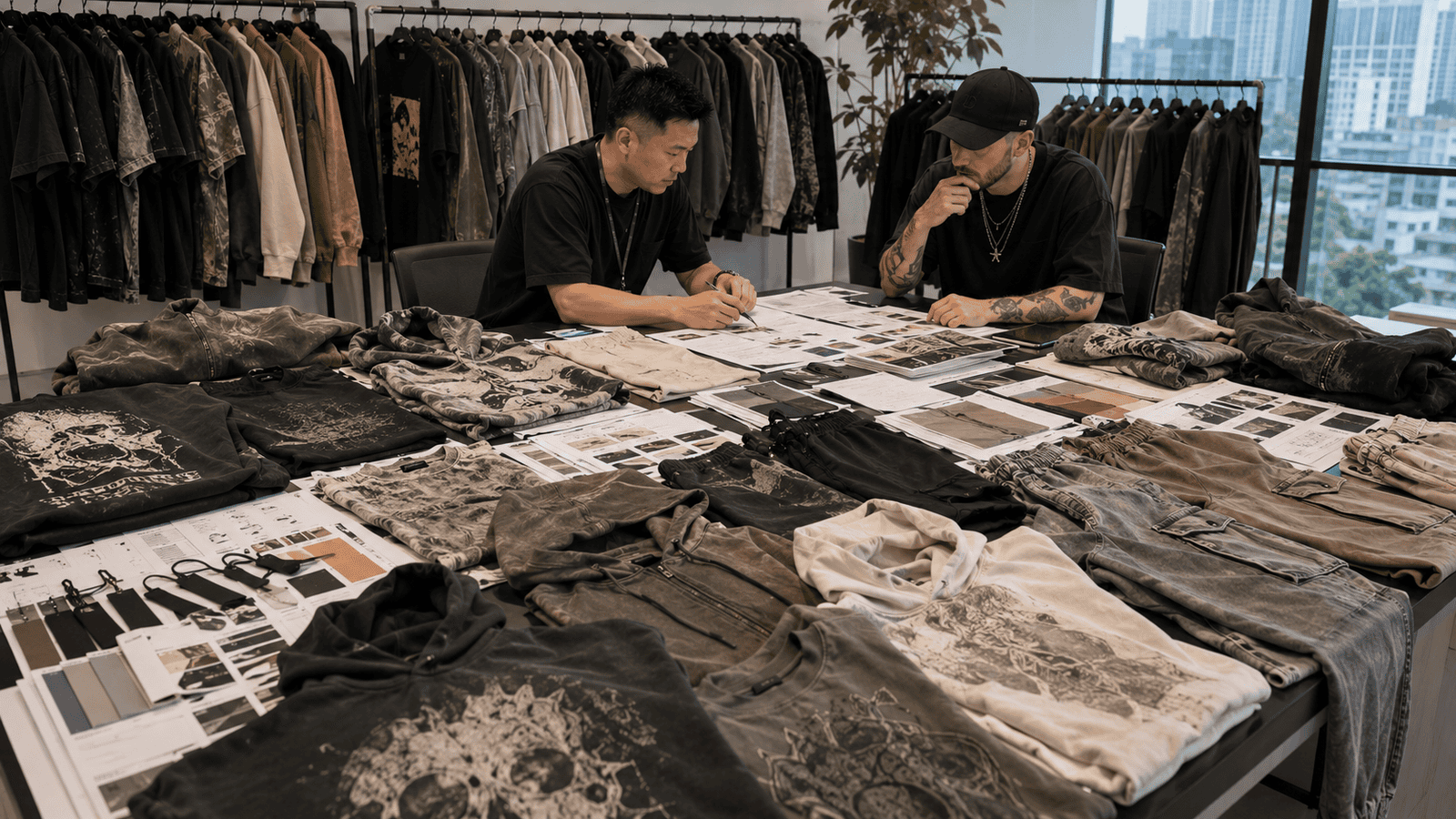
How Can You Compare Multiple Streetwear Manufacturers Effectively?
What Should Be Included in Your Comparison?
Compare manufacturers based on:
- Fabric quality
- Sampling quality
- Graphic capabilities
- MOQ
- Lead times
- Communication
Supplier Comparison Table
| Criteria | Supplier A | Supplier B | Supplier C |
|---|---|---|---|
| Fabric Quality | ★★★★★ | ★★★★☆ | ★★★☆☆ |
| Printing Capability | ★★★★★ | ★★★★☆ | ★★★☆☆ |
| MOQ Flexibility | ★★★★☆ | ★★★★★ | ★★★☆☆ |
| Communication | ★★★★★ | ★★★★☆ | ★★★☆☆ |
| QC System | ★★★★★ | ★★★★☆ | ★★★☆☆ |
Final Recommendation
The best streetwear t-shirts manufacturer in China is not necessarily the cheapest supplier. The ideal partner combines premium fabric sourcing, fit development expertise, graphic printing capabilities, strong communication, quality control systems, and long-term scalability.
Explore professional manufacturing solutions through Ohsure Apparel, discover complete Streetwear Product Manufacturing Services, or work with a trusted Custom Streetwear Manufacturer to develop your next collection.
Frequently Asked Questions (FAQ)
What is the best streetwear t-shirt fabric?
Most premium streetwear brands prefer 220–300 GSM combed cotton or heavyweight cotton fabrics.
What printing method is best for streetwear?
Screen printing, puff printing, embroidery, and high-density printing are among the most popular options.
What MOQ should startup brands look for?
Most startup brands benefit from MOQs between 100 and 300 pieces.
Why is sampling important?
Sampling helps verify fit, fabric, graphics, and construction before committing to bulk production.
How do I know if a manufacturer is reliable?
Review samples, evaluate communication, inspect quality control processes, and verify previous production experience.