
China remains one of the world's leading destinations for streetwear apparel manufacturing. For brands developing vintage t-shirts, finding a reliable manufacturing partner is one of the most important decisions affecting product quality, brand reputation, delivery timelines, and long-term business growth.
However, not all factories offer the same level of expertise in vintage wash development, garment dyeing, heavyweight fabrics, and private label services.
In this guide, we'll explain how successful streetwear brands evaluate and select reliable vintage t shirt manufacturers in China.
Whether you're launching your first collection or scaling an established label, partnering with an experienced Custom Streetwear Manufacturer can help reduce production risks and improve overall product quality.
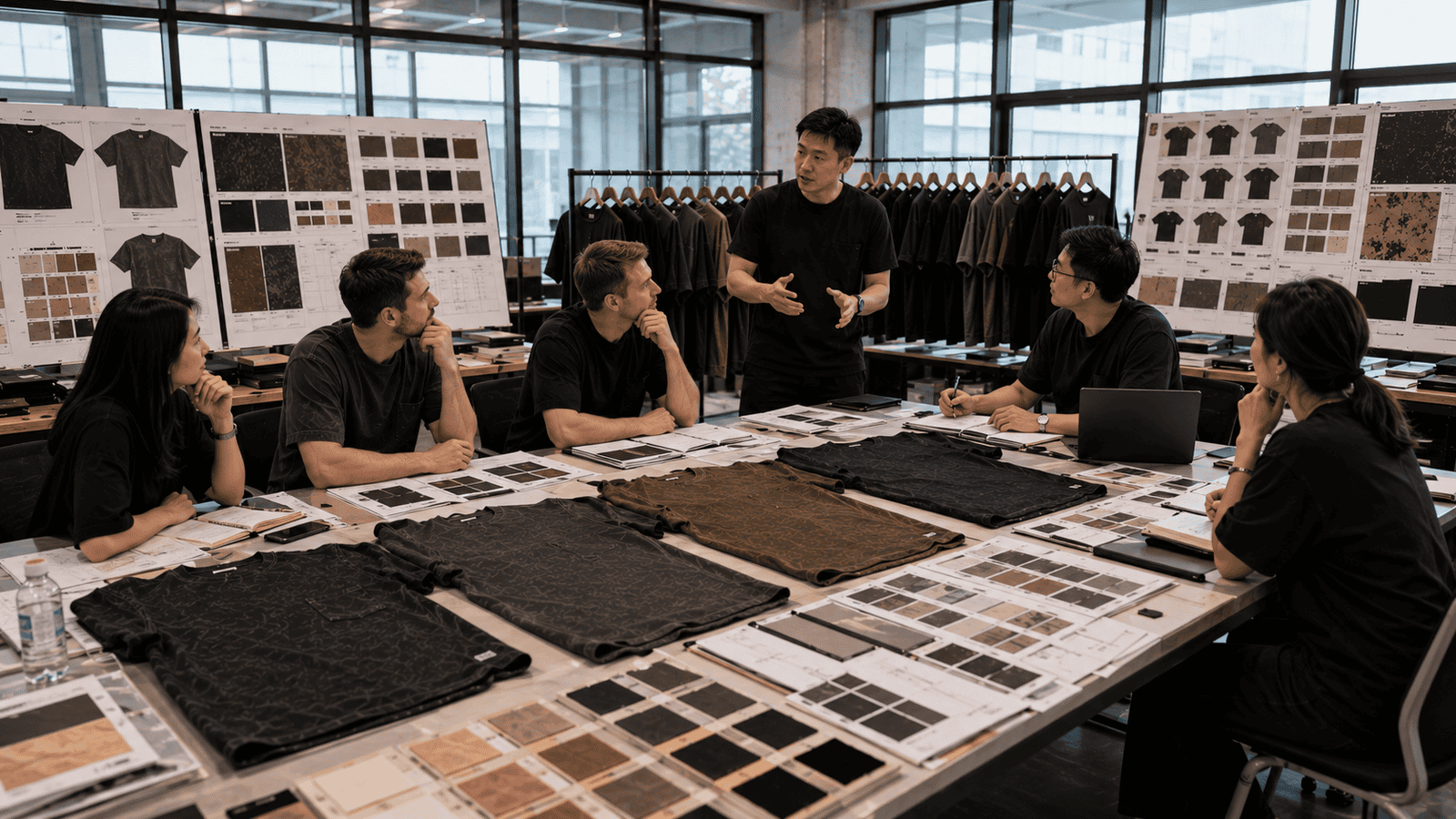
What Makes China a Popular Destination for Vintage Streetwear Manufacturing?
Why Do Streetwear Brands Source from China?
China offers:
- Complete textile supply chains
- Experienced garment factories
- Advanced washing facilities
- Competitive production costs
- Scalable manufacturing capacity
What Streetwear Capabilities Are Commonly Available?
Leading manufacturers often provide:
- Garment dyeing
- Vintage washing
- Acid washing
- Puff printing
- Embroidery
- Private label branding
How Does China Compare to Other Regions?
| Factor | China | Other Regions |
|---|---|---|
| Supply Chain Strength | Excellent | Moderate |
| Fabric Availability | Excellent | Moderate |
| Wash Technology | Excellent | Varies |
| Production Capacity | High | Medium |
| Cost Efficiency | High | Lower |
Where Do Streetwear Brands Search for Vintage T-Shirt Manufacturers?
What Are the Most Common Sourcing Channels?
Brands typically find suppliers through:
- Google Search
- Trade Shows
- Industry Referrals
- Alibaba
- Manufacturing Directories
Why Is Google Search Important?
Google helps brands identify manufacturers with:
- Professional websites
- Detailed product pages
- Manufacturing expertise
- Industry specialization
What Should Brands Look for on a Website?
Key indicators include:
- Product categories
- Factory information
- OEM services
- Case studies
- Manufacturing processes
Explore professional OEM Services before contacting suppliers.
How Can Brands Verify Whether a Manufacturer Specializes in Streetwear?
Why Is Streetwear Experience Important?
Streetwear manufacturing requires expertise in:
- Oversized fits
- Heavyweight cotton
- Garment dyeing
- Vintage wash development
- Premium printing techniques
What Products Should the Factory Produce?
Reliable suppliers often manufacture:
- Vintage T-Shirts
- Hoodies
- Sweatshirts
- Jackets
- Pants
- Shorts
What Questions Should Brands Ask?
| Evaluation Question | Why It Matters |
|---|---|
| Do you offer vintage washes? | Technical capability |
| Can you develop custom fabrics? | Product flexibility |
| Do you have an in-house sample room? | Faster development |
| What is your MOQ? | Project suitability |
Many brands begin by reviewing a supplier's Streetwear Product Collection.
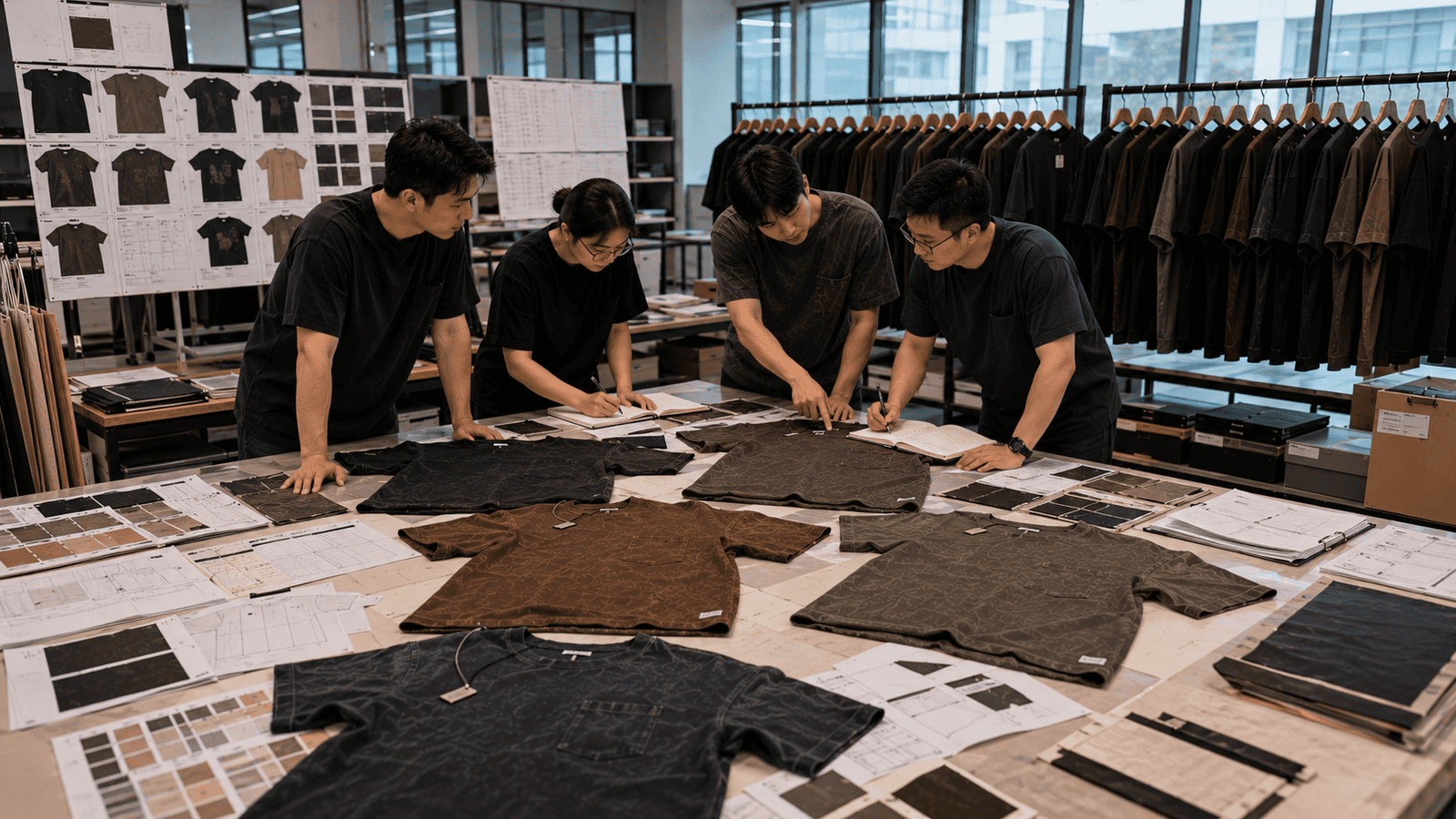
How Important Are Fabric and Wash Development Capabilities?
Why Do Fabric Capabilities Matter?
Fabric quality affects:
- Comfort
- Durability
- Wash performance
- Printing results
Which Fabrics Are Most Common?
Manufacturers frequently use:
- Combed Cotton
- Ring-Spun Cotton
- Organic Cotton
- Heavyweight Cotton
What Wash Effects Should Be Available?
Common options include:
| Wash Type | Popularity |
|---|---|
| Vintage Wash | Very High |
| Garment Dye | Very High |
| Pigment Wash | High |
| Acid Wash | High |
| Stone Wash | Medium |
Reliable factories often work closely with brands to develop custom fabrics through a dedicated Custom T-Shirts Manufacturer program.
Why Is an In-House Sample Room So Important?
What Happens During Sampling?
The sample stage typically includes:
- Pattern making
- Fabric sourcing
- Wash development
- Print testing
- Fit adjustments
How Does an In-House Team Improve Results?
Benefits include:
- Faster communication
- Better quality control
- Shorter lead times
What Sample Lead Time Is Reasonable?
| Development Stage | Timeline |
|---|---|
| Fabric Sourcing | 2-4 Days |
| Pattern Development | 1-2 Days |
| Sample Production | 7-10 Days |
| Revisions | 3-5 Days |
How Can Brands Evaluate Quality Control Systems?
Why Is Quality Control Critical?
Vintage garments involve multiple production variables.
Manufacturers must control:
- Fabric consistency
- Wash effects
- Printing quality
- Measurement accuracy
What QC Stages Should Exist?
Professional factories typically offer:
- Fabric Inspection
- In-Line Inspection
- Final Inspection
- Packing Inspection
What QC Standards Should Be Requested?
| QC Area | Verification Method |
|---|---|
| Fabric Weight | GSM Testing |
| Shrinkage | Wash Testing |
| Print Durability | Adhesion Testing |
| Color Consistency | Batch Comparison |
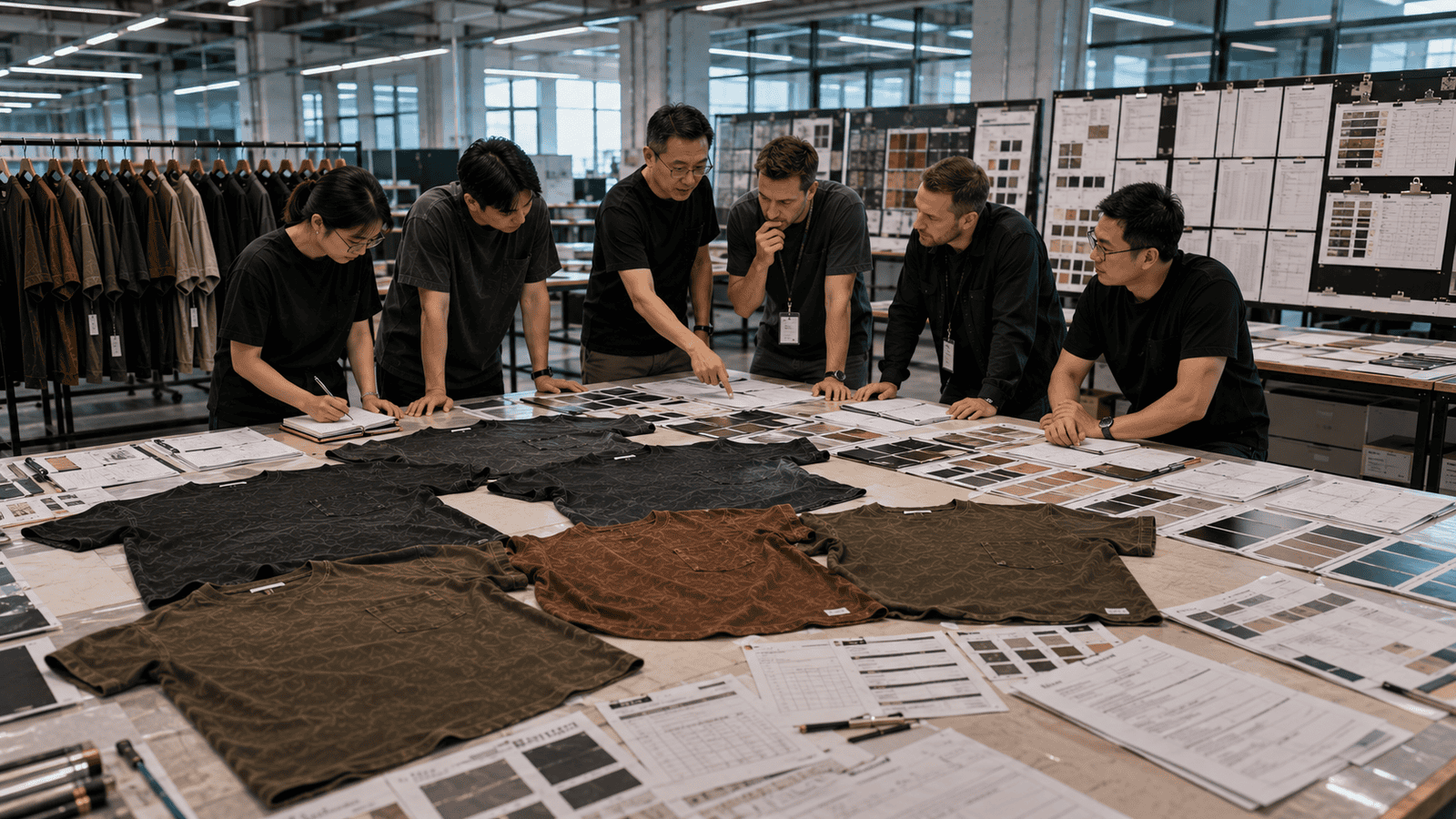
How Can Brands Verify Communication and Project Management?
Why Is Communication Important?
Poor communication often leads to:
- Sampling mistakes
- Production delays
- Cost increases
What Should Brands Expect?
Reliable manufacturers typically provide:
- Dedicated merchandisers
- Fast responses
- Production updates
- Transparent reporting
What Communication Standards Matter?
| Service Area | Expected Standard |
|---|---|
| Email Response | Within 24 Hours |
| Sample Updates | Weekly |
| Production Updates | Scheduled |
| Problem Resolution | Immediate |
What Certifications and Factory Information Should Brands Review?
What Factory Information Should Be Available?
Brands should verify:
- Factory size
- Workforce
- Production capacity
- Years of experience
What Certifications May Be Helpful?
Examples include:
- BSCI
- ISO
- Product testing reports
Why Is Transparency Important?
Transparency demonstrates:
- Professionalism
- Reliability
- Production consistency
What Red Flags Should Streetwear Brands Avoid?
What Are Common Warning Signs?
Potential concerns include:
- Poor communication
- No sample room
- Limited product specialization
- Inconsistent sample quality
Why Is Pricing Alone a Poor Decision Factor?
Extremely low prices often indicate:
- Lower quality materials
- Inexperienced production teams
- Reduced quality control
How Can Brands Reduce Risk?
| Risk Reduction Method | Benefit |
|---|---|
| Order Samples First | Product Verification |
| Review Factory Cases | Capability Assessment |
| Verify QC Process | Quality Assurance |
| Start with Smaller Orders | Lower Risk |
Can One Manufacturer Support a Complete Streetwear Collection?
What Additional Products Should Be Available?
Strong manufacturing partners often offer:
- Streetwear Hoodies
- Streetwear Sweatshirts
- Streetwear Jackets
- Streetwear Pants
- Streetwear Shorts
- Streetwear Sets
- Streetwear Tank Tops
- Streetwear Denim Apparel
Why Is One Supplier Better Than Multiple Suppliers?
Benefits include:
- Consistent sizing
- Unified quality standards
- Faster development
- Easier logistics management
How Can Brands Build Long-Term Relationships with Reliable Manufacturers?
Why Are Long-Term Partnerships Valuable?
Strong partnerships often result in:
- Better pricing
- Priority scheduling
- Faster product development
- Improved communication
What Should Brands Share with Their Manufacturer?
Helpful information includes:
- Seasonal plans
- Product roadmaps
- Growth expectations
What Creates a Successful Partnership?
Successful relationships are built on:
- Transparency
- Consistency
- Communication
- Mutual growth
Learn more about professional manufacturing solutions at Ohsure Apparel.
Conclusion
Finding a reliable vintage t shirt manufacturer in China requires more than comparing prices. Streetwear brands should evaluate fabric expertise, wash development capabilities, sampling systems, quality control procedures, communication standards, and overall manufacturing experience.
By carefully assessing these factors, brands can identify trusted manufacturing partners capable of delivering premium vintage streetwear products while supporting long-term business growth.