
Heavyweight streetwear t-shirts have become one of the most important products in modern urban fashion.
From luxury streetwear labels to independent underground brands, heavyweight oversized t-shirts are now a key part of premium streetwear collections in 2026.
But building a successful heavyweight streetwear collection requires more than simply choosing thick fabric.
Urban fashion brands need:
- Professional oversized fit development
- Heavyweight fabric sourcing
- Premium printing techniques
- Vintage washing capability
- Reliable OEM bulk production
This guide explains how heavyweight private label streetwear t shirts manufacturers help urban fashion brands develop premium products from concept to bulk production.
What Makes Heavyweight Streetwear T Shirts Different From Regular T Shirts?
Why Are Heavyweight T Shirts Popular in Urban Fashion?
Heavyweight streetwear t-shirts create:
- Better oversized structure
- Premium drape
- Luxury hand feel
- Stronger streetwear silhouette
Modern urban fashion brands often prefer:
- Boxy fits
- Drop shoulders
- Thick heavyweight fabrics
- Vintage washed textures
These elements help create a more premium fashion identity.
What GSM Is Considered Heavyweight?
Most heavyweight streetwear t-shirts use:
- 240 GSM
- 260 GSM
- 280 GSM
- 300+ GSM cotton
Higher GSM fabrics create:
- More structure
- Better durability
- Improved shape retention
Heavyweight vs Regular T-Shirt Table
| Feature | Heavyweight Streetwear T Shirt | Regular T Shirt |
|---|---|---|
| GSM | 240–320+ GSM | 160–220 GSM |
| Fit | Oversized & Boxy | Standard |
| Fabric Feel | Thick & Structured | Lightweight |
| Fashion Positioning | Premium Streetwear | Casual Basic |
| Durability | Higher | Standard |
Many brands work with experienced Custom Streetwear Manufacturer partners to develop custom heavyweight collections.
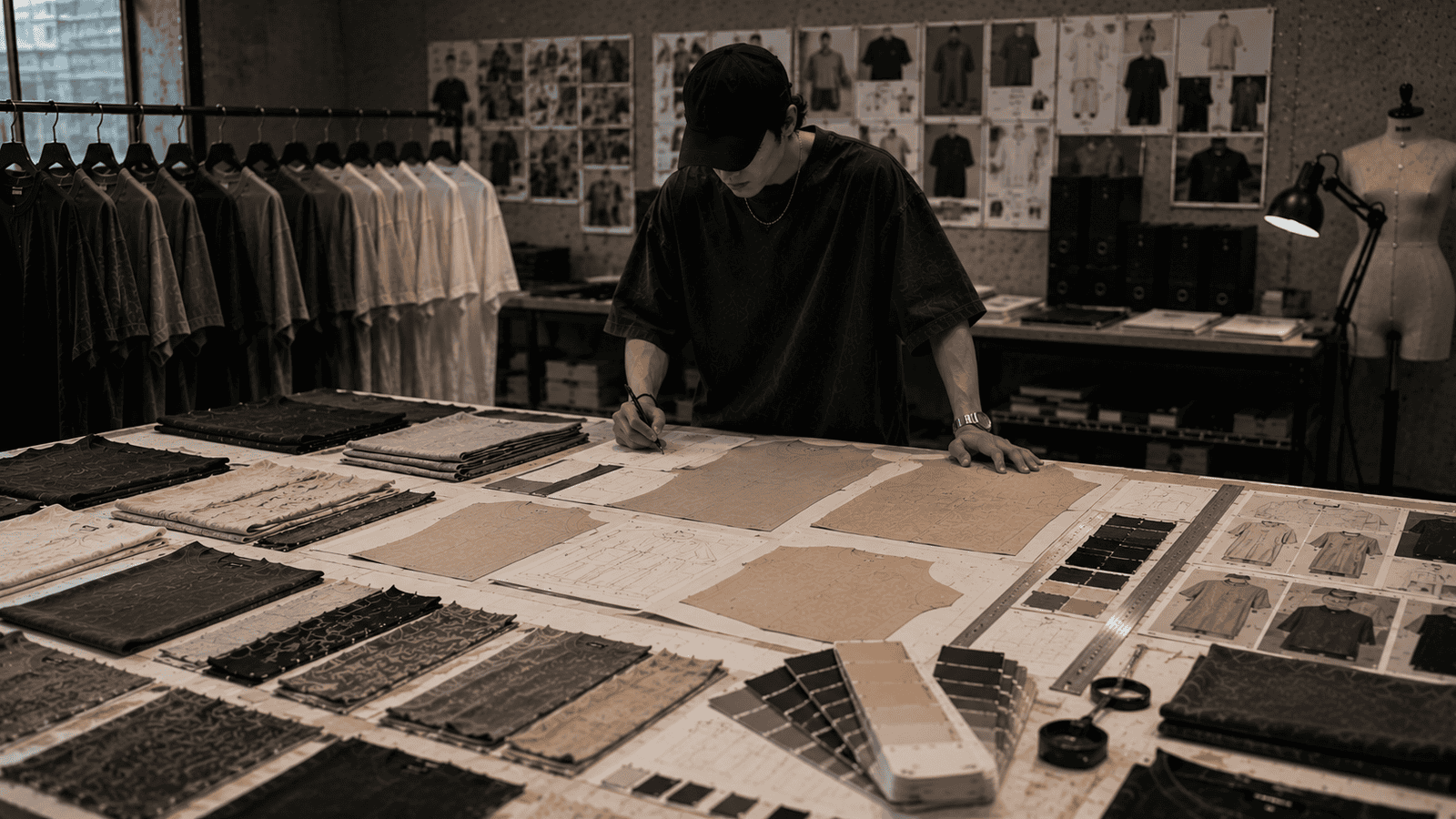
Recommended Image: Professional heavyweight oversized streetwear t-shirt development process with premium cotton fabric swatches, Pantone cards, oversized fit patterns, and garment wash references inside modern OEM apparel studio.
Why Is Fabric Development Important for Heavyweight Streetwear?
What Fabrics Are Commonly Used in Heavyweight Streetwear?
Professional OEM manufacturers commonly recommend:
- Heavyweight cotton jersey
- Combed cotton
- French Terry
- Garment dyed cotton
- Cotton-poly blends
Fabric selection directly affects:
- Drape
- Texture
- Shrinkage
- Durability
- Print quality
Why Does Fabric Quality Matter for Urban Fashion Brands?
Premium urban fashion brands focus heavily on:
- Fabric hand feel
- Vintage appearance
- Weight consistency
- Long-term durability
Low-quality fabric often causes:
- Poor drape
- Weak oversized structure
- Shape distortion after washing
Heavyweight Fabric Comparison Table
| Fabric Type | Typical GSM | Features |
|---|---|---|
| Cotton Jersey | 240–320 GSM | Premium oversized structure |
| French Terry | 300–450 GSM | Thick luxury texture |
| Garment Dyed Cotton | 260–320 GSM | Vintage streetwear look |
| Cotton Blend | 220–300 GSM | Better durability |
Many urban fashion brands also expand into:
How Do Manufacturers Develop Oversized Heavyweight Fits?
Why Is Oversized Fit Development So Technical?
Heavyweight fabrics behave differently than lightweight fabrics.
Factories must carefully engineer:
- Shoulder width
- Sleeve balance
- Body proportions
- Neck structure
- Fabric drape
Without proper fit development, heavyweight garments can look:
- Too stiff
- Too bulky
- Poorly balanced
What Happens During Pattern Development?
Professional streetwear factories usually perform:
- Paper pattern drafting
- Digital grading
- Fit testing
- Sample revisions
- Shrinkage adjustments
What Should Brands Check During Sampling?
Urban fashion brands should review:
- Oversized silhouette
- Sleeve proportions
- Neck opening
- Fabric drape
- Shrinkage after wash
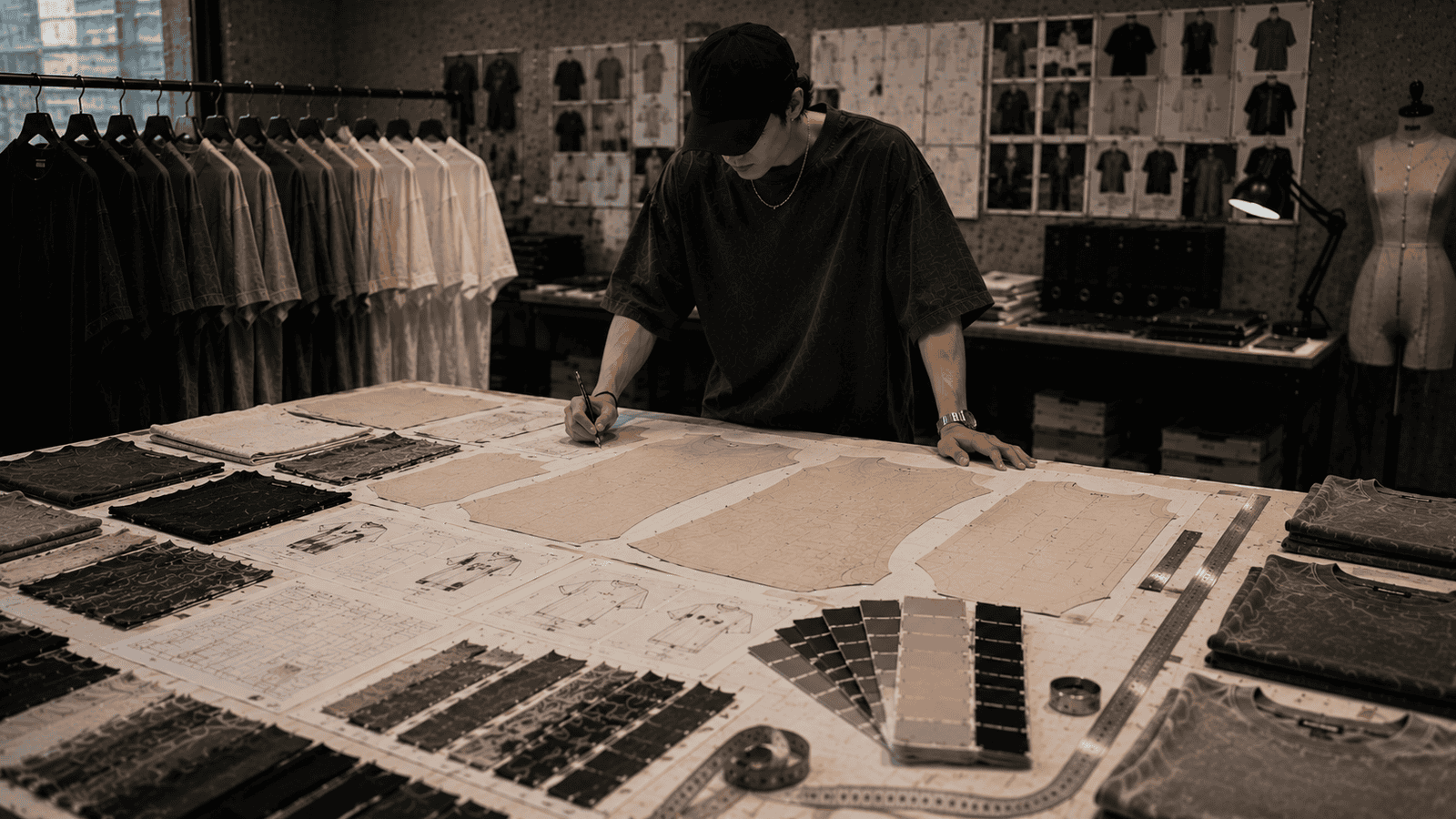
Recommended Image: Oversized heavyweight streetwear t-shirt fit development process with boxy fit paper patterns, grading rulers, drop shoulder measurements, heavyweight cotton fabric swatches, and fashion designer adjusting oversized garment proportions.
What Printing and Washing Techniques Are Best for Heavyweight Streetwear?
Why Are Printing Techniques Important in Urban Fashion?
Streetwear graphics are a major part of brand identity.
Professional OEM factories usually support:
- Puff print
- Screen printing
- DTG printing
- Silicone heat transfer
- Embroidery
Why Are Washing Techniques So Popular?
Urban fashion brands often prefer:
- Acid wash
- Vintage wash
- Enzyme wash
- Stone wash
- Garment dye
These techniques create:
- Vintage aesthetics
- Premium texture
- Faded color effects
- Softer hand feel
Printing & Washing Table
| Technique | Effect |
|---|---|
| Puff Print | Raised premium texture |
| DTG Printing | Detailed artwork |
| Acid Wash | Vintage fading |
| Garment Dye | Rich color tone |
| Enzyme Wash | Softer fabric texture |
Many collections also include:
How Does Bulk Production Work for Heavyweight Streetwear T Shirts?
What Happens Before Bulk Production Starts?
Professional OEM factories confirm:
- Final sample approval
- Fabric approval
- Printing approval
- Measurement specifications
- Packaging requirements
This helps reduce production errors.
What Are the Main Production Steps?
Heavyweight streetwear production usually includes:
- Fabric cutting
- Sewing
- Printing
- Washing
- Ironing
- Packaging
- Final QC inspection
How Long Does Production Usually Take?
Average lead times:
- Sample development: 7–14 days
- Bulk production: 25–35 days
Production timing depends on:
- Order quantity
- Fabric availability
- Washing complexity
- Printing requirements
Factories offering professional OEM Services usually maintain more stable production timelines.
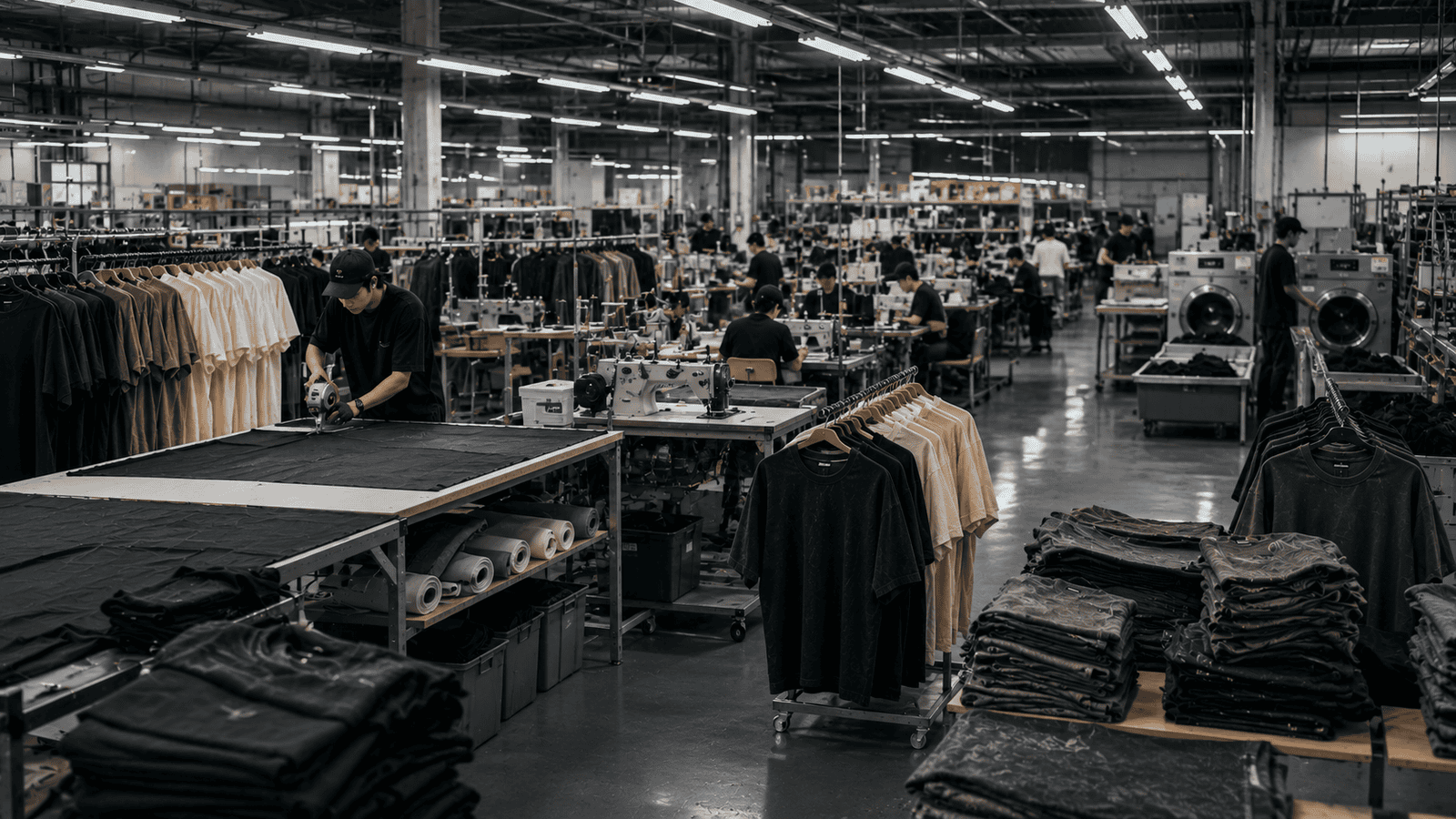
Recommended Image: Modern heavyweight streetwear t-shirt bulk production process inside professional OEM apparel factory with oversized heavyweight garments, industrial sewing machines, garment washing area, fabric cutting tables, and organized quality control workflow.
How Can Urban Fashion Brands Choose the Right Manufacturer?
Why Is Streetwear Experience Important?
Not all apparel factories understand:
- Oversized fit engineering
- Heavyweight fabric behavior
- Vintage washing
- Premium streetwear construction
Factories without streetwear experience often produce:
- Poor oversized balance
- Weak garment structure
- Inconsistent washing results
What Questions Should Brands Ask?
Important questions include:
- Do you specialize in heavyweight streetwear?
- Can you develop custom oversized fits?
- What printing techniques do you offer?
- How do you control quality?
- What is your MOQ?
Manufacturer Evaluation Table
| Evaluation Area | Why It Matters |
|---|---|
| Streetwear Experience | Better oversized development |
| Fabric Capability | Higher product quality |
| QC System | More consistency |
| Communication | Faster revisions |
| Production Capacity | Long-term scalability |
Many experienced manufacturers also support:
Why Do Urban Fashion Brands Prefer Private Label Manufacturing?
What Are the Advantages of Private Label Production?
Private label manufacturing allows brands to:
- Build unique identity
- Improve product quality
- Increase perceived value
- Control branding
- Scale production
Why Is OEM Manufacturing Better Long-Term?
OEM manufacturing supports:
- Better customization
- Stable quality
- Higher margins
- Long-term growth
What Brands Benefit Most?
Heavyweight private label manufacturing is ideal for:
- Urban fashion brands
- Luxury streetwear labels
- Independent fashion designers
- Startup streetwear brands
Conclusion
Heavyweight private label streetwear t shirts manufacturing is one of the most important parts of modern urban fashion development.
The right OEM manufacturing partner helps brands create:
- Premium oversized silhouettes
- Heavyweight fabric quality
- Vintage washed aesthetics
- Professional printing
- Reliable bulk production
For urban fashion brands focused on:
- Premium positioning
- Strong brand identity
- Better product quality
- Long-term scalability
Working with an experienced OEM streetwear manufacturer is essential in 2026.
You can explore complete manufacturing solutions through: