
Many fashion brands see the final product but don’t fully understand what happens behind the scenes during streetwear apparel production.
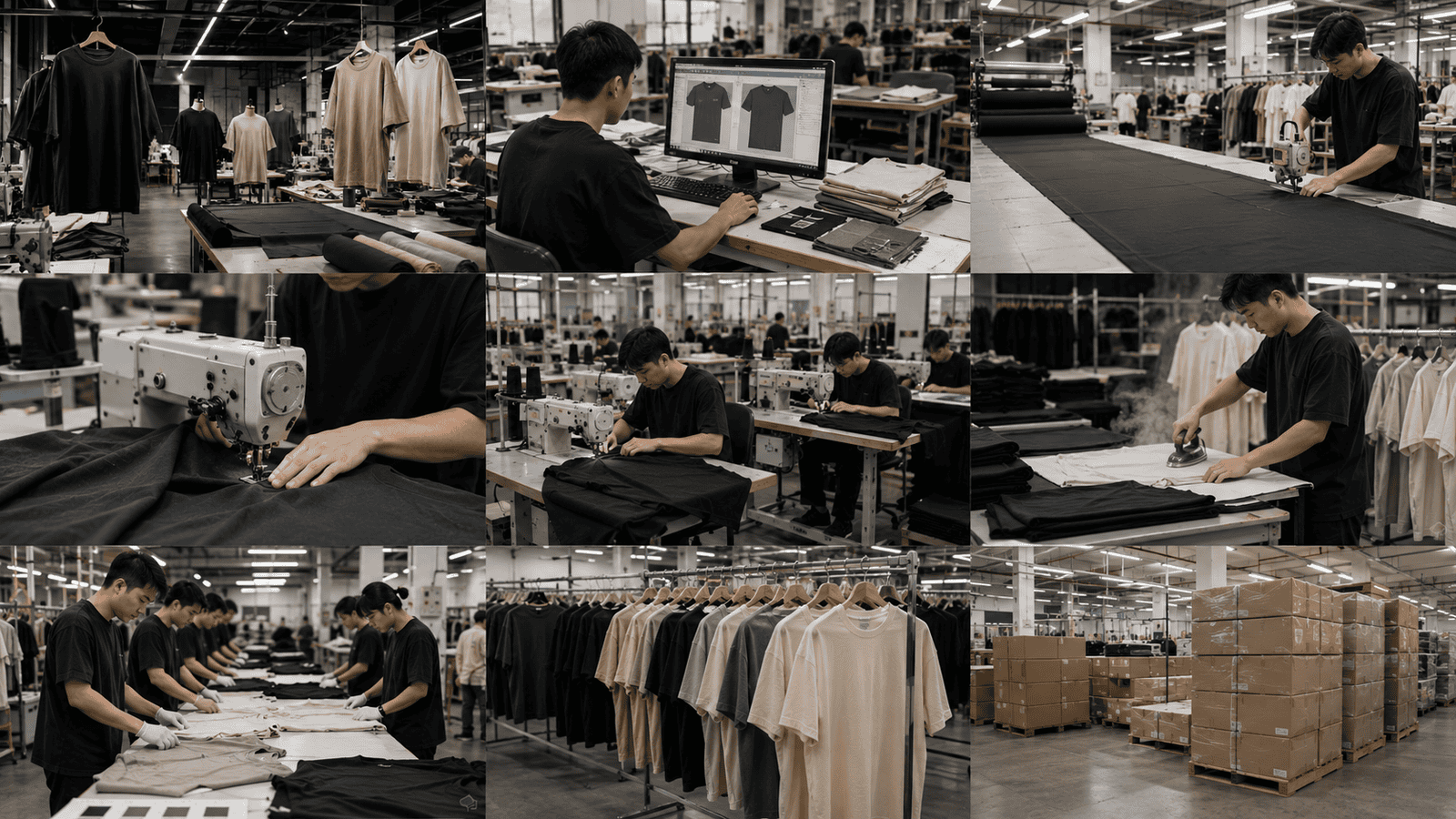
From tech pack review and fabric sourcing to sampling, bulk manufacturing, printing, washing, and quality control, professional OEM streetwear factories follow a detailed process to ensure consistency and production stability.
In this guide, we’ll explain how a custom streetwear T-shirts manufacturer actually works — from the first sample to final bulk production in 2026.
What Happens Before Sampling Starts?
Brands Need Clear Product Information
Before development begins, brands usually provide:
- Tech packs
- Design sketches
- Size charts
- Logo files
- Fabric references
Why Preparation Is Important
Clear product details help reduce:
- Production mistakes
- Sampling delays
- Communication problems
What Manufacturers Usually Request
Professional OEM factories often ask for:
- Print placement details
- Label requirements
- Fabric expectations
- Wash references
Learn more here:
👉 Custom Streetwear Manufacturer
What Is the Purpose of Sampling?
Sampling Helps Verify Product Accuracy
Samples help brands evaluate:
- Fit
- Fabric quality
- Printing
- Construction details
Why Sampling Is Critical
Skipping proper sampling can lead to:
- Bulk production mistakes
- Incorrect sizing
- Graphic problems
- Product inconsistency
Typical Sampling Workflow
| Sampling Stage | Timeline |
|---|---|
| Fabric Confirmation | 2–5 days |
| Pattern Making | 3–7 days |
| Sample Production | 7–14 days |
| Sample Revision | 3–7 days |
Why Multiple Revisions May Be Needed
Streetwear products often require:
- Fit adjustments
- Print refinement
- Wash testing
- Fabric optimization
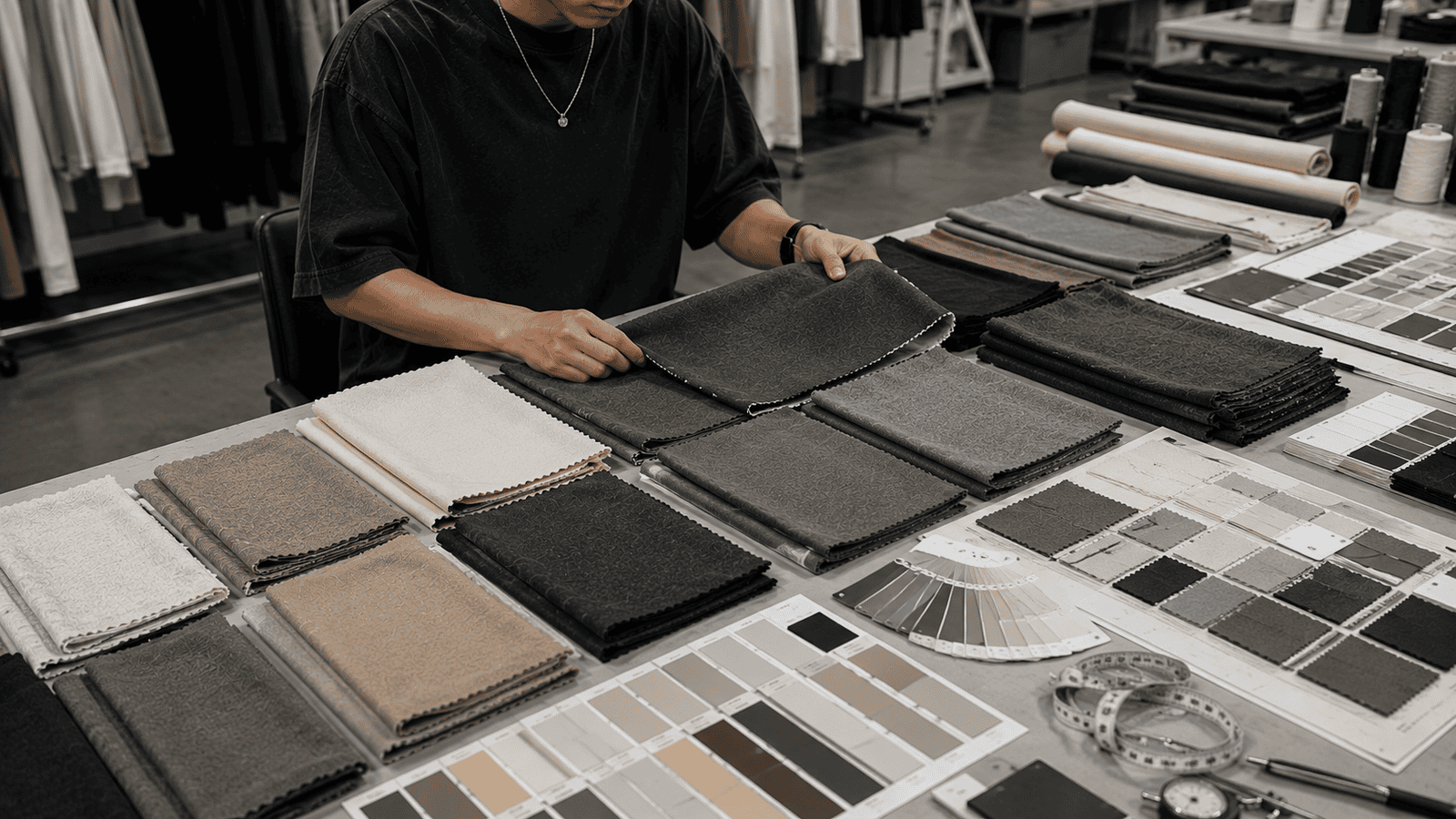
How Important Is Fabric Sourcing?
Fabric Defines Product Positioning
Fabric directly affects:
- Comfort
- Structure
- Durability
- Premium feel
Popular Streetwear T-Shirt Fabrics
Professional manufacturers often offer:
- Heavyweight cotton jersey
- Washed cotton
- Garment-dyed fabrics
- Cotton/poly blends
Fabric Weight Comparison Table
| GSM Range | Fabric Feel | Best For |
|---|---|---|
| 180–220 GSM | Lightweight | Basic streetwear |
| 240–280 GSM | Midweight | Premium everyday tees |
| 300–350 GSM | Heavyweight | Luxury oversized tees |
Why Heavyweight Fabrics Are Popular
Heavyweight fabrics create:
- Better silhouette
- Stronger structure
- Premium streetwear appearance
How Does Pattern Making Work?
Oversized Fits Require Professional Development
Streetwear garments often require:
- Drop shoulders
- Boxy silhouettes
- Relaxed proportions
Why Pattern Accuracy Matters
Poor pattern making can cause:
- Awkward proportions
- Poor drape
- Inconsistent sizing
Professional Pattern Development Should Include
- Custom patterns
- US/EU size grading
- Multiple fit revisions
- Wear testing
Oversized Fit Comparison Table
| Fit Type | Key Features |
|---|---|
| Standard Fit | Regular proportions |
| Relaxed Fit | Slightly loose silhouette |
| Oversized Fit | Wider body & dropped shoulders |
| Boxy Fit | Shorter length & wider width |
How Does Bulk Production Begin?
Bulk Production Starts After Sample Approval
Once samples are approved, factories begin:
- Fabric ordering
- Production scheduling
- Cutting preparation
- Printing setup
Bulk Manufacturing Includes Multiple Stages
Professional production usually involves:
- Fabric inspection
- Cutting
- Sewing
- Printing
- Washing
- Finishing
- Packaging
Bulk Production Workflow Table
| Production Stage | Purpose |
|---|---|
| Fabric Ordering | Secure production materials |
| Cutting | Prepare garment panels |
| Sewing | Construct garments |
| Printing & Branding | Apply graphics & labels |
| Washing | Create garment effects |
| Finishing | Final garment preparation |
| Packing | Packaging & shipment prep |
What Printing Techniques Are Common in Streetwear?
Printing Defines Brand Identity
Streetwear brands often rely heavily on:
- Graphic placement
- Texture effects
- Vintage finishing
Popular Printing Techniques
Reliable manufacturers should support:
- Screen printing
- Puff printing
- DTG printing
- Reflective printing
- Silicone printing
Printing Technique Comparison Table
| Printing Type | Best For |
|---|---|
| Screen Printing | Bold graphics |
| Puff Printing | Raised texture effect |
| DTG Printing | Detailed artwork |
| Silicone Printing | Premium logo finish |
| Reflective Printing | Technical streetwear |
Explore more here:
👉 OEM Services
How Important Is Quality Control During Bulk Production?
QC Directly Affects Brand Reputation
Poor quality products can cause:
- Returns
- Customer complaints
- Negative reviews
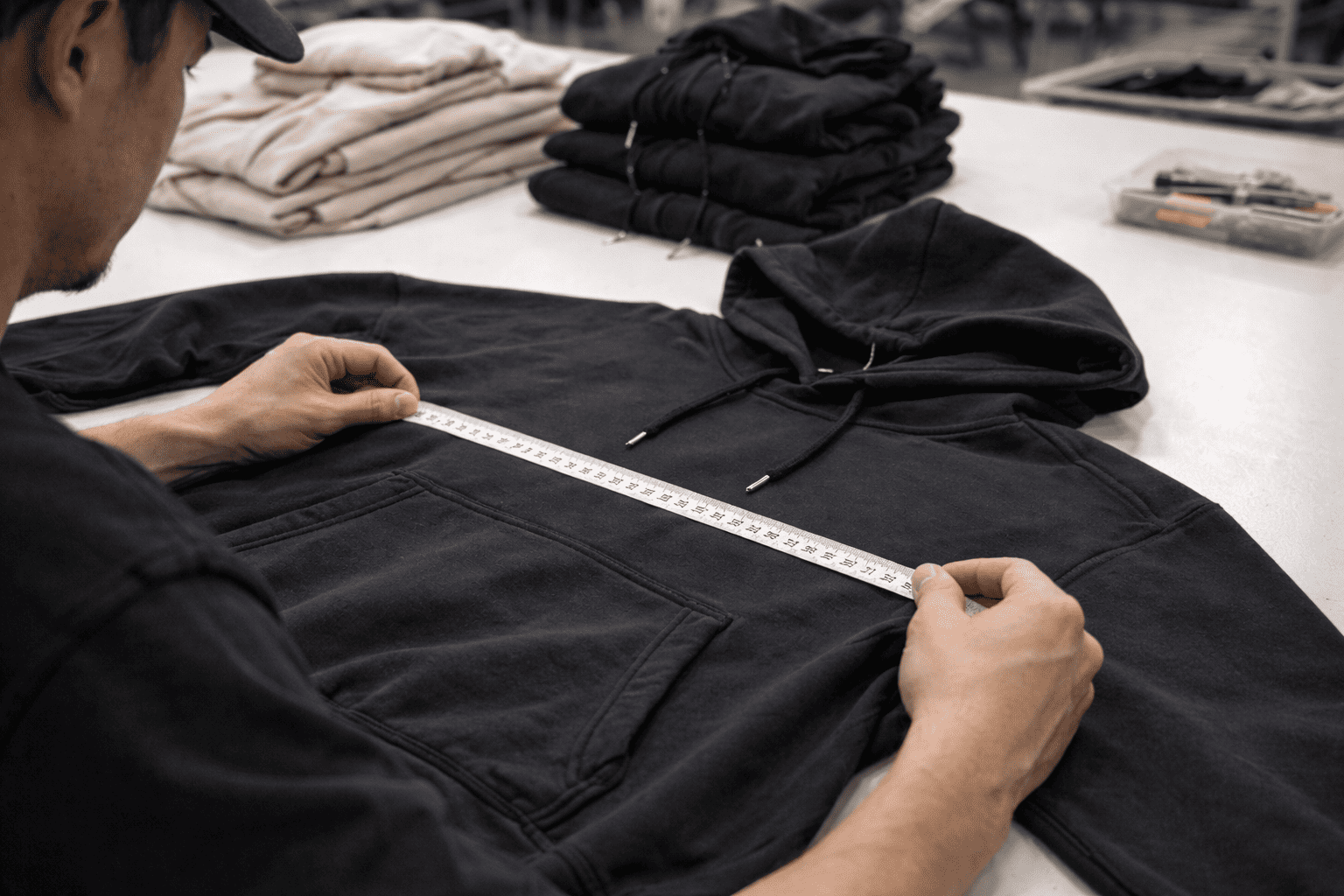
Professional QC Systems Should Include
- Fabric inspection
- Printing inspection
- In-line QC
- Final garment inspection
- Packaging inspection
QC Workflow Table
| QC Stage | Inspection Focus |
|---|---|
| Fabric Inspection | Fabric defects & consistency |
| Printing Inspection | Graphic accuracy |
| In-Line QC | Stitching & workmanship |
| Final QC | Measurements & finishing |
| Packing QC | Packaging & labels |
What Lead Times Should Brands Expect?
Typical Sample Timeline
Professional factories usually complete samples in:
- 7–14 days
Typical Bulk Production Timeline
Bulk production often takes:
- 20–35 days
What Affects Production Speed?
Lead times depend on:
- Fabric availability
- Printing complexity
- Wash treatments
- Order quantity
- Branding requirements
Production Timeline Table
| Production Stage | Timeline |
|---|---|
| Fabric Confirmation | 2–5 days |
| Pattern Making | 3–7 days |
| Sample Production | 7–14 days |
| Bulk Production | 20–35 days |
What Products Should Professional Manufacturers Offer?
Full Streetwear Product Categories
Reliable manufacturers should support complete collection development including:
- Custom T-Shirts
- Streetwear Tank Tops
- Streetwear Hoodies
- Streetwear Sweatshirts
- Streetwear Jackets
- Streetwear Pants
- Streetwear Shorts
- Streetwear Sets
- Streetwear Denim Apparel
Browse all categories here:
👉 Streetwear Products
Why Do Many Brands Choose Professional OEM Manufacturers?
Full Product Development Support
Professional OEM manufacturers support:
- Fabric sourcing
- Pattern making
- Sampling
- Bulk production
- Quality control
Strong Streetwear Manufacturing Expertise
Experienced manufacturers understand:
- Oversized silhouettes
- Heavyweight fabrics
- Premium printing
- Wash treatments
- Luxury branding execution
Better Long-Term Scalability
Reliable OEM factories help brands:
- Maintain product consistency
- Scale production
- Improve operational stability
Why Do Many Brands Choose Ohsure Apparel?
Professional Streetwear OEM Expertise
Ohsure Apparel supports global brands with premium OEM streetwear manufacturing and private label production.
Strong Product Development Support
Professional support includes:
- Fabric sourcing
- Pattern making
- Sample development
- Bulk manufacturing
- Quality control
Flexible MOQ for Growing Brands
Suitable for startup testing and scalable production.
Complete Streetwear Product Categories
Including:
- Oversized T-shirts
- Hoodies
- Sweatshirts
- Jackets
- Pants
- Denim collections
Conclusion: How Does a Professional Streetwear Manufacturer Actually Work?
Professional streetwear T-shirt manufacturers follow a complete production workflow that includes:
- Product development
- Fabric sourcing
- Pattern making
- Sampling
- Bulk manufacturing
- Printing
- Quality control
- Packaging
Before choosing a manufacturing partner, brands should compare:
- Product quality
- OEM capability
- Sampling support
- QC systems
- Communication speed
- Long-term reliability
The right OEM manufacturing partner can help brands reduce production risk, improve product consistency, and scale successfully.