
If you are creating a custom graphic streetwear t-shirt collection, choosing between DTG (Direct-to-Garment) printing and screen printing can significantly affect product quality, production cost, design flexibility, and brand profitability. DTG printing is ideal for small batches, complex artwork, and photo-quality designs, while screen printing remains the preferred option for large-volume production, vibrant colors, and long-lasting durability. Understanding the differences will help you select the right printing method for your streetwear brand.
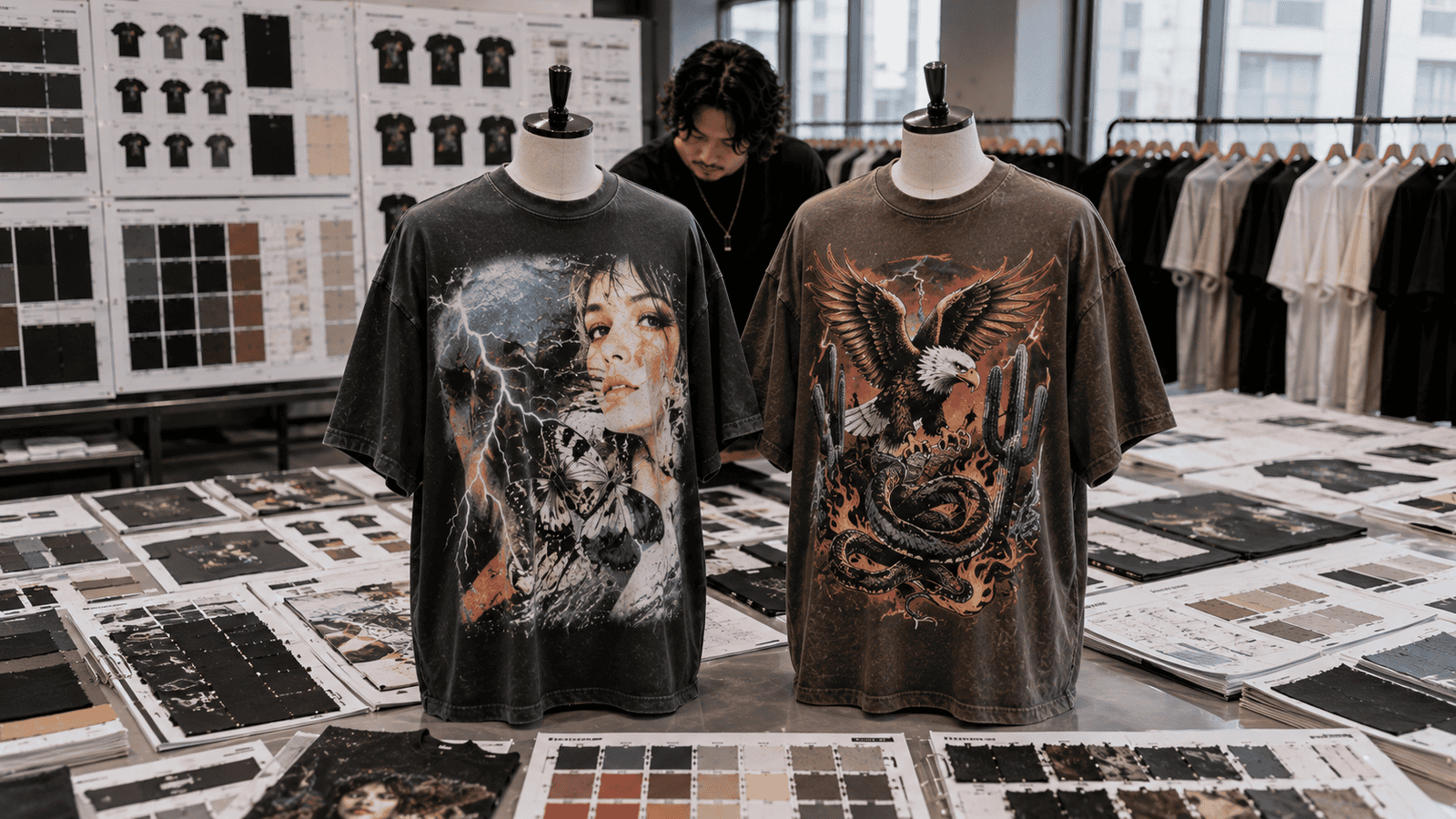
What Is DTG Printing and How Does It Work for Streetwear T Shirts?
How DTG Printing Works
DTG (Direct-to-Garment) printing uses specialized inkjet technology to print artwork directly onto fabric. The process is similar to printing on paper but uses textile-specific inks.
Why Streetwear Brands Use DTG Printing
- Excellent for highly detailed artwork
- Unlimited color capability
- Ideal for gradients and photo-realistic graphics
- Suitable for low MOQ production
Best DTG Applications
- Startup streetwear brands
- Artist merchandise
- Print-on-demand businesses
- Small collection testing
For brands looking to launch custom apparel with flexible production options, working with a professional Custom Streetwear Manufacturer can simplify the development process.
What Is Screen Printing and Why Is It Popular in Streetwear?
How Screen Printing Works
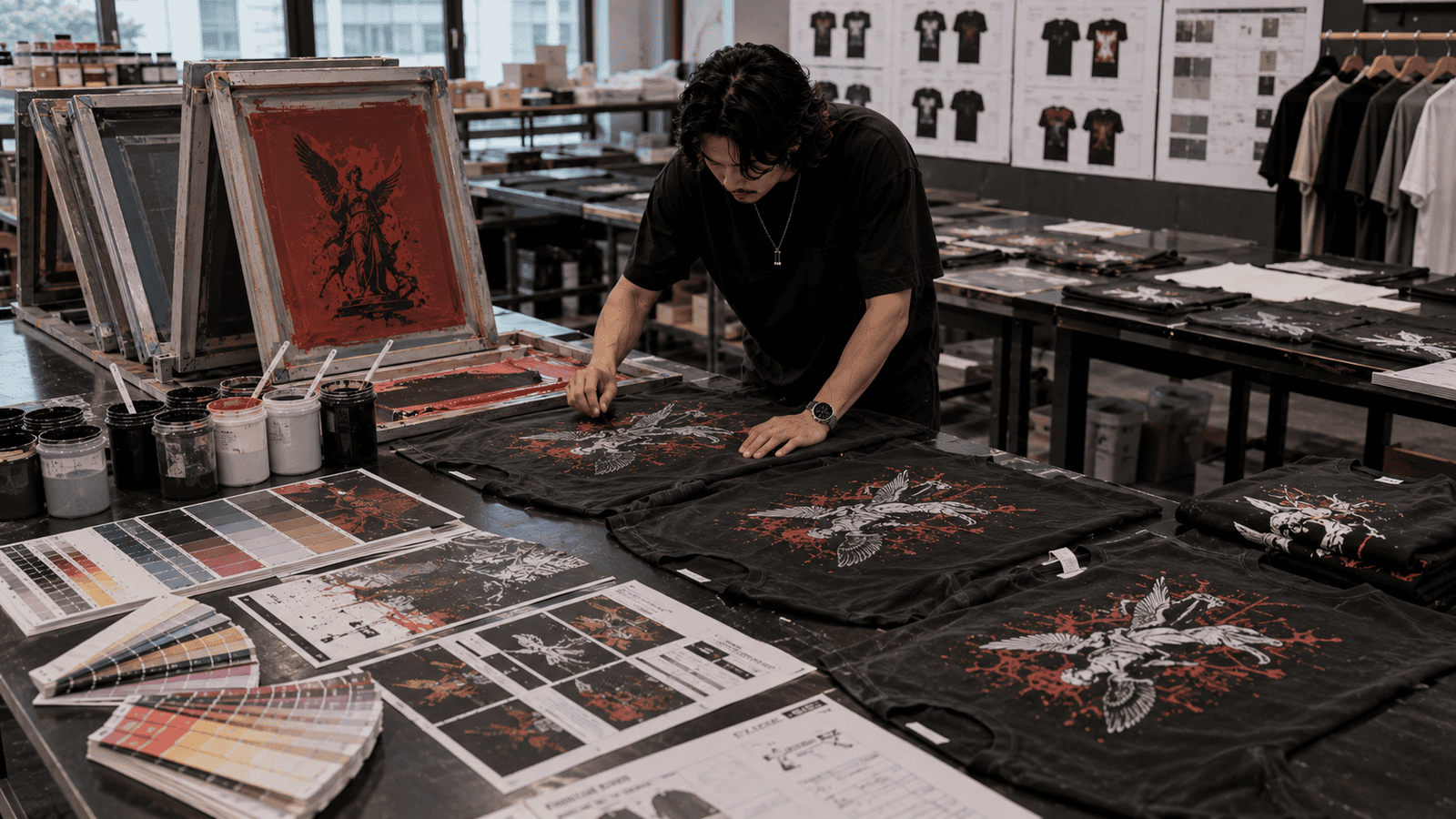
Screen printing transfers ink through mesh screens onto garments. Each color requires a separate screen.
Why Premium Streetwear Brands Prefer Screen Printing
- Thick ink deposits create bold graphics
- Excellent durability
- Vibrant solid colors
- Cost-effective for large production runs
Common Screen Printing Styles
- Plastisol printing
- Water-based printing
- Puff printing
- High-density printing
- Vintage distressed printing
Many premium brands producing collections through a Custom T Shirts Manufacturer rely heavily on screen printing for flagship products.
What Are the Main Differences Between DTG and Screen Printing?
Side-by-Side Comparison
| Feature | DTG Printing | Screen Printing |
|---|---|---|
| Setup Cost | Low | Higher |
| MOQ | Very Low | Better for Bulk |
| Color Complexity | Unlimited | Limited by Screens |
| Print Feel | Softer | Slightly Heavier |
| Durability | Good | Excellent |
| Production Speed | Slower | Faster for Bulk |
| Photo Quality | Excellent | Moderate |
| Large Orders | Less Efficient | Highly Efficient |
| Special Effects | Limited | Extensive |
Which Method Produces Better Graphic Detail?
DTG generally wins for:
- Photographs
- Detailed illustrations
- Complex color transitions
- Fine lines
Screen printing performs better for:
- Bold logos
- Large graphics
- Solid colors
- Vintage streetwear designs
Which Printing Method Is Better for Startup Streetwear Brands?
Advantages of DTG for Startups
Most startup brands initially face uncertainty regarding demand.
DTG offers:
- Lower upfront investment
- No screen setup fees
- Small batch flexibility
- Fast design testing
When Startups Should Choose Screen Printing
Screen printing becomes more economical when:
- Order quantities increase
- Designs are finalized
- Consistent repeat production is required
Many startup founders first test products and then scale through an experienced OEM Streetwear Manufacturing Partner.
Which Printing Method Produces Better Durability?
DTG Durability Performance
Modern DTG inks offer good wash resistance when properly cured.
Expected lifespan:
- 30-50 washes with proper care
Screen Printing Durability Performance
Screen printing remains the industry leader for durability.
Expected lifespan:
- 50-100+ washes
- Excellent color retention
- Better resistance to cracking
Durability Comparison Table
| Durability Factor | DTG | Screen Printing |
|---|---|---|
| Wash Resistance | Good | Excellent |
| Color Retention | Good | Excellent |
| Crack Resistance | Moderate | High |
| Long-Term Wear | Good | Excellent |
How Do DTG and Screen Printing Affect Streetwear Design Creativity?
DTG Design Advantages
Designers can create:
- Unlimited color graphics
- Photographic artwork
- Digital illustrations
- Complex gradients
Screen Printing Design Advantages
Screen printing excels in:
- Bold branding
- Large chest graphics
- Vintage effects
- Specialty ink techniques
Special Effects Available With Screen Printing
- Puff print
- High-density print
- Reflective print
- Metallic ink
- Glow-in-the-dark effects
These effects are commonly used on products such as Streetwear Hoodies, Streetwear Sweatshirts, and oversized graphic tees.
Which Printing Method Is More Cost Effective?
DTG Cost Structure
DTG costs remain relatively stable regardless of order quantity.
Best for:
- 1-50 pieces
- Design testing
- Limited editions
Screen Printing Cost Structure
Screen printing becomes increasingly affordable as quantities increase.
Best for:
- 100+ pieces
- Brand collections
- Wholesale orders
Cost Comparison Table
| Quantity | DTG Cost Efficiency | Screen Printing Cost Efficiency |
|---|---|---|
| 10 pcs | Excellent | Poor |
| 50 pcs | Good | Moderate |
| 100 pcs | Moderate | Good |
| 300 pcs | Poor | Excellent |
| 500+ pcs | Poor | Excellent |
Which Printing Method Works Best on Heavyweight Streetwear T Shirts?
DTG on Heavyweight Cotton
DTG performs well on:
- 100% cotton
- Combed cotton
- Ringspun cotton
Screen Printing on Heavyweight Fabrics
Screen printing excels on:
- 240 GSM cotton
- 260 GSM cotton
- 300 GSM heavyweight fabrics
- Vintage washed fabrics
Many premium collections also expand into products such as:
How Do Professional Streetwear Manufacturers Help Choose the Right Printing Method?
Evaluating Brand Positioning
Manufacturers analyze:
- Target market
- Retail pricing
- Order volume
- Graphic complexity
Matching Printing Techniques to Products
Different products may require different methods.
Examples:
| Product Type | Recommended Method |
|---|---|
| Graphic T Shirts | DTG or Screen Print |
| Vintage Tees | Screen Print |
| Oversized Tees | Screen Print |
| Hoodies | Screen Print |
| Tank Tops | DTG or Screen Print |
| Jackets | Specialty Printing |
Explore more production options through a professional Streetwear Product Development Team and specialized categories such as Streetwear Tank Tops and Streetwear Jackets.
Should You Choose DTG or Screen Printing for Your Streetwear Brand?
Choose DTG If:
- You need low MOQ production
- Your artwork contains many colors
- You want photo-quality graphics
- You are testing new designs
Choose Screen Printing If:
- You are producing 100+ pieces
- You need maximum durability
- You want specialty print effects
- You focus on premium streetwear branding
Final Recommendation
For most startup streetwear brands, DTG is an excellent way to validate designs with minimal risk. As demand grows, screen printing typically becomes the preferred solution due to lower bulk costs, stronger durability, and access to premium streetwear effects such as puff printing and high-density graphics.
Partnering with a trusted Custom Streetwear Manufacturer allows brands to evaluate both printing methods and choose the most effective solution for each collection.
Frequently Asked Questions (FAQ)
Is DTG better than screen printing?
Neither is universally better. DTG is ideal for small batches and detailed graphics, while screen printing excels in durability and bulk production.
Can DTG prints crack?
DTG prints are less likely to crack than thick plastisol prints but may fade faster over time.
Is screen printing more expensive?
For small quantities, yes. For large orders, screen printing is usually cheaper per piece.
Which printing method do luxury streetwear brands use?
Most luxury streetwear brands primarily use screen printing, often combined with specialty techniques like puff print, embroidery, and high-density printing.
Can I combine DTG and screen printing in one collection?
Yes. Many brands use DTG for design testing and limited releases while using screen printing for core collection products.