
Organic cotton streetwear is becoming the foundation of modern ethical fashion brands. Startups today are not only looking for stylish oversized fits, but also sustainable production, transparent supply chains, and reliable OEM support from a real factory partner.
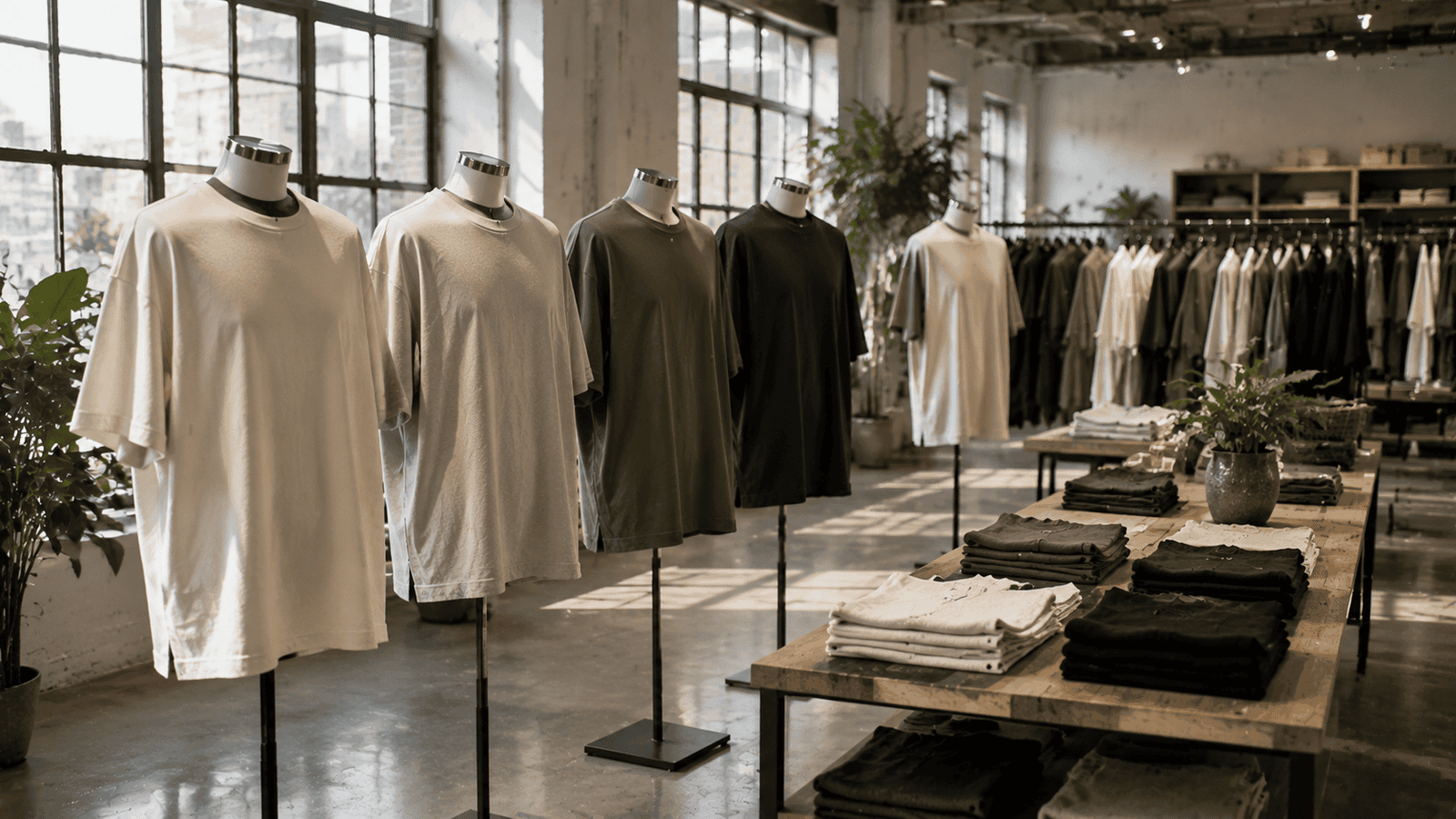
What is a Custom Organic Cotton Streetwear T Shirt Manufacturer and how does it support startup brands?
Understanding organic cotton streetwear production
Organic cotton T-shirts are produced without harmful pesticides and with environmentally responsible farming and processing methods. In streetwear, they are usually combined with heavyweight GSM fabrics and oversized silhouettes.
Why startups need a real manufacturer instead of a trading company
Startups need stable sampling, low MOQ, and consistent bulk production. A direct factory ensures better cost control and faster development cycles.
Key services included in OEM/ODM production
- Fabric sourcing (organic cotton / recycled blends)
- Pattern making & grading
- Custom printing & embroidery
- Private label packaging
Internal links:
Why are ethical fashion brands switching to organic cotton streetwear manufacturing?
Sustainability and environmental responsibility
Organic cotton reduces water usage, chemical pollution, and supports long-term sustainable fashion systems.
Consumer demand for transparency
Modern customers expect brands to show:
- Fabric origin
- Factory conditions
- Ethical certifications
Long-term brand value building
Ethical manufacturing helps brands build trust and premium positioning in competitive markets.
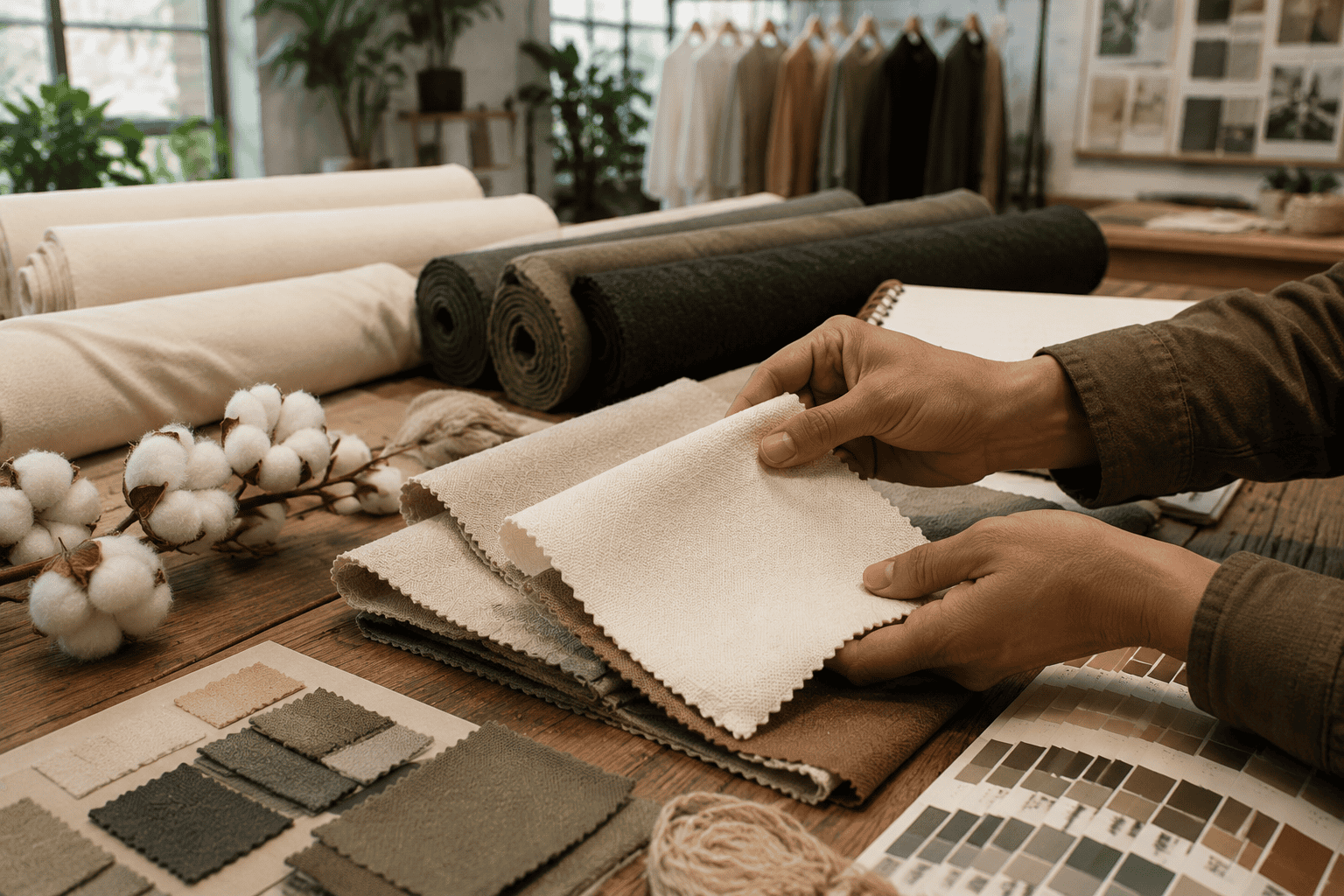
What fabric options and GSM levels are used in organic cotton streetwear T shirts?
Common organic cotton fabric types
- 100% organic cotton jersey
- Organic cotton + recycled cotton blend
- Organic heavyweight fleece cotton
GSM weight guide for streetwear brands
| Fabric Type | GSM Range | Application |
|---|---|---|
| Lightweight Cotton | 160–180gsm | Summer basic tees |
| Midweight Cotton | 200–220gsm | Daily streetwear |
| Heavyweight Cotton | 240–320gsm | Premium oversized fits |
Fit types commonly used
- Oversized drop shoulder
- Boxy fit
- Vintage washed fit
Internal links:
What customization options are available for organic cotton streetwear T shirts?
Printing and decoration techniques
- Screen printing
- Puff print
- Embroidery
- DTG (direct-to-garment)
Garment dyeing and washing effects
- Acid wash
- Vintage wash
- Enzyme wash
- Garment dye with Pantone matching
Branding customization options
- Woven labels
- Printed neck labels
- Hang tags
- Eco packaging
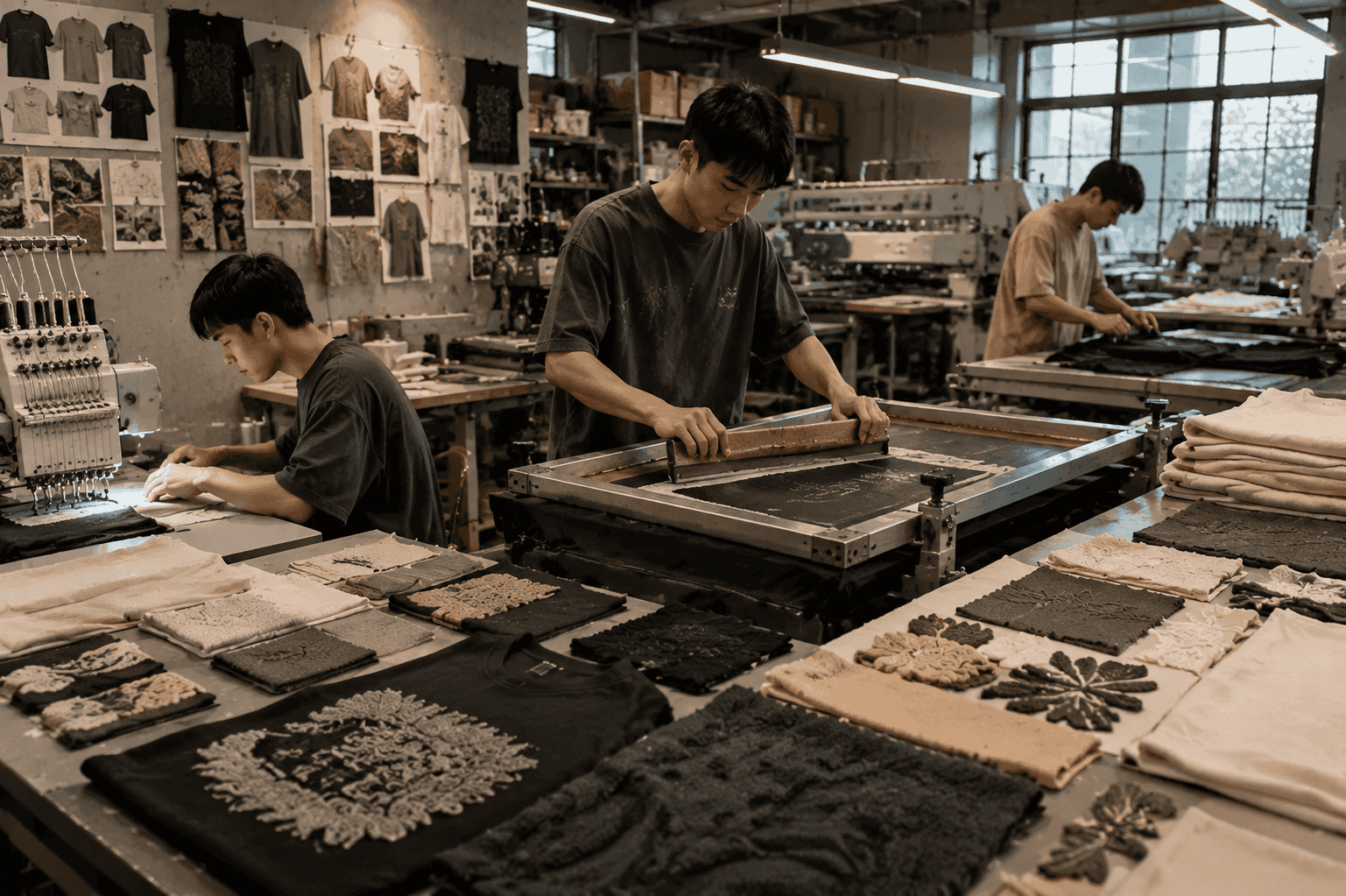
What is the OEM production process for organic cotton streetwear manufacturing?
Step 1: Tech pack and design confirmation
Brands submit sketches, references, or samples for development.
Step 2: Fabric sourcing and sampling
Organic cotton fabrics are selected and lab-dipped for color approval.
Step 3: Sample production and revision
Sample is produced in 7–10 days with fit adjustment if needed.
Step 4: Bulk production and QC
Mass production begins after approval, followed by 3-stage quality control.
How long does MOQ, pricing, and lead time take for startup streetwear brands?
Standard production conditions for startups
| Item | Detail |
|---|---|
| MOQ | 100 pcs per color |
| Sample time | 7–10 days |
| Bulk production | 25–35 days |
| Factory capacity | 1000 pcs/day |
Cost factors affecting pricing
- Fabric GSM and quality
- Printing complexity
- Label and packaging customization
Why small brands prefer low MOQ factories
Startups reduce risk by testing designs before scaling production.
What product categories can be developed with organic cotton streetwear manufacturing?
Full streetwear product ecosystem
Organic cotton manufacturing is not limited to T-shirts:
- Hoodies & sweatshirts
- Streetwear jackets
- Streetwear pants & shorts
- Full sets and capsule collections
Internal links:
How to choose a reliable organic cotton streetwear T shirt manufacturer in China?
Key evaluation factors
- Factory experience (15+ years recommended)
- OEM/ODM capability
- QC system (fabric → in-line → final inspection)
- Communication efficiency
Red flags to avoid
- No sample support
- No clear MOQ policy
- Lack of fabric transparency
Ideal manufacturer profile for startups
A strong partner should support:
- Low MOQ
- Fast sampling
- Ethical fabric sourcing
- Full private label service
Internal links:
Conclusion: Building an ethical streetwear brand with the right manufacturing partner
Organic cotton streetwear manufacturing is not just about fabric—it is about building a scalable, ethical, and premium brand system from design to delivery. Startups that choose the right OEM partner can grow faster with lower risk and stronger market positioning.