
Creating a successful graphic streetwear T-shirt requires more than a great design. Fabric selection, GSM weight, printing techniques, fit development, and manufacturing quality all play critical roles in the final product.
For modern streetwear brands, understanding how fabrics, garment weight, and printing methods work together can help improve product quality, customer satisfaction, and brand positioning.
This guide explains everything brands need to know about fabric options, GSM standards, and print techniques when working with a custom graphic streetwear T-shirts manufacturer.

What Does a Custom Graphic Streetwear T Shirts Manufacturer Do?
Why Is a Specialized Manufacturer Important?
A professional manufacturer helps brands:
- Develop custom products
- Source fabrics
- Create samples
- Manage production
What Services Are Typically Offered?
Most manufacturers provide:
- Fabric sourcing
- Pattern development
- Graphic printing
- Private label branding
- Quality control
How Does This Benefit Clothing Brands?
Brands can focus on marketing and growth while the manufacturer handles production.
Many brands choose an experienced Custom Streetwear Manufacturer to streamline development and production.
Why Is Fabric Selection So Important for Graphic T-Shirts?
How Does Fabric Affect Product Quality?
Fabric influences:
- Comfort
- Durability
- Print performance
- Brand perception
What Fabrics Are Most Common?
| Fabric Type | Typical GSM | Best For |
|---|---|---|
| Combed Cotton | 220–280 GSM | Premium Graphic Tees |
| Heavyweight Cotton | 240–320 GSM | Streetwear Collections |
| Compact Cotton | 240–300 GSM | Luxury Streetwear |
| Organic Cotton | 220–280 GSM | Sustainable Brands |
Which Fabric Is Most Popular in 2026?
Heavyweight combed cotton remains the preferred choice for most premium graphic streetwear collections.

What Is GSM and Why Does It Matter?
What Does GSM Mean?
GSM stands for Grams per Square Meter.
It measures fabric weight and density.
How Does GSM Affect a T-Shirt?
Higher GSM generally provides:
- More structure
- Better durability
- Premium feel
Which GSM Is Best for Streetwear?
| GSM Range | Application |
|---|---|
| 180–220 GSM | Standard T-Shirts |
| 220–260 GSM | Premium Streetwear |
| 260–320 GSM | Heavyweight Collections |
| 320+ GSM | Luxury Oversized Pieces |
Most modern streetwear brands choose 240–280 GSM fabrics.
Which Fabric Works Best for Graphic Printing?
Why Does Fabric Impact Print Quality?
Fabric affects:
- Ink absorption
- Surface smoothness
- Print durability
Which Fabrics Produce the Best Results?
Top options include:
- Combed cotton
- Compact cotton
- Heavyweight cotton
What Should Brands Avoid?
Low-quality fabrics often create:
- Uneven printing
- Poor durability
- Customer complaints
Brands frequently work with a professional Custom T-Shirts Manufacturer to match fabric choices with print requirements.
What Printing Techniques Are Most Common?
Which Printing Methods Are Used for Graphic Streetwear?
| Printing Method | Best For | Durability |
|---|---|---|
| Screen Printing | Large Graphics | Excellent |
| Puff Printing | Streetwear Logos | Excellent |
| Silicone Printing | Premium Branding | Excellent |
| DTG Printing | Detailed Artwork | Good |
| Embroidery | Luxury Graphics | Excellent |
Which Printing Method Is Most Popular?
Screen printing remains the industry standard.
Why Do Brands Use Multiple Techniques?
Combining techniques creates unique visual effects and enhances product value.
What Is Puff Print and Why Is It Popular?
How Does Puff Print Work?
Puff print expands during curing and creates a raised three-dimensional texture.
Why Do Streetwear Brands Use Puff Print?
Benefits include:
- Premium appearance
- Tactile texture
- Strong visual impact
Which Designs Work Best?
Puff print performs best on:
- Logos
- Typography
- Bold graphics
How Does Screen Printing Compare to Other Methods?
Why Is Screen Printing So Widely Used?
Screen printing offers:
- Excellent durability
- Cost efficiency
- Consistent results
Which Designs Are Best for Screen Printing?
Ideal applications include:
- Large graphics
- Multi-color artwork
- Back prints
Is Screen Printing Suitable for Premium Brands?
Yes. Many luxury and premium brands still use screen printing extensively.
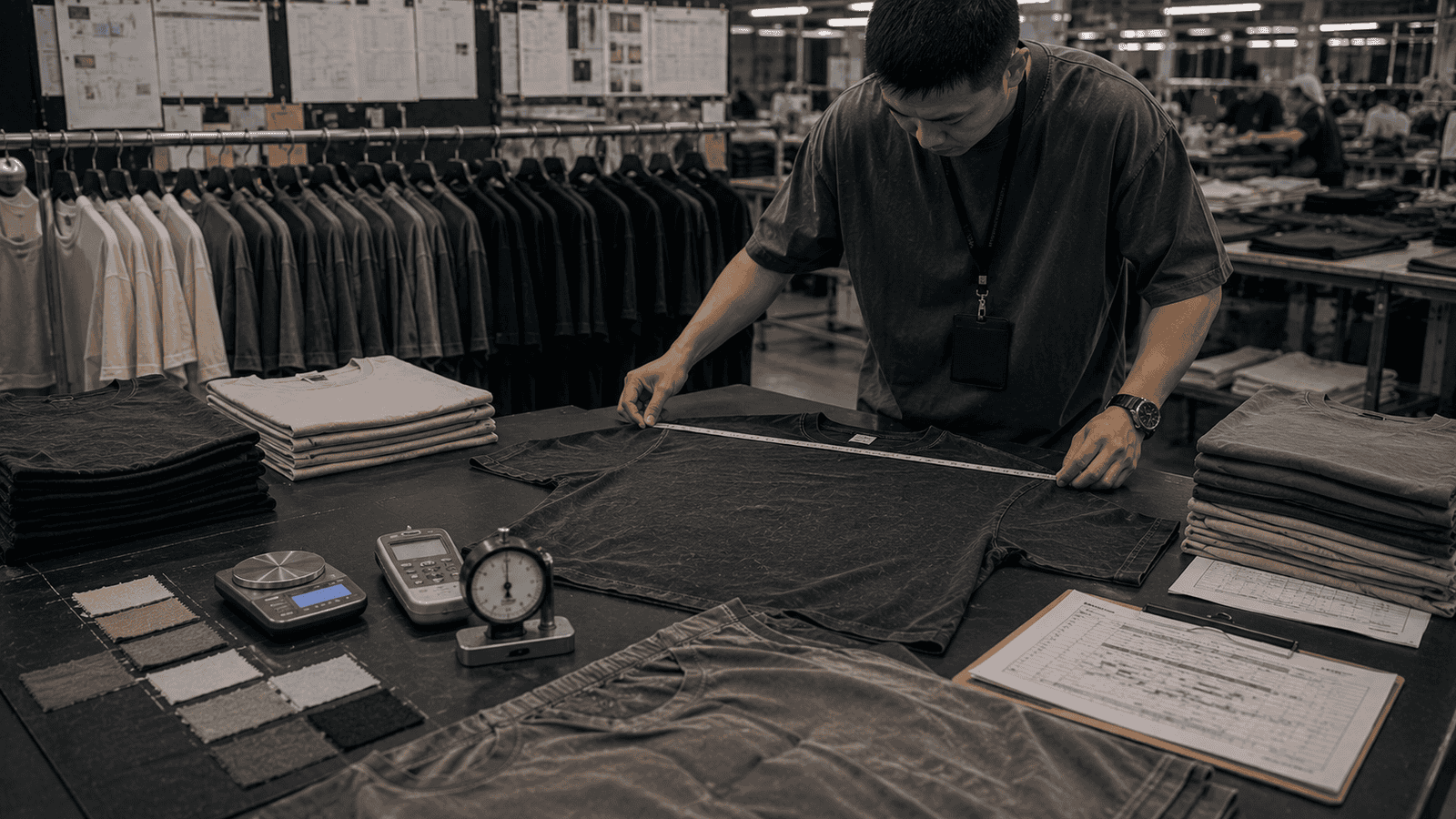
How Do Manufacturers Test Fabric and Print Quality?
What Fabric Tests Are Performed?
Manufacturers commonly evaluate:
- Shrinkage
- GSM accuracy
- Colorfastness
- Pilling resistance
What Print Tests Are Performed?
Testing often includes:
- Wash resistance
- Stretch testing
- Adhesion testing
Why Is Testing Important?
Testing reduces:
- Product defects
- Customer complaints
- Quality inconsistencies
How Does Private Label Branding Fit Into the Process?
What Branding Elements Can Be Customized?
Manufacturers can create:
- Woven labels
- Neck labels
- Hang tags
- Packaging
Why Is Branding Important?
Branding improves:
- Brand recognition
- Product value
- Customer loyalty
What Should Startup Brands Prioritize?
Focus on:
- Neck labels
- Hang tags
- Consistent packaging
Professional OEM Services often include complete private label solutions.
Can One Manufacturer Produce a Full Streetwear Collection?
What Products Can Be Manufactured?
A professional factory can produce:
- Custom T-Shirts
- Streetwear Hoodies
- Streetwear Sweatshirts
- Streetwear Jackets
- Streetwear Tank Tops
- Streetwear Pants
- Streetwear Shorts
- Streetwear Sets
- Streetwear Denim Apparel
Why Is One-Stop Manufacturing Valuable?
Benefits include:
- Faster development
- Consistent quality
- Easier communication
How Does It Help Growing Brands?
A single supplier can support long-term collection expansion.
Conclusion
Fabric, GSM, and printing techniques are the foundation of every successful graphic streetwear T-shirt. Choosing the right materials and decoration methods can significantly improve product quality, customer satisfaction, and brand positioning.
By understanding how fabric weight, cotton quality, and print technologies work together, brands can make smarter development decisions and build stronger streetwear collections with confidence.