
Choosing the right fabric is one of the most important decisions when developing custom graphic streetwear T-shirts. Even the best artwork cannot compensate for poor fabric quality. In 2026, successful streetwear brands are focusing on heavyweight cotton, premium combed cotton, compact cotton, and sustainable fabrics that offer superior durability, structure, and print performance.
This guide explores the best fabrics for custom graphic streetwear T-shirts and explains how brands can select the right material for their collections.
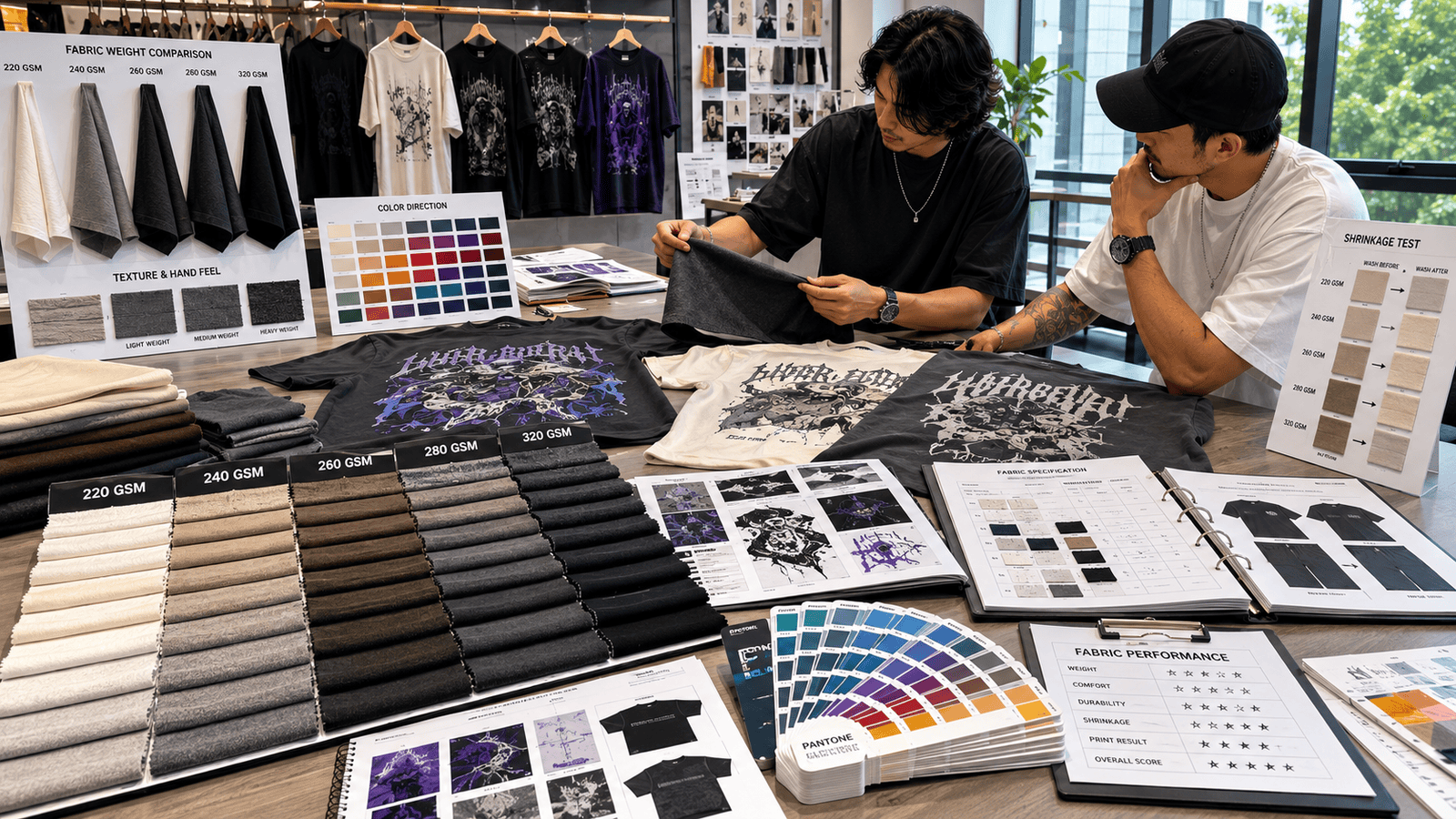
What Makes a Fabric Suitable for Graphic Streetwear T-Shirts?
Why Does Fabric Matter So Much?
Fabric affects:
- Print quality
- Garment durability
- Customer comfort
- Brand positioning
- Perceived value
What Do Streetwear Customers Expect in 2026?
Modern customers prefer:
- Heavyweight construction
- Premium hand feel
- Long-lasting durability
- Minimal shrinkage
How Does Fabric Influence Branding?
Premium fabrics help brands create:
- Better customer experiences
- Higher product value
- Stronger brand loyalty
Many brands partner with an experienced Custom Streetwear Manufacturer to develop custom fabric specifications.
Which Fabric Is Most Popular for Graphic Streetwear T-Shirts in 2026?
Why Is Heavyweight Cotton Dominating the Market?
Heavyweight cotton provides:
- Better structure
- Premium appearance
- Improved durability
What GSM Is Most Common?
| GSM Range | Typical Use |
|---|---|
| 180–220 GSM | Basic T-Shirts |
| 220–260 GSM | Premium Streetwear |
| 260–320 GSM | Heavyweight Collections |
| 320+ GSM | Luxury Oversized Pieces |
Which GSM Should Most Brands Choose?
Most successful graphic streetwear brands use:
- 240 GSM
- 260 GSM
- 280 GSM
Why Is Combed Cotton a Top Choice?
What Is Combed Cotton?
Combed cotton removes short fibers during processing.
What Benefits Does It Offer?
Advantages include:
- Softer texture
- Better durability
- Cleaner surface
- Improved print results
Why Do Manufacturers Recommend It?
Combed cotton balances:
- Cost
- Comfort
- Performance
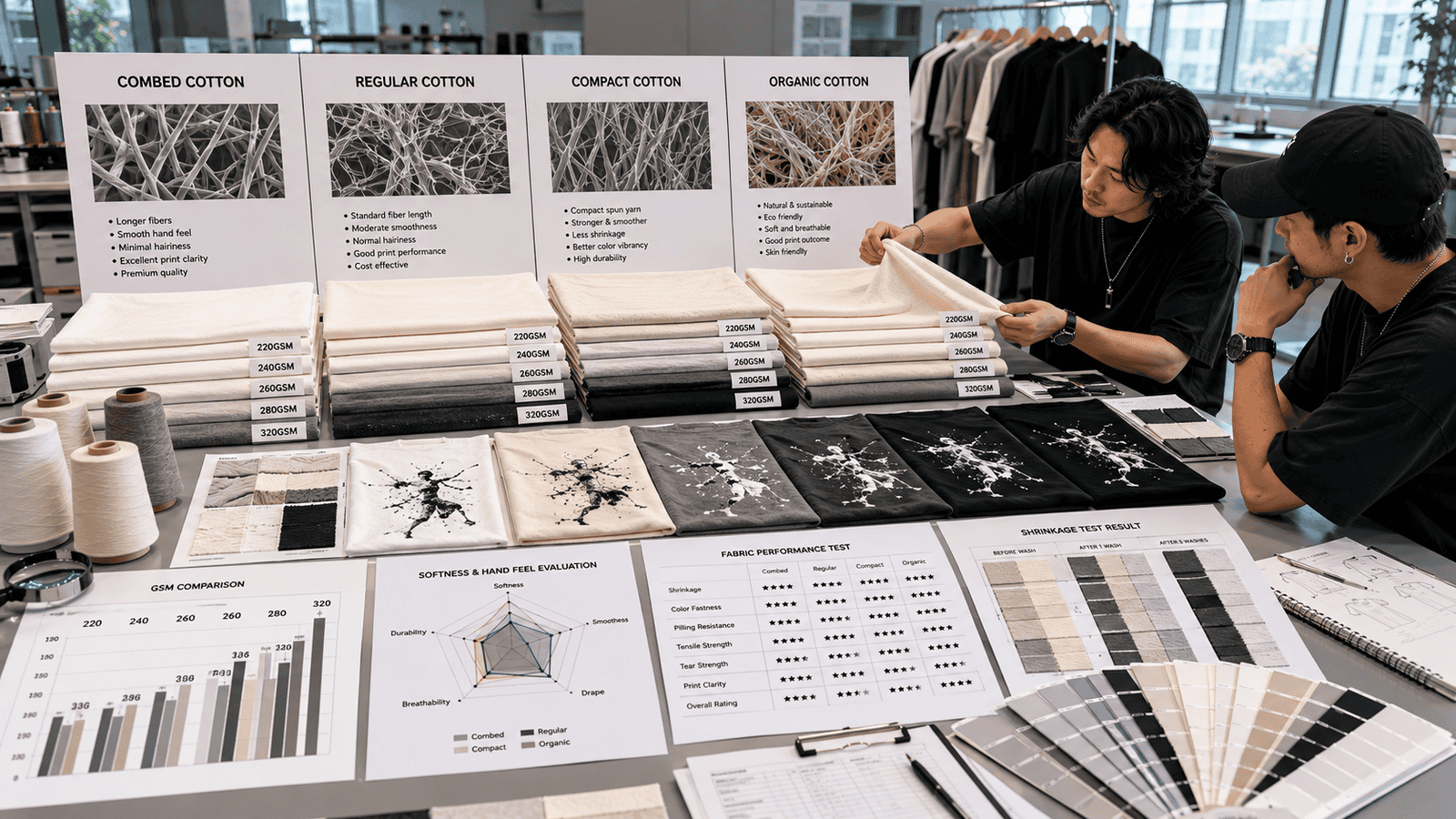
Is Compact Cotton Better Than Regular Cotton?
What Is Compact Cotton?
Compact cotton undergoes additional spinning processes to create tighter yarn structures.
Why Is It Popular in Luxury Streetwear?
Benefits include:
- Smooth surface
- Reduced pilling
- Better shape retention
Is Compact Cotton Worth the Extra Cost?
For premium collections, compact cotton often delivers stronger perceived value.
What Role Does Organic Cotton Play in 2026?
Why Are Brands Using Organic Cotton?
Organic cotton supports:
- Sustainability goals
- Eco-conscious marketing
- Responsible sourcing
How Does It Compare to Conventional Cotton?
| Feature | Organic Cotton | Conventional Cotton |
|---|---|---|
| Sustainability | Excellent | Standard |
| Softness | Excellent | Excellent |
| Durability | Very Good | Very Good |
| Cost | Higher | Lower |
Is Organic Cotton Suitable for Streetwear?
Yes, especially for brands targeting environmentally conscious consumers.
Which Fabric Works Best for Graphic Printing?
Why Does Fabric Affect Printing?
Fabric influences:
- Ink absorption
- Print sharpness
- Durability
Which Fabrics Deliver the Best Results?
Top choices include:
- Combed cotton
- Compact cotton
- Heavyweight cotton
Which Fabrics Work Best With Puff Print?
Dense heavyweight cotton fabrics typically provide stronger puff print performance.
Brands often work with a professional Custom T-Shirts Manufacturer to match printing techniques with fabric specifications.
How Does Fabric Weight Affect Streetwear Fit?
Why Is Fabric Weight Important?
Fabric weight influences:
- Drape
- Structure
- Silhouette
Which Fits Benefit From Heavyweight Fabrics?
Heavyweight fabrics are ideal for:
- Oversized fits
- Boxy fits
- Drop shoulder styles
Which Fabrics Support Luxury Streetwear Aesthetics?
Most luxury streetwear brands prefer:
- 260 GSM cotton
- 280 GSM cotton
- Compact cotton fabrics
Which Fabric Offers the Best Durability?
What Causes T-Shirts to Wear Out?
Common causes include:
- Fabric thinning
- Pilling
- Shrinkage
Which Fabrics Last the Longest?
| Fabric Type | Durability Rating |
|---|---|
| Compact Cotton | Excellent |
| Heavyweight Cotton | Excellent |
| Combed Cotton | Very Good |
| Organic Cotton | Very Good |
How Can Brands Improve Product Lifespan?
Focus on:
- Fabric quality
- Proper garment construction
- Reliable manufacturing
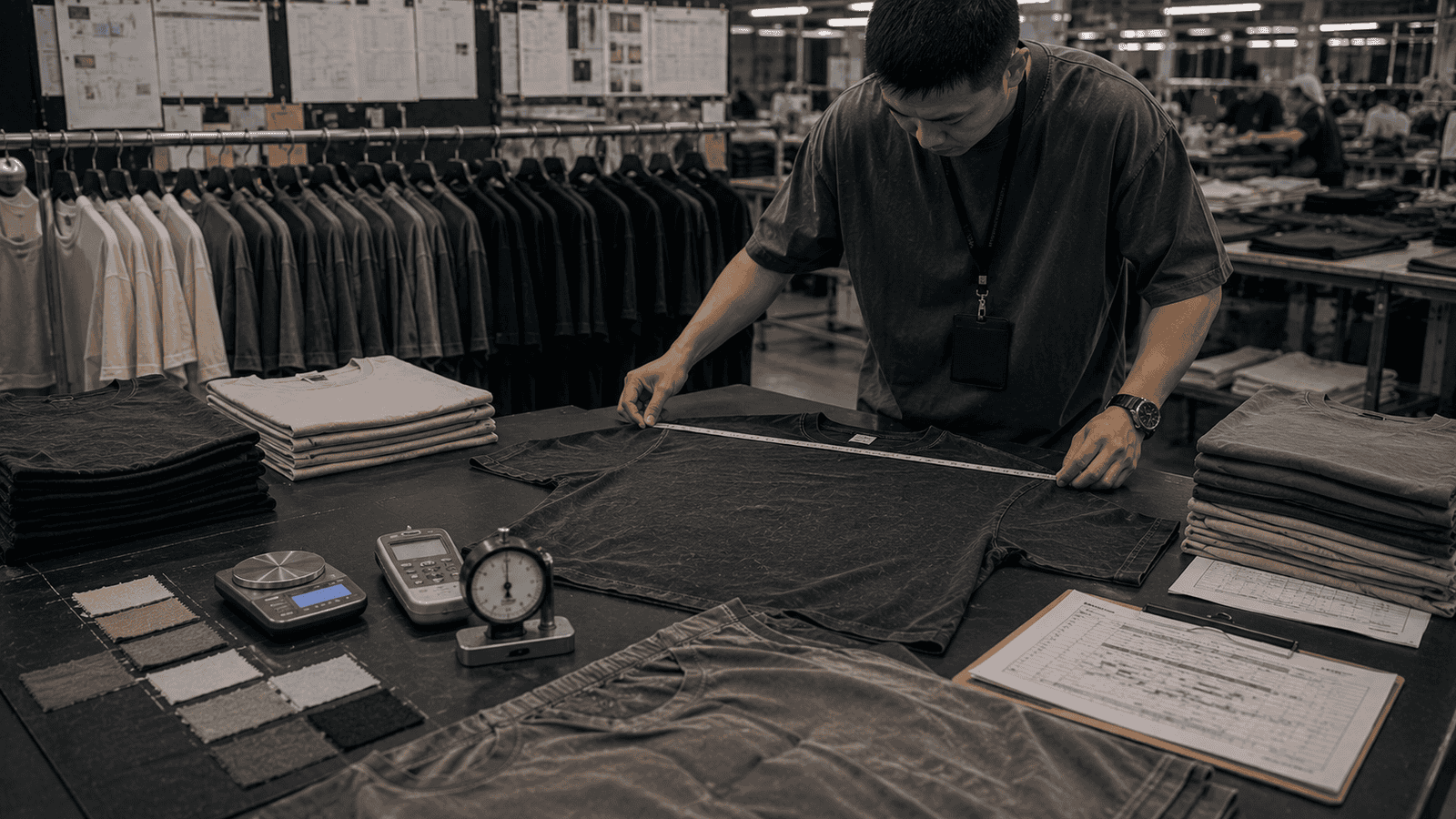
How Do Manufacturers Test Fabric Quality?
What Tests Are Common?
Manufacturers typically evaluate:
- GSM accuracy
- Shrinkage
- Colorfastness
- Pilling resistance
Why Is Fabric Testing Important?
Testing helps prevent:
- Customer complaints
- Product defects
- Quality inconsistencies
What Should Brands Request?
Ask for:
- Fabric test reports
- Wash test results
- Material specifications
How Should Brands Choose Fabrics Based on Their Market Position?
Which Fabrics Are Best for Startup Brands?
Recommended options:
- 240 GSM combed cotton
- 260 GSM combed cotton
Which Fabrics Are Best for Premium Brands?
Recommended options:
- Compact cotton
- 280 GSM heavyweight cotton
Which Fabrics Are Best for Luxury Collections?
Luxury brands often choose:
- Compact cotton
- Premium heavyweight cotton
- Organic compact cotton
Can One Manufacturer Supply Fabrics for an Entire Streetwear Collection?
What Products Can Be Developed?
A professional manufacturer can produce:
- Custom T-Shirts
- Streetwear Hoodies
- Streetwear Sweatshirts
- Streetwear Jackets
- Streetwear Tank Tops
- Streetwear Pants
- Streetwear Shorts
- Streetwear Sets
- Streetwear Denim Apparel
Why Is One-Stop Fabric Sourcing Valuable?
Benefits include:
- Consistent quality
- Faster development
- Simplified communication
How Does It Support Growth?
A reliable supplier helps brands maintain consistency across multiple categories.
Conclusion
In 2026, fabric selection is a major factor in the success of graphic streetwear T-shirts. Heavyweight cotton, combed cotton, compact cotton, and organic cotton continue to dominate premium streetwear collections because of their superior comfort, durability, structure, and print compatibility.
By understanding fabric performance and working with an experienced manufacturer, brands can create better products, strengthen brand positioning, and improve customer satisfaction.