
Many fashion entrepreneurs see the finished product but rarely understand what happens behind the scenes inside a China streetwear T shirts manufacturer. From the first design concept to bulk production and final shipment, dozens of processes work together to transform an idea into a finished garment.
For streetwear brands, understanding this workflow helps improve communication, reduce production mistakes, shorten lead times, and create better products. Whether you're launching your first collection or scaling an established label, knowing what happens inside a professional manufacturing facility can help you make smarter sourcing decisions.
In this guide, we'll walk through every stage of the journey—from sample development to bulk production.
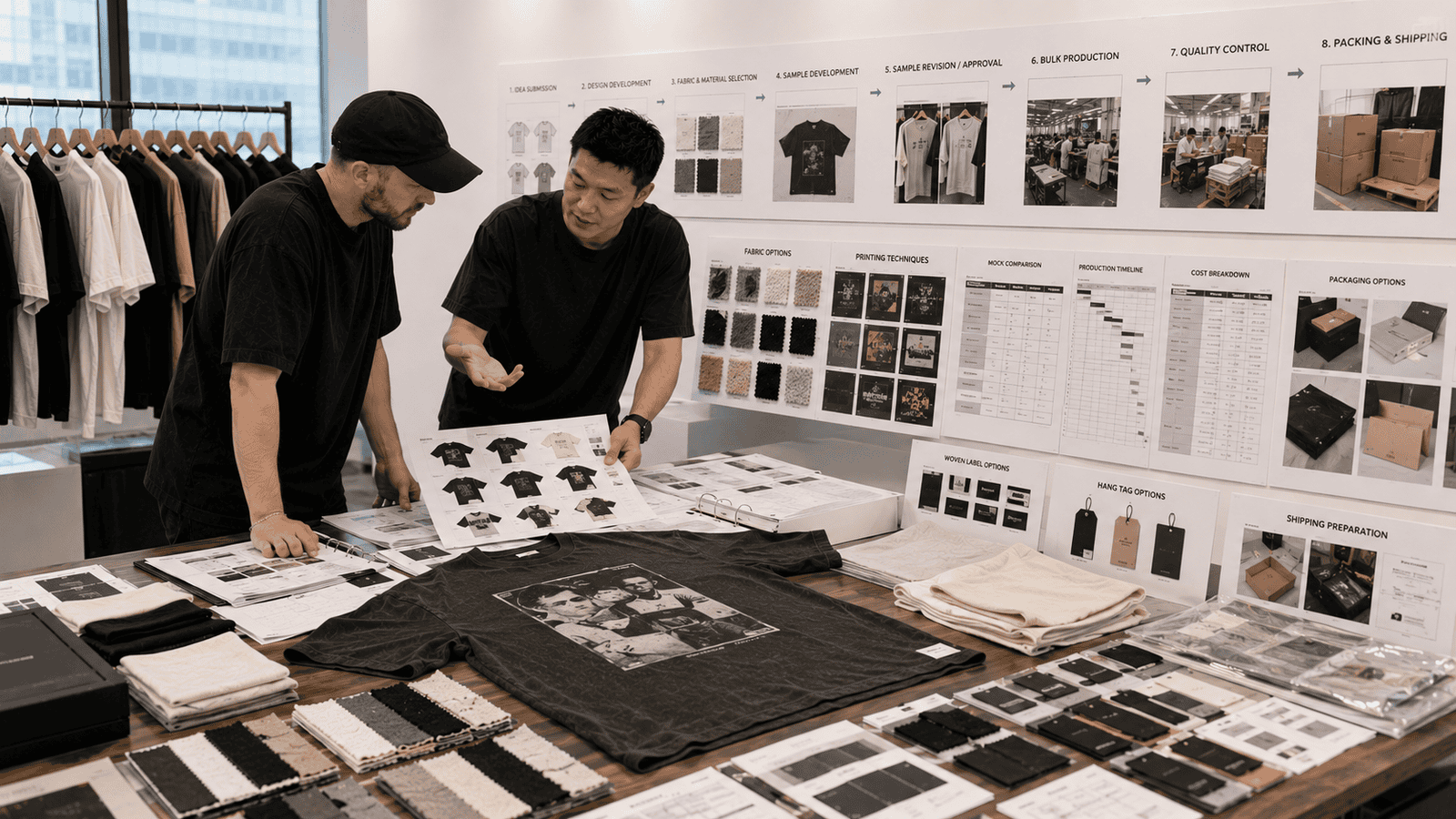
How Does a Streetwear Brand Start Working With a Manufacturer?
What Information Should Brands Prepare?
Before production begins, manufacturers typically request:
- Tech Pack
- Design Sketches
- Fabric Requirements
- Print Artwork
- Size Specifications
- Branding Requirements
Why Is Preparation Important?
Providing complete information helps:
- Reduce revisions
- Improve quote accuracy
- Speed up sampling
- Avoid production delays
Many brands begin their journey with an experienced Custom Streetwear Manufacturer that can assist with product development and technical guidance.
How Does the Quotation Process Work?
What Factors Affect Pricing?
Manufacturers calculate pricing based on:
- Fabric Type
- GSM Weight
- Printing Method
- Trim Requirements
- Packaging
- Order Quantity
Typical Quotation Components
| Cost Factor | Impact on Price |
|---|---|
| Fabric | Very High |
| Printing | High |
| Labels & Packaging | Medium |
| Labor | High |
| Quantity | Very High |
Why Accurate Specifications Matter
The more complete the project details, the more accurate the quotation will be.
What Happens During Fabric Sourcing?
How Are Fabrics Selected?
The development team evaluates:
- Fabric Composition
- GSM Weight
- Color Options
- Shrinkage Rates
- Surface Texture
Common Streetwear Fabrics
| Fabric Type | Typical Application |
|---|---|
| 100% Cotton | Standard Streetwear |
| Heavyweight Cotton | Premium Collections |
| French Terry | Lightweight Hoodies |
| Brushed Fleece | Heavyweight Apparel |
China's textile ecosystem gives brands access to extensive material options and faster sourcing capabilities.
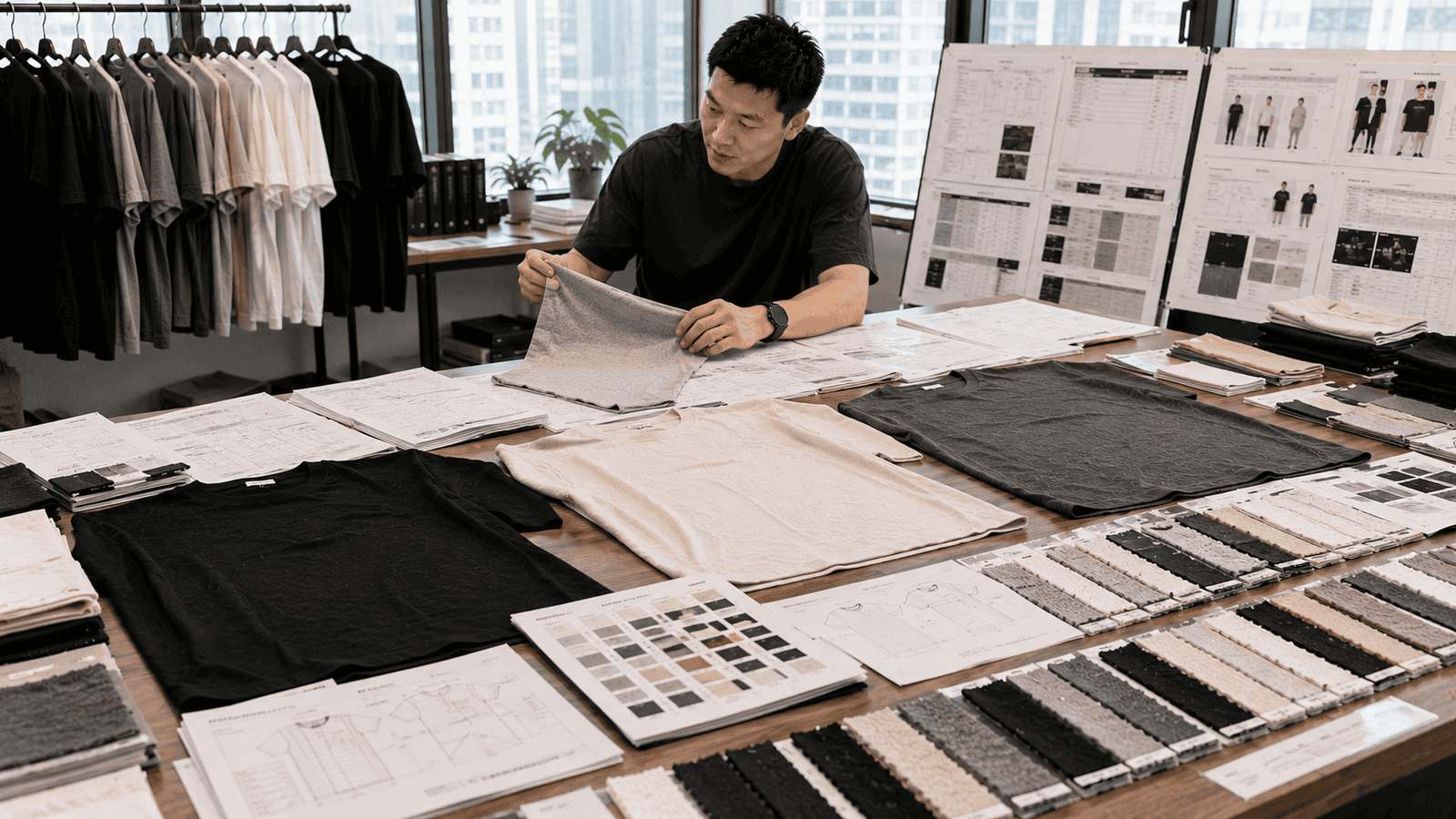
How Is a Streetwear T-Shirt Sample Developed?
What Happens During Sampling?
The sample room typically handles:
- Pattern Development
- Fabric Cutting
- Sewing Construction
- Graphic Application
- Label Installation
- Initial Quality Inspection
Why Is Sampling Critical?
Sampling helps brands evaluate:
- Fit
- Fabric Feel
- Print Quality
- Construction Details
Most professional manufacturers complete samples within 7–10 business days.
How Are Oversized and Boxy Fits Developed?
Why Is Fit Development Important?
Fit is one of the most important elements of modern streetwear.
Popular fits include:
- Oversized
- Boxy
- Drop Shoulder
- Cropped Oversized
- Relaxed Fit
What Happens During Fit Corrections?
Manufacturers often adjust:
| Fit Area | Common Revisions |
|---|---|
| Chest Width | Increase or Reduce |
| Body Length | Adjust Proportions |
| Sleeve Length | Improve Silhouette |
| Shoulder Width | Refine Oversized Look |
Several sample revisions may be required before final approval.
How Are Graphics and Branding Applied?
What Decoration Methods Are Available?
Common options include:
- Screen Printing
- Puff Printing
- DTG Printing
- Embroidery
- Silicone Logos
What About Private Label Branding?
Most factories also provide:
- Woven Labels
- Neck Labels
- Hang Tags
- Packaging Boxes
- Tissue Paper
- Stickers
Many brands combine production with professional OEM Streetwear Manufacturing Services to simplify product development and branding.
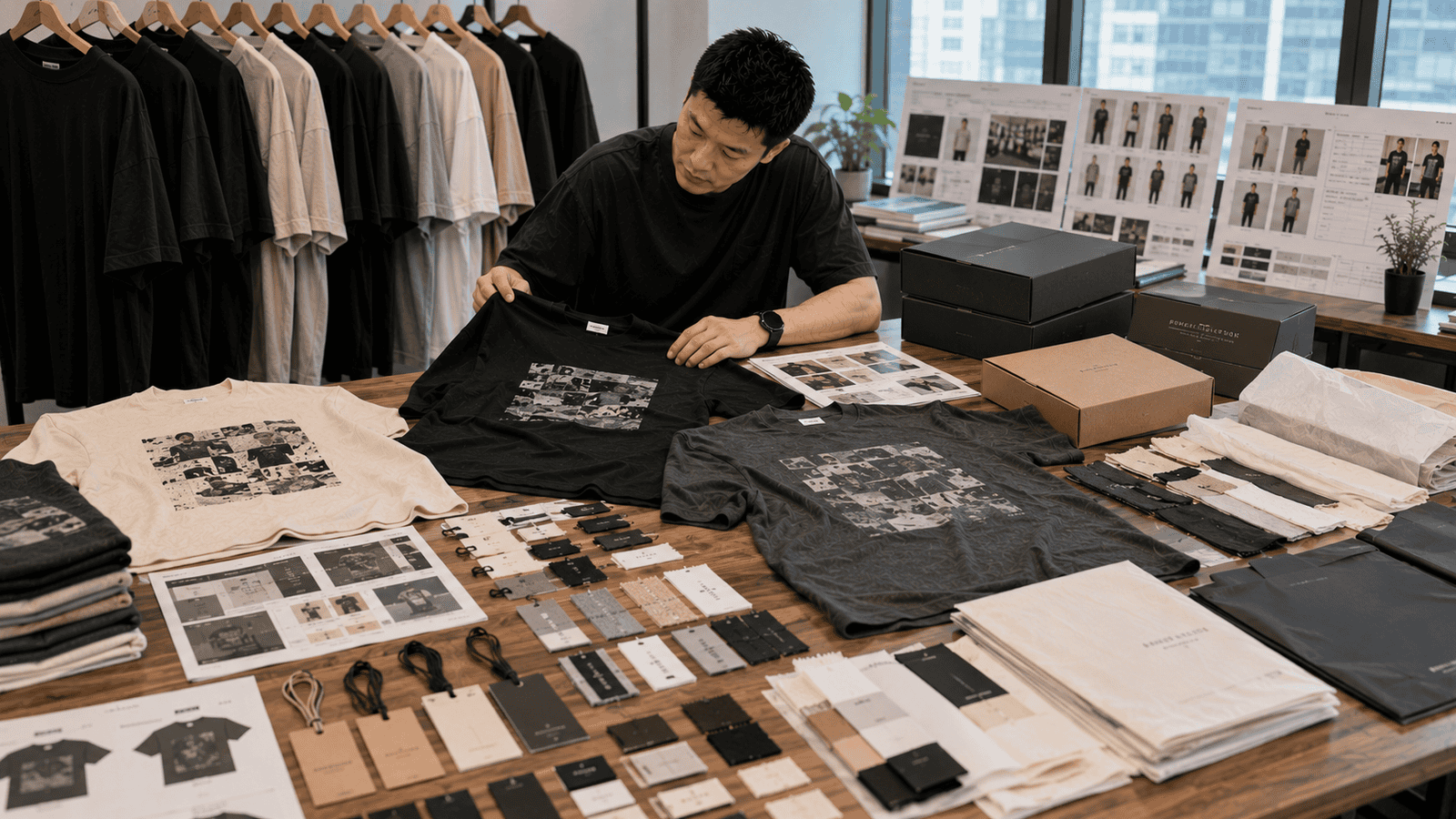
What Happens Before Bulk Production Begins?
What Must Be Approved?
Before production starts, manufacturers usually require approval of:
- Final Sample
- Fabric
- Artwork
- Labels
- Packaging
Why Is Approval Important?
Approving all details minimizes:
- Production mistakes
- Color inconsistencies
- Fit issues
- Delivery delays
How Is Bulk Production Organized?
What Are the Main Production Stages?
Bulk production generally includes:
- Fabric Inspection
- Fabric Cutting
- Sewing
- Printing
- Finishing
- Packaging
Typical Production Timeline
| Production Stage | Typical Duration |
|---|---|
| Material Preparation | 3–5 Days |
| Cutting | 1–3 Days |
| Sewing | 7–15 Days |
| Printing | 2–5 Days |
| Finishing | 2–4 Days |
| Packaging | 1–3 Days |
Most bulk orders require approximately 25–35 days after sample approval.
How Does Quality Control Work Inside a Manufacturer?
What Quality Checks Are Performed?
Professional manufacturers typically implement:
- Fabric Inspection
- In-Line Inspection
- Final Inspection
- Packaging Inspection
What Is Checked?
| Inspection Area | Purpose |
|---|---|
| Measurements | Size Accuracy |
| Stitching | Construction Quality |
| Printing | Graphic Consistency |
| Fabric | Material Quality |
| Packaging | Shipping Accuracy |
Strong quality control helps ensure sample-to-bulk consistency.
How Are Orders Packed and Prepared for Shipment?
What Packaging Options Are Available?
Packaging can include:
- Poly Bags
- Custom Boxes
- Tissue Paper
- Stickers
- Hang Tags
What Shipping Methods Are Common?
| Shipping Method | Best For |
|---|---|
| DHL / FedEx / UPS | Small Orders |
| Air Freight | Urgent Deliveries |
| Sea Freight | Large Orders |
Professional factories coordinate logistics to ensure smooth delivery.
Can One Manufacturer Produce a Full Streetwear Collection?
What Products Can Be Developed Together?
Many streetwear brands eventually expand beyond T-shirts.
Common categories include:
- Streetwear Hoodies
- Streetwear Sweatshirts
- Streetwear Jackets
- Streetwear Pants
- Streetwear Shorts
- Streetwear Sets
- Streetwear Denim Apparel
- Streetwear Tank Tops
Why Is One-Stop Manufacturing Beneficial?
Benefits include:
- Consistent quality
- Unified branding
- Easier communication
- Faster development
Many growing brands prefer working with one supplier for their entire collection.
What Are the Most Common Production Mistakes Brands Make?
Common Mistakes
- Incomplete Tech Packs
- Skipping Sample Reviews
- Rushing Production
- Ignoring Quality Reports
- Changing Designs Mid-Production
How Can Brands Avoid Problems?
Focus on:
- Clear communication
- Detailed specifications
- Proper sample approval
- Realistic timelines
The most successful projects follow a structured development process from start to finish.
Sample vs Bulk Production Comparison
| Factor | Sample Production | Bulk Production |
|---|---|---|
| Purpose | Product Development | Order Fulfillment |
| Quantity | 1–5 pcs | 100+ pcs |
| Timeline | 7–10 Days | 25–35 Days |
| Cost Per Piece | Higher | Lower |
| Revision Flexibility | High | Low |
Why Do Successful Streetwear Brands Understand the Manufacturing Process?
Key Benefits
Understanding manufacturing helps brands:
- Communicate more effectively
- Reduce development costs
- Improve product quality
- Speed up launches
- Scale more efficiently
Why Transparency Matters
The best manufacturing partnerships are built on communication, trust, and a clear understanding of every production stage.
Conclusion
A professional China streetwear T shirts manufacturer does much more than simply sew garments. From fabric sourcing and sample development to bulk production, quality control, and shipping, every stage plays an important role in creating successful products.
Brands that understand this process are better equipped to build strong supplier relationships, avoid costly mistakes, and create premium streetwear collections that stand out in the market.
Explore the complete Streetwear Product Collection or visit the Ohsure Apparel Homepage to learn more about available manufacturing solutions.
FAQ
How long does it take to develop a streetwear T-shirt sample?
Most manufacturers complete samples within 7–10 business days depending on complexity.
How long does bulk production take?
Bulk production typically requires 25–35 days after sample approval.
Can manufacturers help with oversized streetwear fits?
Yes. Professional manufacturers often provide fit development and pattern-making services.
What quality control procedures should a manufacturer have?
Fabric inspection, in-line inspection, final inspection, and packaging inspection are considered essential.
Can one manufacturer produce a full streetwear collection?
Yes. Many suppliers can produce T-shirts, hoodies, sweatshirts, jackets, pants, shorts, denim, and coordinated sets.