
Graphic T-shirts are one of the most important categories in modern streetwear. From startup brands to established fashion labels, graphic tees help communicate brand identity, create customer loyalty, and drive repeat sales.
However, successful graphic T-shirt production requires more than great artwork. Brands must understand printing methods, MOQ requirements, fabric selection, sampling, quality control, and production timelines before working with a manufacturer.
This complete guide explains everything clothing brands should know about graphic T-shirt manufacturing, printing options, minimum order quantities, and production processes.
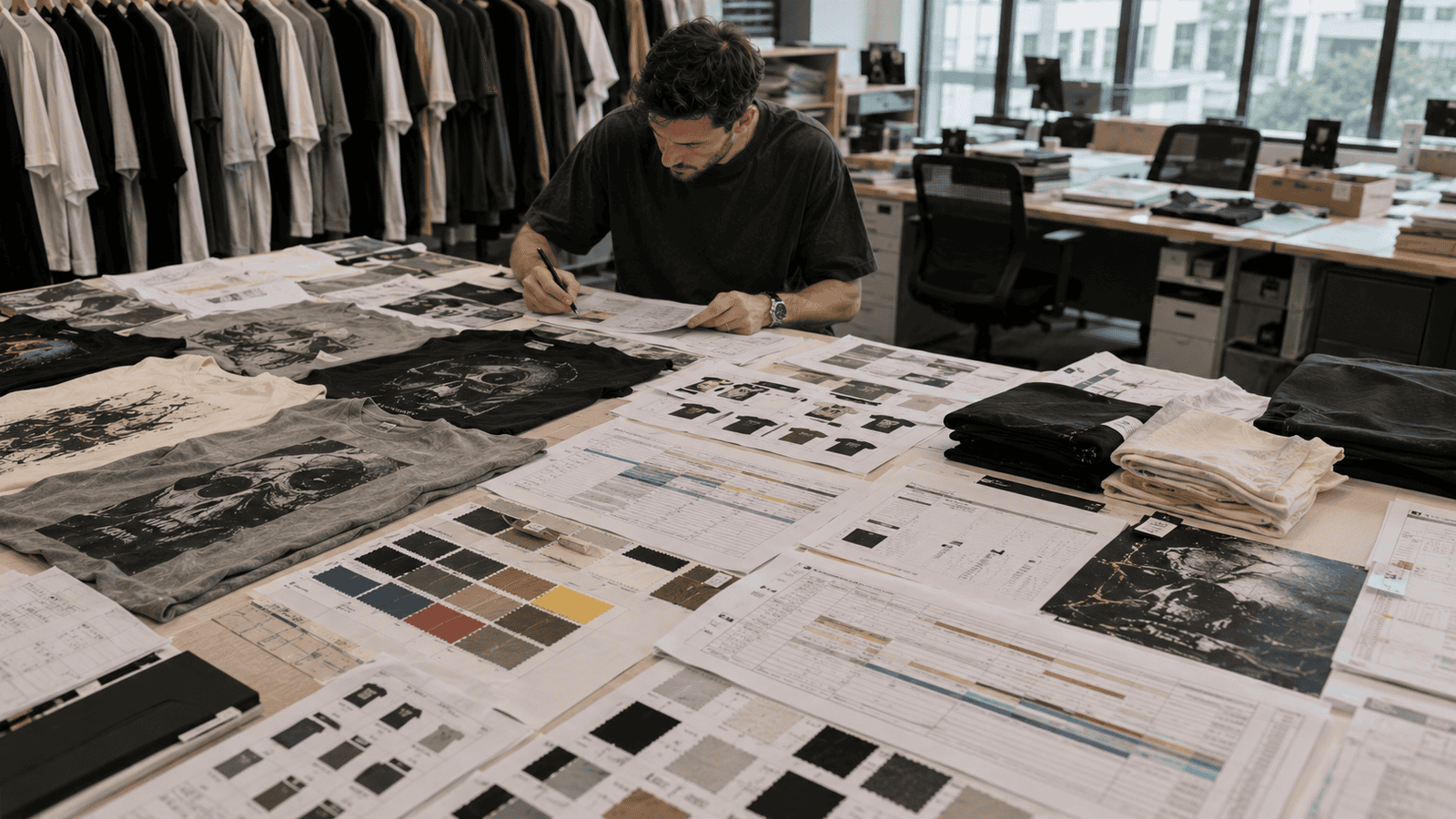
What Does a Custom Graphic Streetwear T Shirts Manufacturer Actually Do?
What Services Should a Manufacturer Provide?
A professional manufacturer typically offers:
- Product development
- Fabric sourcing
- Pattern making
- Sampling
- Printing
- Private label branding
- Bulk production
Why Is Full-Service Manufacturing Important?
It helps brands:
- Save development time
- Improve quality consistency
- Reduce production mistakes
How Is a Manufacturer Different From a Print Shop?
A print shop only prints graphics.
A manufacturer develops the entire garment.
Many brands partner with a professional Custom Streetwear Manufacturer to handle development and production under one roof.
Which Printing Methods Are Best for Graphic Streetwear T-Shirts?
What Printing Techniques Are Most Common?
| Printing Method | Best For | Appearance |
|---|---|---|
| Screen Printing | Large Graphics | Durable |
| Puff Printing | Streetwear Logos | 3D Texture |
| Silicone Printing | Premium Branding | Luxury Feel |
| DTG Printing | Detailed Artwork | High Resolution |
| Embroidery | Premium Graphics | Textured Finish |
Why Does Printing Method Matter?
Different techniques affect:
- Durability
- Cost
- Visual impact
- Production efficiency
Which Printing Method Is Most Popular?
Screen printing remains the industry standard for graphic streetwear.
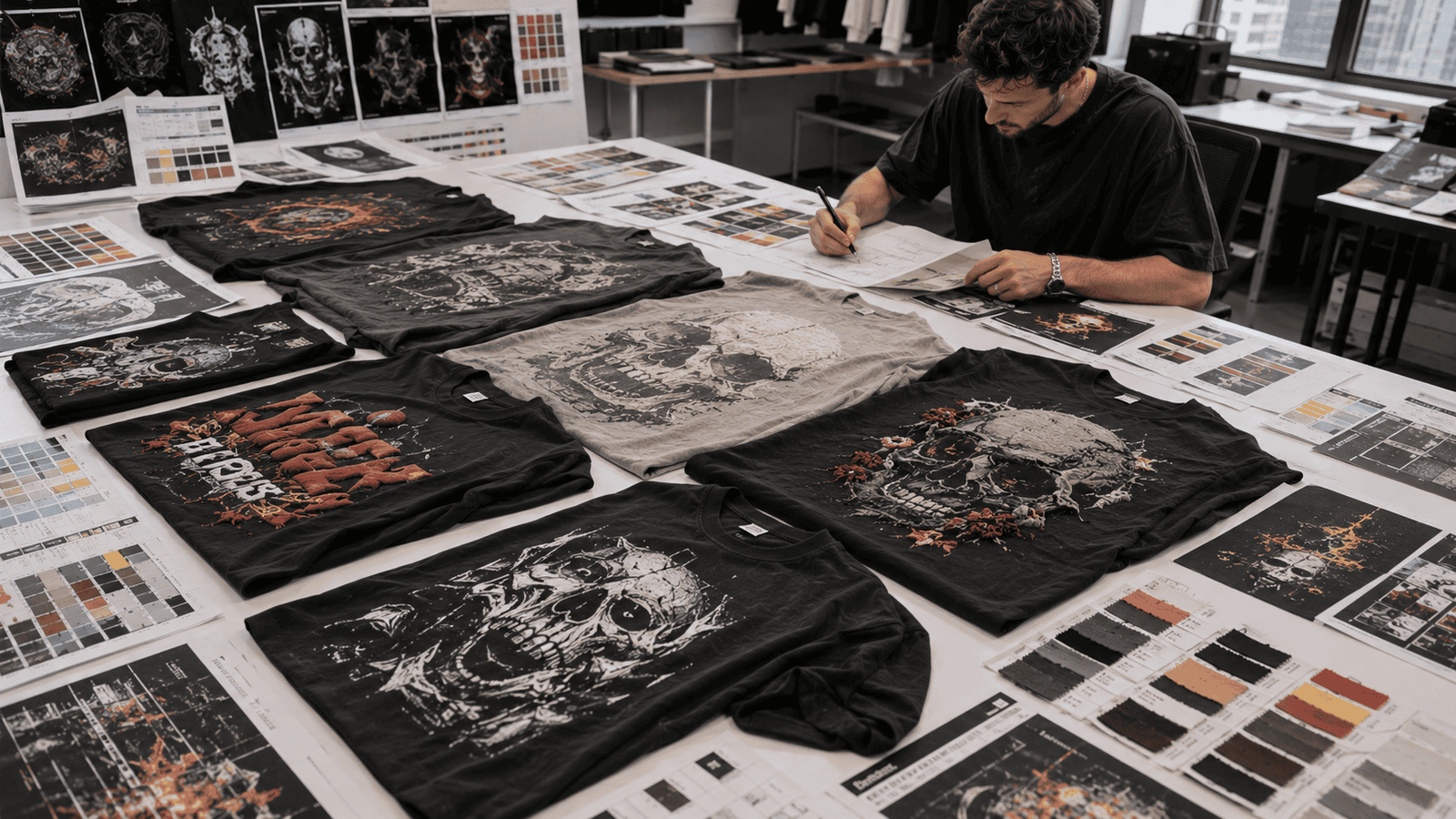
Why Is Print Quality So Important?
What Problems Can Poor Printing Cause?
Common issues include:
- Cracking
- Peeling
- Fading
- Color inconsistency
How Can Brands Verify Print Quality?
Request:
- Print samples
- Wash tests
- Production references
What Should Be Checked During Sampling?
Review:
- Artwork sharpness
- Placement accuracy
- Color consistency
How Does Fabric Selection Affect Graphic T-Shirts?
Why Does Fabric Matter?
Fabric impacts:
- Print performance
- Comfort
- Durability
- Product value
What Fabrics Are Most Common?
| Fabric Type | Typical GSM |
|---|---|
| Combed Cotton | 220–280 GSM |
| Heavyweight Cotton | 240–320 GSM |
| Organic Cotton | 220–280 GSM |
| Compact Cotton | 240–300 GSM |
Which Fabric Is Best for Premium Graphic Tees?
Heavyweight combed cotton remains a top choice.
Brands often work with a specialized Custom T-Shirts Manufacturer to source premium fabrics and develop custom fits.
Why Is Fit Development Important for Graphic Streetwear?
Why Does Fit Influence Sales?
Customers notice fit immediately.
Which Fits Are Most Popular?
Common styles include:
- Oversized fit
- Boxy fit
- Drop shoulder fit
- Cropped oversized fit
How Can Manufacturers Help?
Professional factories provide:
- Pattern development
- Sample revisions
- Size grading
What Is MOQ and Why Does It Matter?
What Does MOQ Mean?
MOQ stands for Minimum Order Quantity.
Why Do Manufacturers Require MOQ?
MOQ covers:
- Fabric purchasing
- Printing setup
- Production planning
What MOQ Is Typical?
| Product Type | Typical MOQ |
|---|---|
| Graphic T-Shirts | 100 pcs |
| Puff Print Tees | 100 pcs |
| Embroidered Tees | 100 pcs |
| Fully Custom Graphic Tees | 100 pcs |
How Can Brands Reduce MOQ Risks?
Why Is MOQ a Challenge for Startups?
Large inventories increase:
- Financial risk
- Storage costs
What Strategies Help?
Brands can:
- Launch fewer styles
- Limit color options
- Focus on best sellers
Why Is Product Validation Important?
Testing demand helps avoid overproduction.
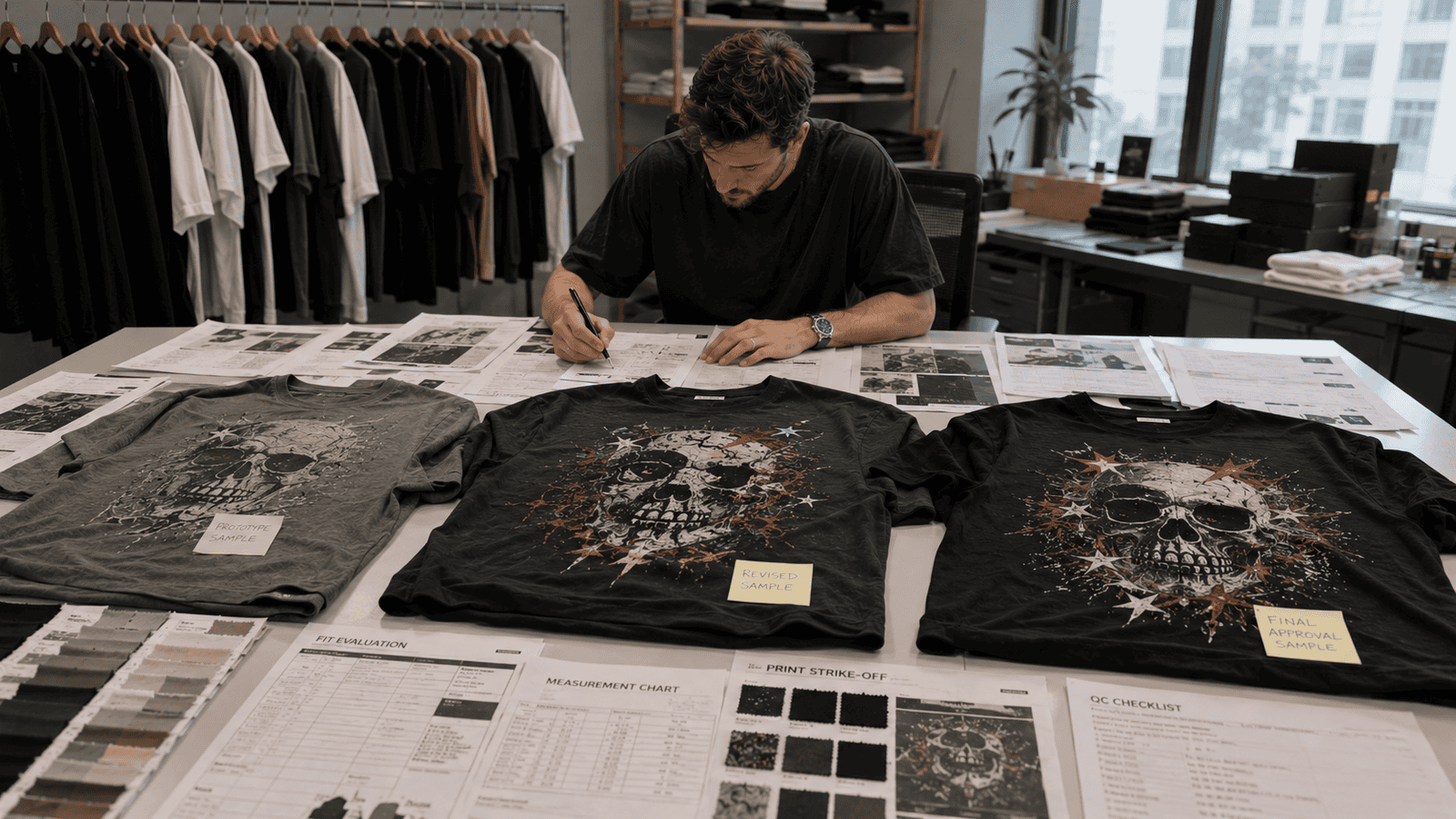
How Does the Sampling Process Work?
What Happens During Sampling?
Manufacturers produce a prototype for approval.
What Should Brands Evaluate?
Review:
- Fabric quality
- Printing quality
- Measurements
- Construction details
How Many Sample Revisions Are Normal?
Most projects require:
- One to three revisions
What Quality Control Systems Should Manufacturers Have?
What Should QC Inspect?
Quality control should verify:
- Fabric consistency
- Print quality
- Measurements
- Stitching
- Packaging
Why Is QC Essential?
QC reduces:
- Defects
- Returns
- Customer complaints
How Can Brands Verify QC Systems?
Request:
- QC reports
- Inspection photos
- Final approval records
Professional OEM Services should include multiple inspection stages throughout production.
What Is the Typical Production Timeline?
How Long Does Sampling Take?
Typical sample development:
- 7–10 days
How Long Does Bulk Production Take?
Typical bulk production:
- 25–35 days
What Factors Affect Lead Time?
Factors include:
- Fabric availability
- Printing complexity
- Order volume
Can One Manufacturer Produce an Entire Streetwear Collection?
What Products Can Be Manufactured?
A professional factory can produce:
- Custom T-Shirts
- Streetwear Hoodies
- Streetwear Sweatshirts
- Streetwear Jackets
- Streetwear Tank Tops
- Streetwear Pants
- Streetwear Shorts
- Streetwear Sets
- Streetwear Denim Apparel
Why Is One-Stop Manufacturing Valuable?
Benefits include:
- Easier communication
- Consistent quality
- Faster collection development
How Does It Support Growth?
A single manufacturing partner simplifies scaling.
How Do You Choose the Right Graphic T-Shirt Manufacturer?
What Should Brands Prioritize?
Focus on:
- Printing expertise
- Fabric quality
- MOQ flexibility
- Quality control
- Communication
What Questions Should You Ask?
- Which printing methods do you support?
- What fabrics are available?
- What is your MOQ?
- How do you manage quality control?
What Is the Long-Term Advantage?
Working with an experienced Streetwear Manufacturer provides access to professional development resources, scalable production, and long-term growth support.
Conclusion
Custom graphic streetwear T-shirt manufacturing involves much more than printing artwork onto garments. Successful production requires careful planning around printing methods, fabric selection, MOQ management, sampling, quality control, and production timelines.
By understanding these key factors and partnering with the right manufacturer, brands can create high-quality graphic apparel that strengthens brand identity and supports long-term business growth.