
Heavyweight streetwear t-shirts have become one of the most important products for modern fashion brands. From oversized silhouettes to luxury garment-washed finishes, premium heavyweight tees are now essential for startup labels and established streetwear brands alike.
However, many brands still struggle to understand MOQ requirements, sampling processes, and actual production costs when working with a Custom Streetwear Manufacturer.
This guide explains how heavyweight streetwear t-shirt manufacturing works, including MOQ structures, sample development, fabric pricing, printing costs, and production timelines.
What Is the Typical MOQ for Heavyweight Streetwear T Shirts?
MOQ stands for:
Minimum Order Quantity
MOQ is one of the first topics brands discuss with a manufacturer because it directly impacts startup budgets and production planning.
Why Manufacturers Have MOQ Requirements
Factories require MOQ because:
- Fabric mills require minimum fabric orders
- Production setup costs are high
- Printing and washing need batch processing
- Labor efficiency improves with larger orders
Typical Heavyweight T Shirt MOQ Range
| Product Type | Typical MOQ |
|---|---|
| Basic Heavyweight Tee | 50–100 pcs |
| Custom Dyed Tee | 100–200 pcs |
| Garment Washed Tee | 100–300 pcs |
| Puff Print Tee | 100+ pcs |
What Affects MOQ the Most?
MOQ usually increases because of:
- Custom fabric dyeing
- Multiple colorways
- Complex washing
- Special printing
Professional suppliers offering OEM Services often provide flexible MOQ solutions for startup streetwear brands.
Why Are Heavyweight Streetwear T Shirts More Expensive to Produce?
Heavyweight t-shirts cost more because they use more fabric and require more advanced production processes.
Main Cost Factors
Fabric Weight
Higher GSM fabrics use:
- More cotton
- More yarn
- More knitting time
Garment Washing
Special washing techniques increase:
- Labor costs
- Water usage
- Processing time
Printing Complexity
Premium printing methods like:
- Puff print
- Silicone print
- Large graphics
can significantly increase production costs.
Average Heavyweight T Shirt Cost Breakdown
| Cost Area | Estimated Share |
|---|---|
| Fabric | 35–45% |
| Sewing | 20–25% |
| Printing | 10–20% |
| Washing | 10–15% |
| Packaging | 5–10% |
Brands working with a professional Custom T-Shirts Manufacturer can better optimize fabric and production costs.
What Fabrics Are Commonly Used for Heavyweight Streetwear T Shirts?
Fabric choice directly affects both cost and product positioning.
Popular Heavyweight Streetwear Fabrics
Heavyweight Cotton Jersey
Best for:
- Oversized t-shirts
- Everyday premium streetwear
French Terry
Popular for:
- Luxury fashion collections
- Structured silhouettes
Open-End Cotton
Ideal for:
- Vintage washed tees
- Retro streetwear aesthetics
Recommended GSM for Streetwear
| Fabric Type | Recommended GSM |
|---|---|
| Standard Heavyweight Tee | 240–280 GSM |
| Premium Oversized Tee | 280–320 GSM |
| Luxury Streetwear Tee | 320–400 GSM |
Why Fabric Quality Matters
Low-quality fabric can cause:
- Shrinkage
- Twisting
- Shape loss
- Poor drape
Reliable Streetwear Sweatshirt Manufacturer factories often use similar heavyweight fabric standards across product categories.
How Does the Sampling Process Work for Heavyweight T Shirts?
Sampling is essential before bulk production begins.
What Happens During Sampling?
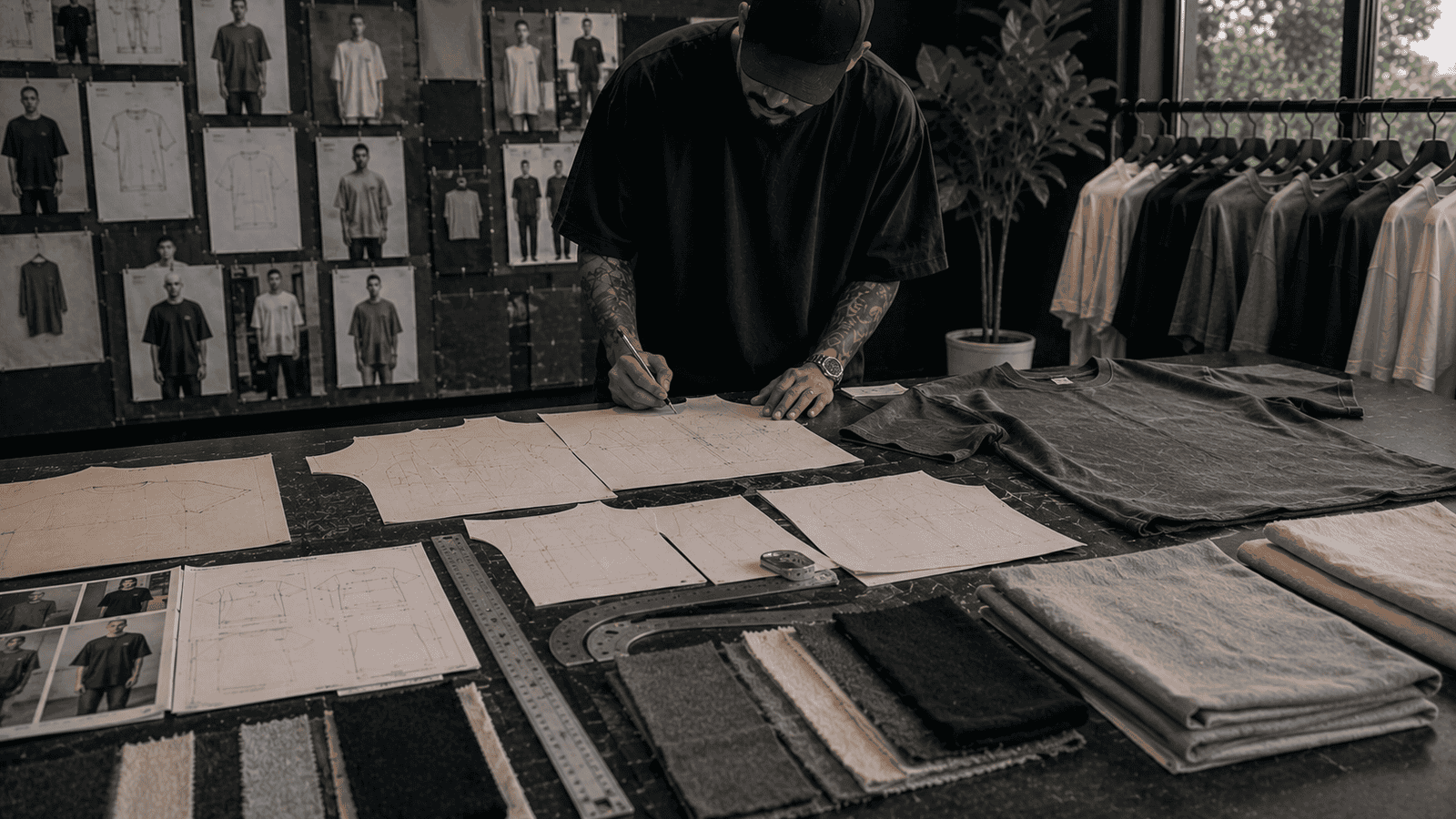
The sample process usually includes:
- Fabric confirmation
- Pattern making
- Logo testing
- Fit development
- Printing tests
- Washing tests
Why Sampling Is Important
Sampling helps brands verify:
- Product quality
- Fabric feel
- Fit accuracy
- Print quality
- Shrinkage control
Typical Sample Timeline
| Sample Stage | Estimated Time |
|---|---|
| Fabric Sourcing | 3–5 Days |
| Pattern Development | 2–4 Days |
| Sample Sewing | 5–7 Days |
| Fit Revision | 3–5 Days |
Experienced factories working as a Streetwear Manufacturer usually provide multiple sample revisions for oversized streetwear development.
Why Does Oversized Fit Development Increase Production Complexity?
Oversized streetwear requires more advanced fit development than standard apparel.
Why Fit Matters in Streetwear
Modern streetwear focuses heavily on:
- Boxy silhouettes
- Drop shoulders
- Sleeve proportions
- Premium drape
What Makes Oversized Fits Difficult?
Oversized garments require:
- Accurate pattern grading
- Fabric drape testing
- Multiple fit revisions
Common Oversized Fit Styles
| Fit Type | Characteristics |
|---|---|
| Boxy Fit | Wider chest & shorter body |
| Relaxed Fit | Loose overall silhouette |
| Cropped Oversized | Luxury fashion fit |
| Drop Shoulder | Relaxed shoulder structure |
Many brands later apply the same fit logic to products from a Streetwear Hoodie Manufacturer and Streetwear Jacket Manufacturer.
Which Printing Methods Affect Production Costs the Most?
Printing can significantly change the final production cost.
Common Streetwear Printing Techniques
Screen Printing
Most affordable for:
- Large quantity orders
- Simple graphics
Puff Print
More expensive because:
- Special ink is required
- Multiple curing stages are needed
Silicone Heat Transfer
Used for:
- Luxury branding
- Premium logo finishes
Embroidery
Higher cost because:
- Production speed is slower
- Stitch count affects pricing
Printing Cost Comparison
| Printing Method | Relative Cost |
|---|---|
| Screen Print | Low |
| Puff Print | Medium |
| Silicone Print | Medium–High |
| Embroidery | High |
Many premium brands also use matching print aesthetics across products from a Streetwear Pants Manufacturer and Streetwear Shorts Manufacturer.
How Do Washing Techniques Affect Production Costs?
Garment washing is one of the biggest cost factors in premium streetwear manufacturing.
Popular Streetwear Washing Techniques
Garment Dye
Creates:
- Vintage fading
- Rich color depth
Enzyme Wash
Improves:
- Softness
- Surface texture
Acid Wash
Adds:
- Distressed appearance
- Retro streetwear aesthetic
Why Washing Costs More
Washing increases:
- Labor time
- Water consumption
- Quality inspection requirements
Washed vs Unwashed Cost Comparison
| Product Type | Relative Cost |
|---|---|
| Basic Unwashed Tee | Lower |
| Garment Dyed Tee | Medium |
| Acid Washed Tee | Higher |
Many fashion brands later apply similar wash aesthetics to products from a Streetwear Denim Apparel Manufacturer.
How Long Does Bulk Production Usually Take?
Production timelines depend on:
- Order quantity
- Fabric availability
- Printing complexity
- Washing requirements
Typical Production Timeline
| Production Stage | Estimated Time |
|---|---|
| Fabric Preparation | 5–7 Days |
| Cutting & Sewing | 10–15 Days |
| Printing & Washing | 5–10 Days |
| Final QC & Packing | 3–5 Days |
Why Luxury Streetwear Takes Longer
Luxury production often requires:
- More inspections
- More detailed sewing
- Complex washes
- Higher-quality finishing
Professional Streetwear Sets Manufacturer factories usually schedule longer production timelines for premium collections.
How Can Startup Brands Reduce Production Costs?
Managing production costs is critical for startup streetwear brands.
Smart Cost Reduction Strategies
Focus on Fewer Products
Start with:
- One core heavyweight tee
- One fit
- One wash style
Limit Colorways
Too many colors increase:
- Fabric MOQ
- Dyeing complexity
- Inventory risk
Simplify Printing
Startups can reduce costs by using:
- Smaller graphics
- Single-color prints
Why Working With Specialized Factories Helps
Streetwear-focused manufacturers understand:
- Startup budgets
- Flexible MOQ
- Production optimization
A professional Custom Streetwear Manufacturer can help brands reduce production risks while maintaining premium quality.
Why Is Quality Control Essential in Heavyweight Streetwear Production?
Premium streetwear brands require strict quality standards.
Common Production Problems
Poor factories may produce:
- Inconsistent sizing
- Uneven stitching
- Fabric shrinkage
- Color inconsistency
Professional QC Systems Include
Fabric Inspection
Checks:
- GSM consistency
- Colorfastness
- Fabric defects
Inline Production QC
Monitors:
- Stitching quality
- Measurement accuracy
Final Inspection
Confirms:
- Packaging quality
- Logo placement
- Wash consistency
Luxury QC Standards
| QC Area | Industry Standard |
|---|---|
| Shrinkage | ≤5% |
| Measurement Tolerance | ±1 cm |
| Fabric Consistency | Stable GSM |
| Stitching Quality | Clean & durable |
Reliable factories often apply the same quality standards across categories including hoodies, sweatshirts, denim, and matching sets.
Conclusion
Heavyweight streetwear t-shirt manufacturing involves much more than basic garment production. MOQ structures, sampling processes, fabric selection, printing methods, washing techniques, and quality control all affect final product quality and production costs.
For startup and luxury brands alike, working with an experienced Streetwear Manufacturer can help improve production efficiency, reduce manufacturing risks, and create premium streetwear products with strong market positioning.