
Many startup and growing fashion brands search for “streetwear clothing manufacturers near me” because they want faster communication, local production support, and easier product development.
But finding the right local factory requires more than choosing the closest supplier. Brands should evaluate quality, customization capability, MOQ, lead times, and long-term scalability before making a decision.
In this guide, we’ll explain how to find the best local streetwear manufacturer and compare local factories with overseas OEM suppliers in 2026.
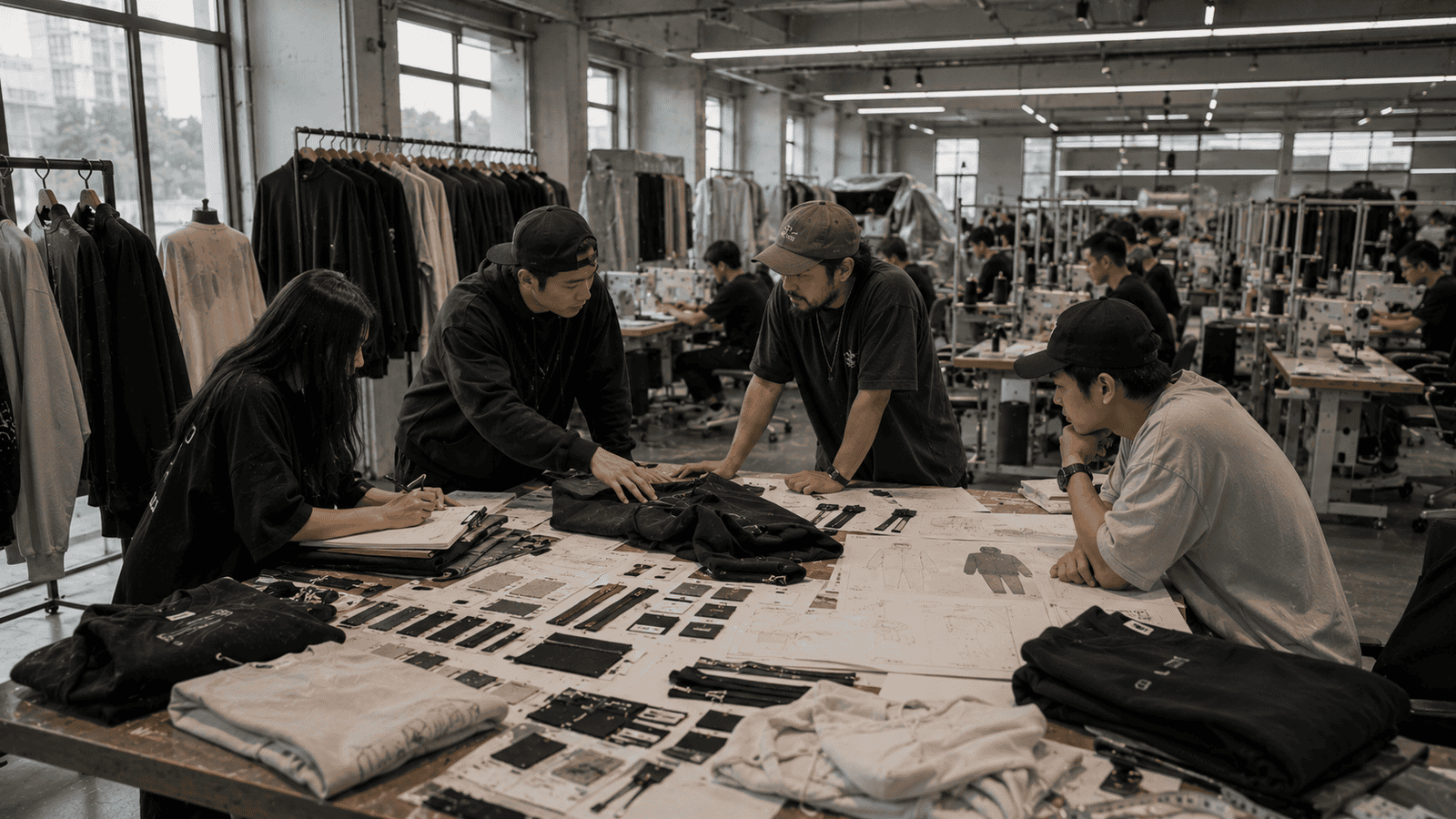
Why Do Brands Search for Local Streetwear Manufacturers?
Easier Communication
Working with local suppliers can simplify:
- Meetings
- Sample reviews
- Production updates
- Problem solving
Faster Sample Revisions
Brands may receive and revise samples more quickly when working with nearby manufacturers.
Better Factory Visibility
Some brands prefer visiting factories in person to review:
- Production quality
- Equipment
- Workflow
- Team organization
What Makes a Good Local Streetwear Manufacturer?
Streetwear-Specific Experience
A reliable factory should understand:
- Oversized fits
- Heavyweight fabrics
- Graphic printing
- Vintage washing techniques
OEM & Private Label Capability
Professional manufacturers should support:
- Product development
- Custom labels
- Packaging
- Bulk production
Learn more here:
👉 OEM Services
Clear Production Workflow
Reliable suppliers should provide transparent processes from sampling to final shipment.
How Can You Verify a Local Clothing Factory?
Request Product Samples
Always review sample quality before bulk production.
Check Product Categories
A professional manufacturer should support multiple categories including:
- Custom T-Shirts
- Streetwear Tank Tops
- Streetwear Hoodies
- Streetwear Sweatshirts
- Streetwear Jackets
- Streetwear Pants
- Streetwear Shorts
- Streetwear Sets
- Streetwear Denim Apparel
Browse all product categories here:
👉 Streetwear Products
Evaluate Communication Quality
Fast and professional communication is critical for reducing production risks.
What Questions Should You Ask Before Choosing a Manufacturer?
Production Questions
Ask about:
- MOQ
- Sample lead time
- Bulk production lead time
- Production capacity
Quality Control Questions
Clarify how they inspect:
- Fabrics
- Stitching
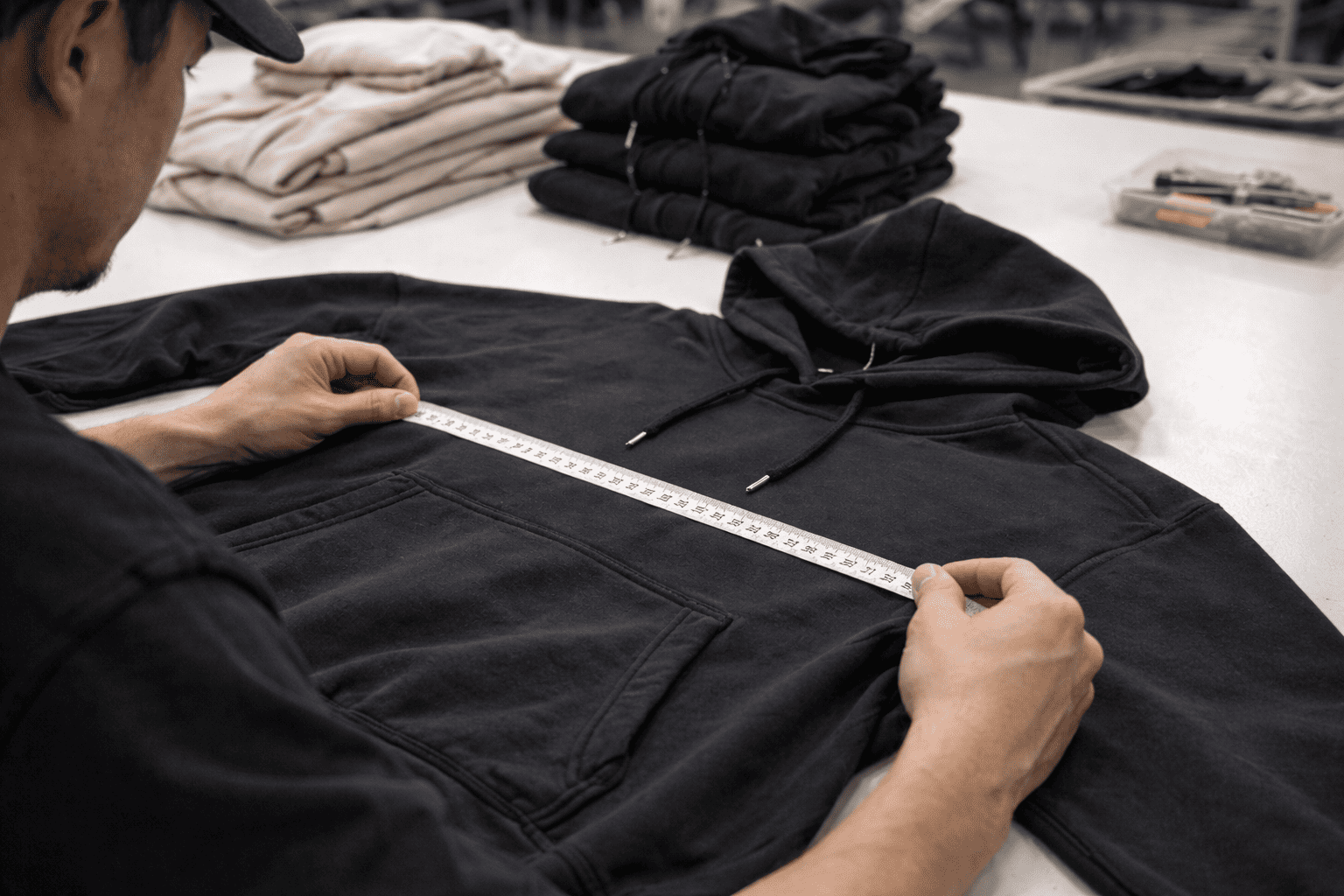
- Measurements
- Printing quality
Customization Questions
Confirm support for:
- Embroidery
- Puff printing
- Silicone logos
- Custom labels & packaging
Factory Evaluation Table
| Evaluation Factor | What to Check |
|---|---|
| MOQ | Minimum quantity per style |
| Sampling | Sample quality & timeline |
| QC Process | Fabric & garment inspection |
| Communication | Response speed & professionalism |
| Product Capability | Streetwear development experience |
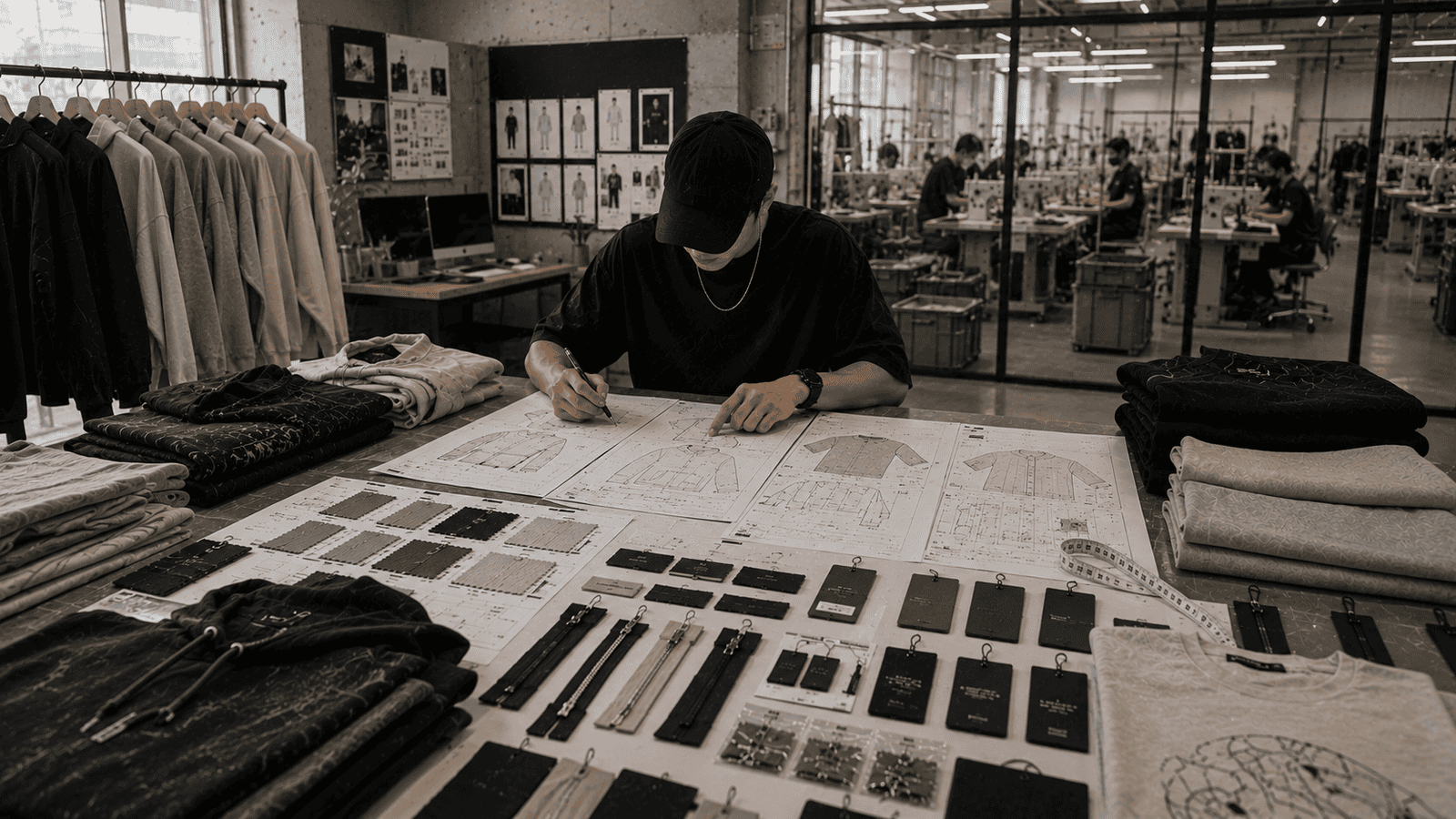
How Important Is Sampling & Product Development?
Sampling Reduces Production Risks
Professional samples help verify:
- Fit
- Fabric quality
- Printing details
- Garment construction
Streetwear Requires Technical Expertise
Modern streetwear often involves:
- Oversized silhouettes
- Heavyweight fabrics
- Garment washing
- Graphic applications
Typical Development Workflow
- Design consultation
- Fabric sourcing
- Pattern making
- Sample production
- Revisions & approval
What Customization Options Should You Expect?
Logo Techniques
Reliable manufacturers should support:
- Screen Printing
- Puff Printing
- Embroidery
- Silicone Logos
- Reflective Printing
Garment Wash Effects
- Acid Wash
- Vintage Wash
- Enzyme Wash
- Garment Dye
Private Label Services
Professional manufacturers should provide:
- Woven labels
- Printed neck labels
- Hang tags
- Custom packaging
Learn more here:
👉 Custom Streetwear Manufacturer
How Do Local Manufacturers Compare With Overseas OEM Suppliers?
Advantages of Local Factories
- Easier communication
- Faster sample revisions
- Local factory visits
Advantages of Overseas OEM Manufacturers
- Lower production costs
- Flexible MOQ
- Larger production capacity
- Full OEM manufacturing support
Comparison Table
| Factor | Local Manufacturer | Overseas OEM Supplier |
|---|---|---|
| Communication | Easier local contact | Online structured workflow |
| Cost | Higher | More competitive |
| MOQ | Medium–High | Flexible |
| Capacity | Moderate | High |
| Scalability | Moderate | Strong |
| Customization | Strong | Full OEM capability |
How Important Is Quality Control?
Quality Directly Affects Brand Reputation
Poor quality can lead to:
- Customer complaints
- Product returns
- Negative reviews
Professional QC Workflow
Reliable manufacturers should implement:
- Fabric inspection
- In-line QC
- Final garment inspection
- Packaging inspection
QC Workflow Table
| QC Stage | Purpose |
|---|---|
| Fabric Inspection | Prevent defects |
| Cutting Inspection | Ensure panel accuracy |
| In-Line QC | Monitor production quality |
| Final Inspection | Verify finished garments |
| Packing Inspection | Prevent shipping errors |
What Mistakes Should Brands Avoid When Choosing a Factory?
Choosing Only Based on Location
The closest factory is not always the best manufacturing partner.
Ignoring MOQ Details
Always confirm MOQ per style, color, and size.
Skipping Sample Approval
Never move into bulk production without approved samples.
Overlooking Communication Quality
Poor communication often leads to delays and production errors.
Why Do Many Brands Choose Ohsure Apparel?
Professional OEM Streetwear Expertise
Ohsure Apparel supports global streetwear brands with full OEM manufacturing solutions.
Flexible MOQ for Startups & Growing Brands
Suitable for both small and scalable production.
Strong Product Development Workflow
Professional support from concept development to final shipment.
Full Product Categories
Including:
Conclusion: How Can You Find the Best Streetwear Manufacturer Near You?
Finding the best local streetwear manufacturer requires evaluating more than location alone. Brands should compare:
- Product quality
- MOQ flexibility
- Sampling capability
- Customization support
- Communication quality
- Long-term scalability
For many modern brands, combining local development with professional overseas OEM production provides the best balance between quality, flexibility, and cost efficiency.