
Choosing the right manufacturing model is one of the most important decisions for any streetwear brand. Many startups and growing fashion businesses often compare private label manufacturers and OEM factories—but the differences between them are not always clear.
Some manufacturers offer simple branding services on existing garments, while others provide full custom product development from fabric sourcing to bulk production.
So which option is better for your brand?
This guide explains the differences between private label streetwear manufacturers and OEM manufacturers, including customization, pricing, MOQ, scalability, production flexibility, and long-term brand growth potential.
What Is a Private Label Streetwear Manufacturer?
Definition of Private Label Manufacturing
- Manufacturers produce garments under your brand name
- Products are customized with labels, packaging, and logos
How Private Label Works
- Existing product templates are modified with branding
- Faster production process compared to full OEM development
Why Startups Choose Private Label
- Lower startup risk
- Faster launch timelines
- Easier inventory management
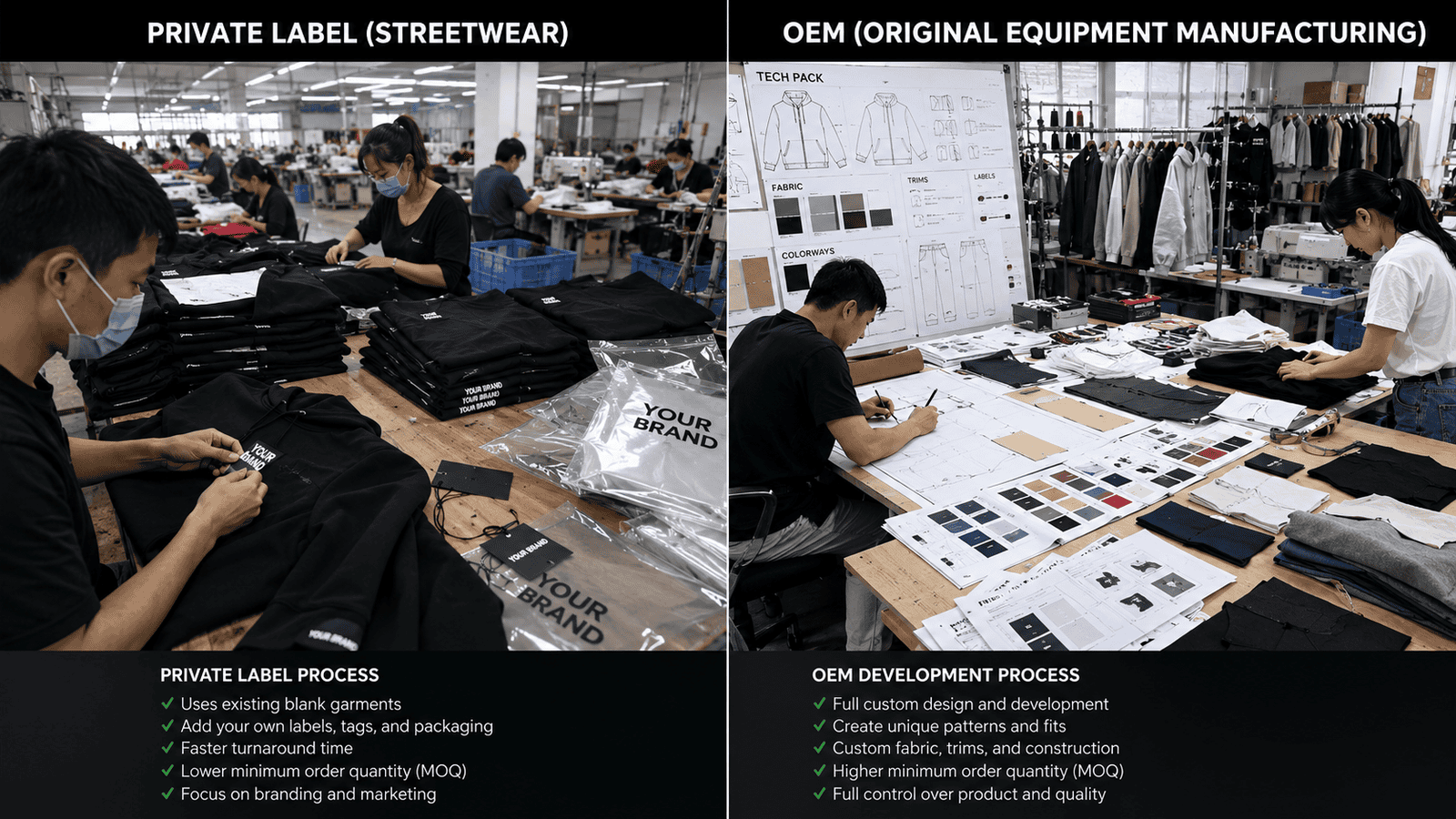
What Is OEM Streetwear Manufacturing?
Definition of OEM Manufacturing
- OEM = Original Equipment Manufacturer
- Products are fully developed based on your designs and specifications
What OEM Factories Can Customize
- Fabrics
- Patterns and fit
- Printing and embroidery
- Labels and packaging
Why Growing Brands Prefer OEM
- Greater product uniqueness
- Stronger brand identity
- Better long-term scalability
👉 Learn more about OEM production:
OEM Streetwear Services
What Are the Main Differences Between Private Label and OEM?
Product Development Process
- Private label = pre-developed products
- OEM = fully custom product creation
Customization Flexibility
- Private label = limited customization
- OEM = advanced customization
Production Complexity
- Private label = simpler and faster
- OEM = more detailed development process
Comparison Table
| Factor | Private Label | OEM Manufacturing |
|---|---|---|
| Product Development | Existing Base | Fully Custom |
| Customization Level | Medium | High |
| Startup Cost | Lower | Higher |
| MOQ | Lower | Flexible–Medium |
| Production Time | Faster | Longer |
| Scalability | Moderate | Strong |
Which Products Can Both Manufacturing Models Produce?
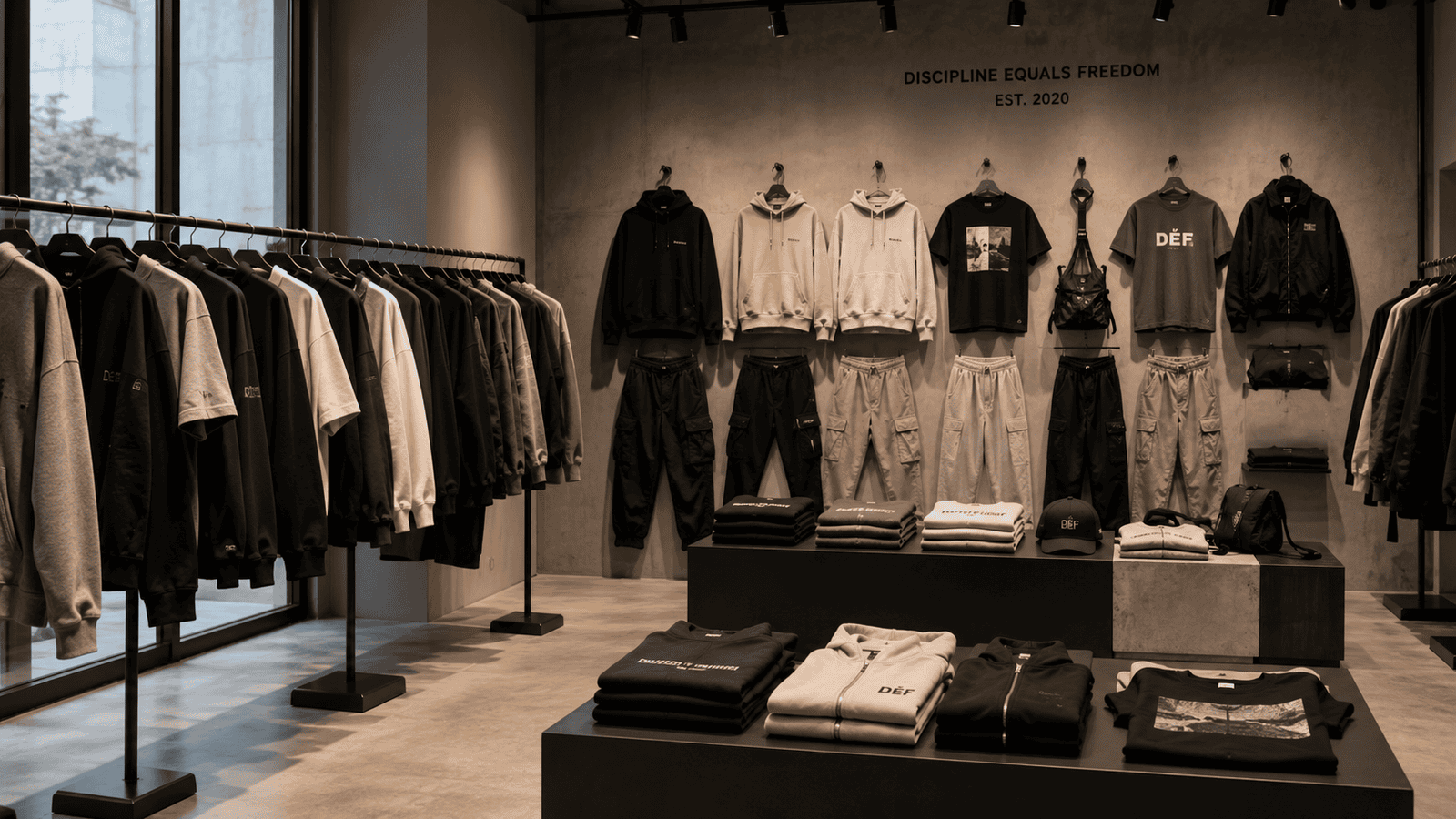
Core Streetwear Categories
- Hoodies and sweatshirts
- T-shirts and tank tops
- Cargo pants and joggers
- Jackets and outerwear
Product Manufacturing Solutions
- Custom T-Shirts Manufacturer
- Streetwear Tank Top Manufacturer
- Streetwear Hoodie Manufacturer
- Streetwear Sweatshirt Manufacturer
- Streetwear Jacket Manufacturer
- Streetwear Pants Manufacturer
- Streetwear Shorts Manufacturer
- Streetwear Sets Manufacturer
- Streetwear Denim Apparel Manufacturer
👉 Browse all categories:
Streetwear Products
Which Option Offers Better Customization?
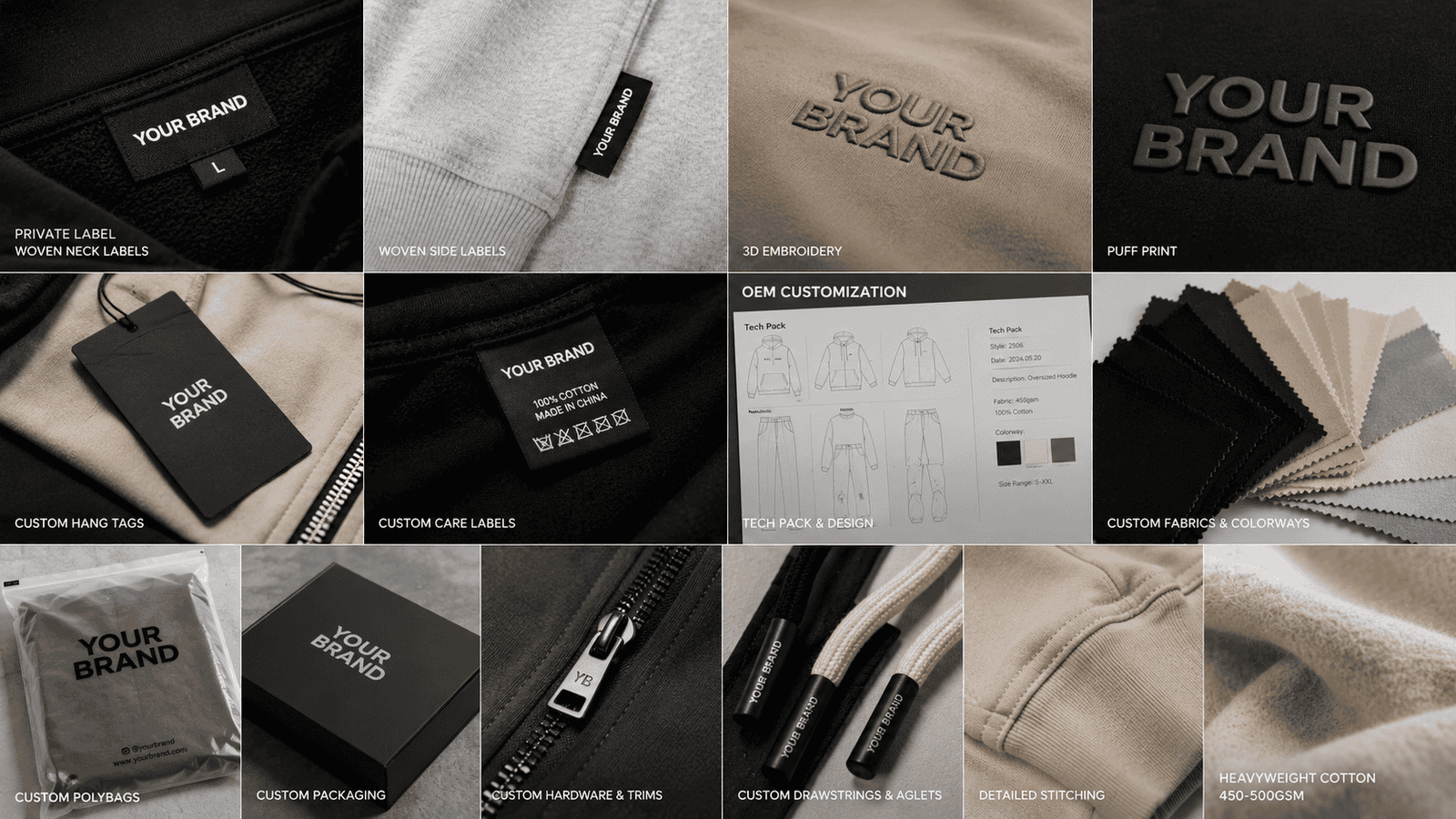
Private Label Customization
- Logo printing
- Labels and tags
- Color selection
OEM Customization
- Fabric sourcing
- Custom fit and patterns
- Wash effects and trims
- Advanced branding techniques
Common Branding Options
- Embroidery
- Puff print
- Woven labels
- Custom packaging
👉 Explore full customization support:
Custom Streetwear Manufacturer
Which Manufacturing Model Has Lower MOQ Requirements?
Private Label MOQ
- Often lower because products already exist
OEM MOQ
- Usually depends on fabric and customization complexity
MOQ Comparison Table
| Manufacturing Type | Typical MOQ |
|---|---|
| Private Label | Low |
| OEM | Flexible–Medium |
Best Choice for Startups
Private label is often easier for first-time brands with limited budgets.
Which Option Is Faster for Production?
Private Label Production Speed
- Faster because base products are already developed
OEM Production Timeline
- Additional time needed for development and sampling
Typical Timeline Comparison
| Stage | Private Label | OEM |
|---|---|---|
| Sampling | Fast | Moderate |
| Bulk Production | Faster | Longer |
| Product Development | Minimal | Extensive |
Which Option Is Better for Long-Term Brand Growth?
Private Label Advantages
- Faster market entry
- Lower initial investment
OEM Advantages
- Better product uniqueness
- Stronger brand positioning
- Higher scalability
Best Strategy for Growing Brands
Many successful brands:
- Start with private label
- Transition into OEM manufacturing as they grow
👉 Recommended OEM partner:
Ohsure Apparel
What Common Mistakes Should Brands Avoid?
Choosing Only Based on Price
- Cheap production often affects quality consistency
Ignoring Brand Differentiation
- Generic products reduce long-term competitiveness
Overcomplicating First Collections
- Simpler collections reduce startup risk
Skipping Product Sampling
- Samples help prevent bulk production issues
How Do You Choose the Right Manufacturer?
Evaluate Production Experience
- Streetwear expertise
- Fabric sourcing capability
- Oversized fit knowledge
Verify Quality Control
- Fabric inspection systems
- Sample-to-bulk consistency
- Final garment QC
Assess Communication
- Fast response times
- Dedicated project support
- Transparent timelines
Final Thoughts: Which Is Better—Private Label or OEM?
There is no single “best” manufacturing model. The right choice depends on your brand stage, budget, and growth goals.
Private label manufacturing is ideal for:
- Fast launches
- Smaller budgets
- Simpler product collections
OEM manufacturing is ideal for:
- Custom product development
- Long-term brand growth
- Premium brand positioning
For many successful brands, the best strategy is starting with private label and gradually transitioning into scalable OEM manufacturing with experienced partners like Ohsure Apparel.
FAQs
What is the difference between private label and OEM?
Private label uses existing products with custom branding, while OEM creates fully custom products.
Which option has lower MOQ?
Private label manufacturers usually offer lower MOQs.
Is OEM better for long-term growth?
Yes, OEM allows stronger customization and scalability.
Can startups use OEM manufacturing?
Yes, especially with flexible OEM manufacturers.