
Launching a successful streetwear brand requires more than just great ideas—it requires the right manufacturing partner and a clear production process. In this guide, we break down the step-by-step workflow of working with a custom streetwear clothing manufacturer, from concept to final delivery.
What Is the Complete Process of Custom Streetwear Production?
Overview of the Production Workflow
- Design & concept development
- Tech pack creation
- Sampling & revisions
- Bulk production
- Quality control & shipping
Why Understanding the Process Matters
- Avoid delays and miscommunication
- Ensure consistent product quality
- Improve cost and time efficiency
Learn more about full-service solutions: OEM Streetwear Services
How Do You Start the Design and Development Stage?
Creating a Strong Concept
- Define your brand identity and target audience
- Focus on silhouettes (oversized, boxy, drop shoulder)
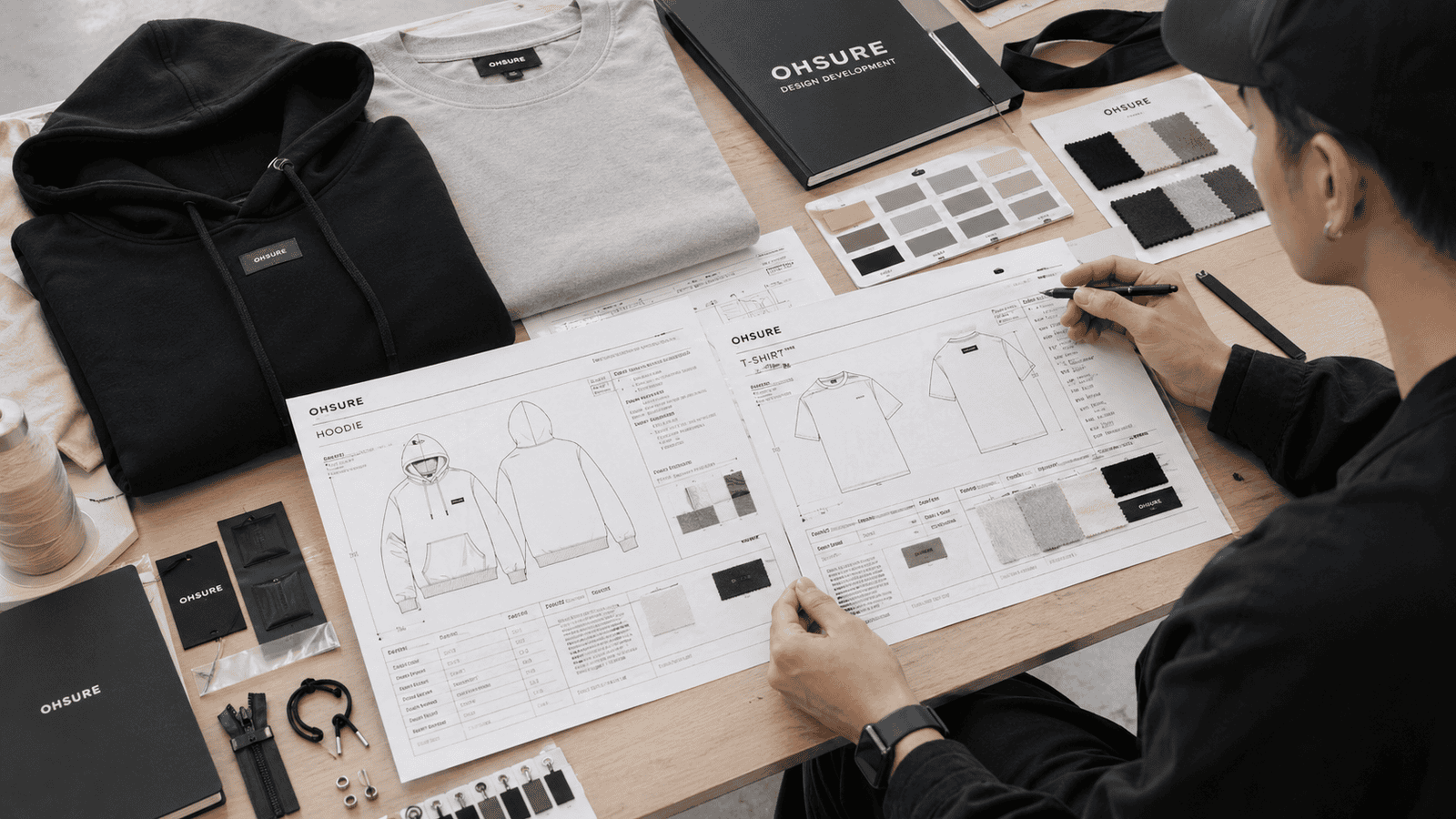
Preparing a Tech Pack
- Include measurements, materials, logo placement
- Add references for colors and finishes
Choosing the Right Products
- Hoodies & sweatshirts
- T-shirts & tank tops
What Happens During Sampling and Prototype Development?
Sampling Timeline
- Typically 7–10 days
- Includes pattern making and first sample creation
Sample Review Process
- Fit adjustments
- Fabric and print validation
- Logo and branding checks
Why Sampling Is Critical
- Ensures “sample = bulk” consistency
- Reduces production risks
How Do You Confirm Materials and Production Details?
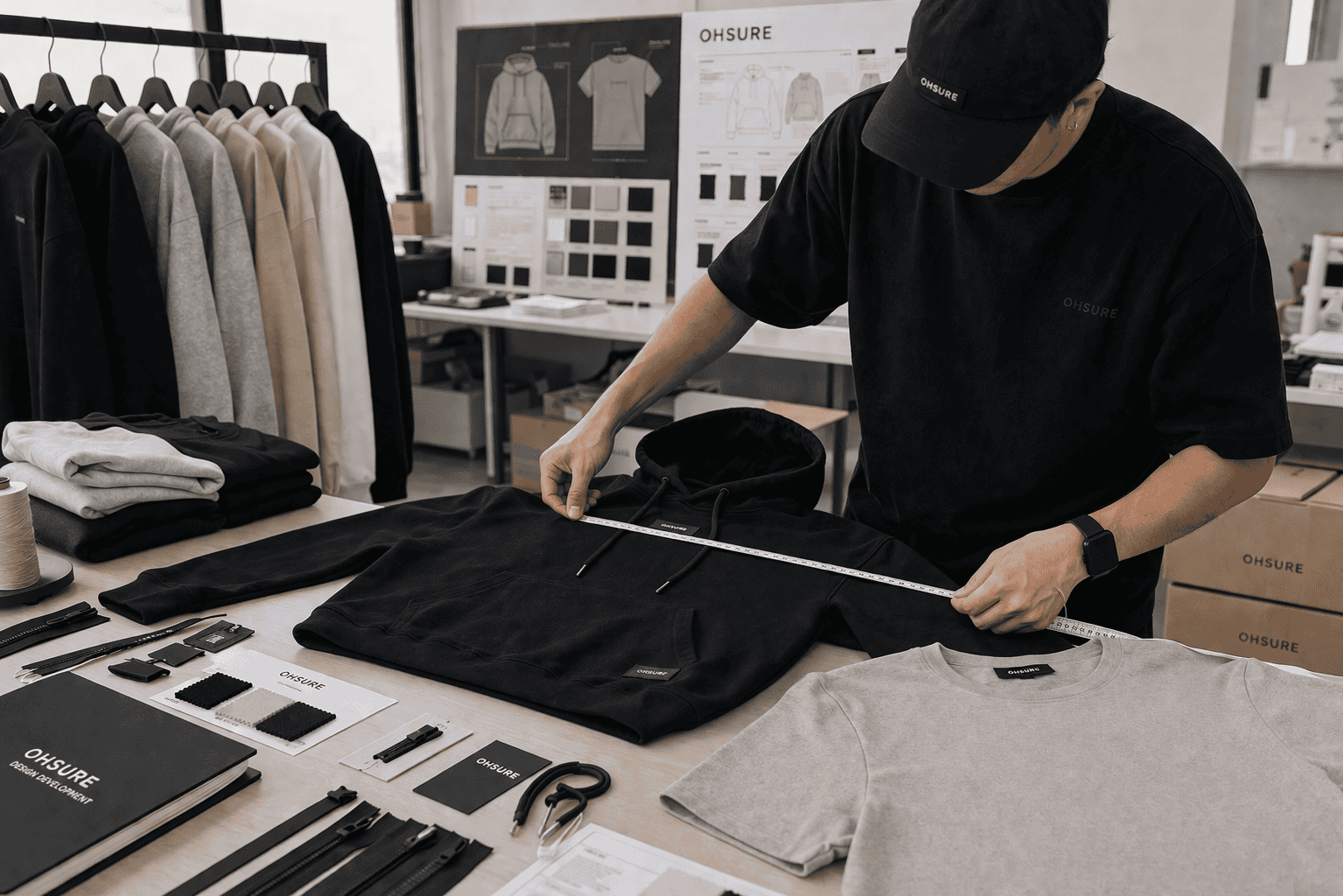
Fabric Selection
- Cotton, fleece, French terry
- GSM control (180–400gsm)
Customization Options
- Printing: screen print, puff print, DTG
- Embroidery & patches
- Wash effects: acid wash, garment dye
Accessories & Branding
- Labels, hang tags, packaging
- Zippers, drawstrings, trims
Explore more: Streetwear Products
What Happens During Bulk Production?
Production Timeline
- Usually 25–35 days depending on quantity
Manufacturing Process
- Fabric cutting
- Sewing & assembly
- Printing and finishing
Key Production Factors
- Skilled workers
- Organized production lines
- Consistent quality control
How Is Quality Control Managed During Production?
Multi-Step QC System
- Fabric inspection before cutting
- In-line inspection during sewing
- Final garment inspection
What to Check
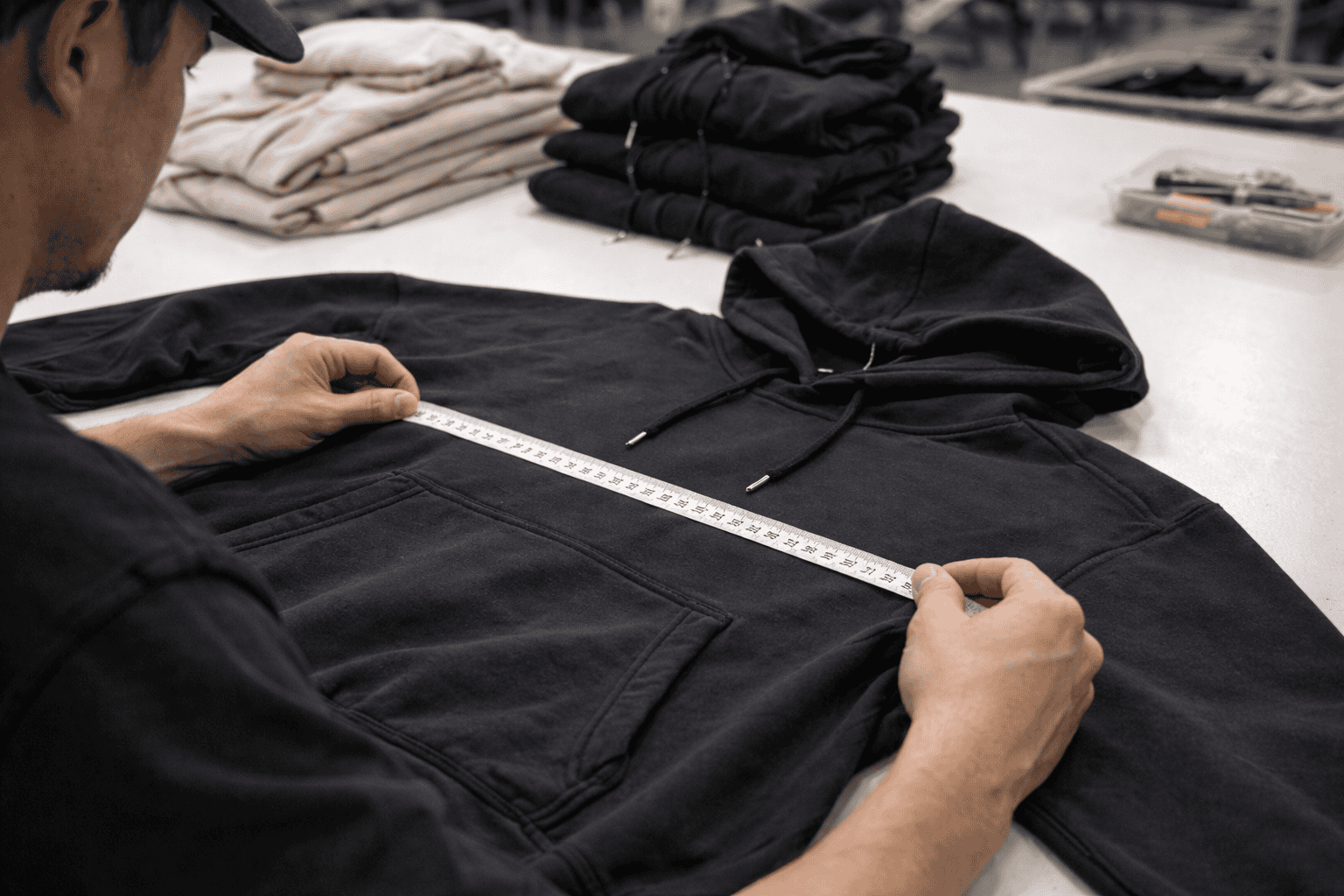
- Measurements accuracy
- Stitching quality
- Print durability
Quality Control Table
| QC Stage | What Is Checked | Purpose |
|---|---|---|
| Fabric Inspection | GSM, color, defects | Prevent material issues |
| In-line QC | Stitching, assembly | Detect errors early |
| Final Inspection | Size, logo, finishing | Ensure shipment quality |
| Packing Check | Labels, packaging accuracy | Avoid shipping mistakes |
How Does Shipping and Delivery Work?
Shipping Options
- Express (DHL, FedEx, UPS)
- Air freight
- Sea freight
Trade Terms
- EXW, FOB, DDP
Delivery Considerations
- Lead time planning
- Customs clearance
- Logistics cost control
What Types of Streetwear Products Can You Produce?
Full Product Range
- Hoodies, sweatshirts, jackets
- Pants & cargo
- Shorts & sets
Extended Categories
- Denim & washed apparel
Why Choose Ohsure as Your Custom Streetwear Manufacturing Partner?
End-to-End Service
- From design to delivery
- Full OEM & ODM support
- Learn more: Ohsure Apparel
Reliable Production System
- Low MOQ (100 pcs)
- Fast sampling (7–10 days)
- Stable bulk production (25–35 days)
Professional Communication
- Dedicated merchandiser
- Clear updates throughout production
Final Thoughts: How to Successfully Work with a Streetwear Manufacturer?
Key Takeaways
- Start with a clear tech pack
- Prioritize sampling and revisions
- Choose a reliable manufacturer
- Monitor quality control closely
- Plan logistics in advance
If you're ready to bring your designs to life, partner with a trusted Custom Streetwear Manufacturer to start your project today.