
Private label streetwear manufacturing has become one of the most important business models for modern fashion brands. Instead of using generic blank apparel, more brands now develop custom heavyweight t-shirts with oversized fits, premium fabrics, and unique branding details.
However, working with a Custom Streetwear Manufacturer requires more preparation than many startup brands expect.
Before starting production, it’s important to understand fabric sourcing, MOQ, fit development, sampling, printing, washing, quality control, and production timelines.
This guide explains the 10 most important things every clothing brand should know before working with a private label streetwear t-shirt manufacturer.
Why Is Choosing the Right Streetwear Manufacturer So Important?
Your manufacturer directly affects product quality, delivery reliability, and customer satisfaction.
What Does a Private Label Manufacturer Handle?
A professional manufacturer usually supports:
- Fabric sourcing
- Pattern development
- Sampling
- Printing
- Washing
- Packaging
- Bulk production
Why Streetwear Experience Matters
Streetwear-focused factories understand:
- Oversized silhouettes
- Heavyweight fabrics
- Luxury finishing
- Vintage washing techniques
Generic Factory vs Streetwear Specialist
| Factory Type | Main Focus |
|---|---|
| Generic Apparel Factory | Basic clothing production |
| Streetwear Manufacturer | Oversized & premium streetwear |
| Luxury OEM Factory | High-end garment development |
Many brands choose a professional Streetwear Manufacturer to improve product quality and reduce production risks.
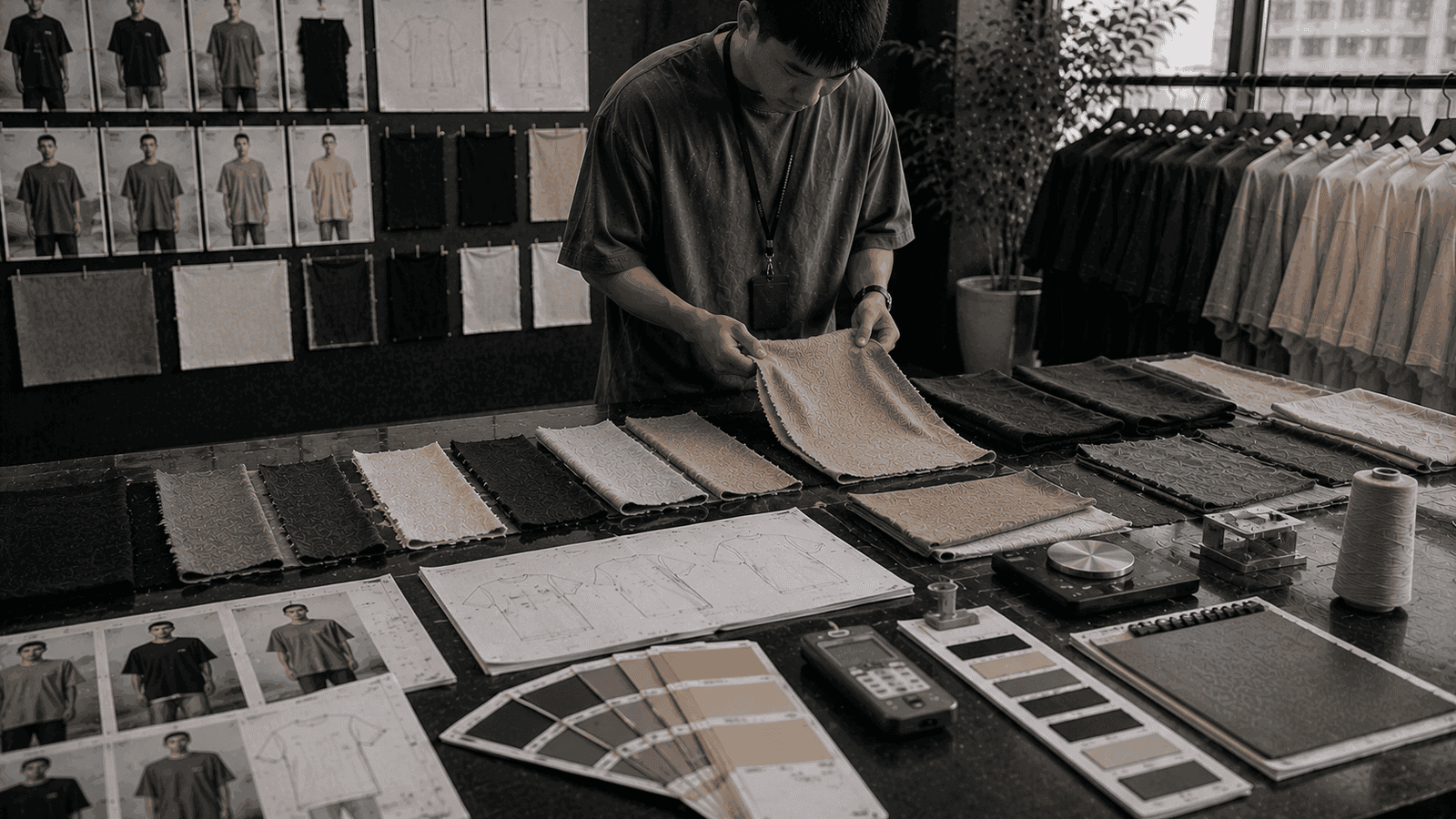
Why Should You Understand Fabric GSM Before Production?
Fabric GSM directly affects fit, quality, and product positioning.
What Does GSM Mean?
GSM stands for:
Grams per square meter
Higher GSM fabrics are:
- Thicker
- More structured
- More durable
Recommended GSM for Streetwear
| Product Style | Recommended GSM |
|---|---|
| Standard Oversized Tee | 240–280 GSM |
| Premium Heavyweight Tee | 280–320 GSM |
| Luxury Streetwear Tee | 320–400 GSM |
Why Fabric Quality Matters
Low-quality fabrics may cause:
- Shrinkage
- Twisting
- Poor drape
- Weak durability
Reliable factories working as a Custom T-Shirts Manufacturer often support custom heavyweight fabric development.
Why Is Oversized Fit Development More Complex Than Standard Apparel?
Oversized fit development is one of the biggest differences between premium streetwear and basic t-shirt production.
What Defines a Modern Streetwear Fit?
Modern streetwear usually includes:
- Boxy proportions
- Drop shoulders
- Relaxed sleeves
- Cropped silhouettes
Why Oversized Fits Require Technical Expertise
Proper fit development includes:
- Pattern making
- Fabric drape testing
- Multiple sample revisions
- Accurate grading
Common Oversized Fit Types
| Fit Type | Characteristics |
|---|---|
| Boxy Fit | Wider chest & shorter body |
| Relaxed Fit | Loose silhouette |
| Drop Shoulder | Relaxed shoulder seam |
| Cropped Oversized | Luxury fashion silhouette |
Factories producing products for a Streetwear Hoodie Manufacturer often use the same fit-development systems for t-shirts.
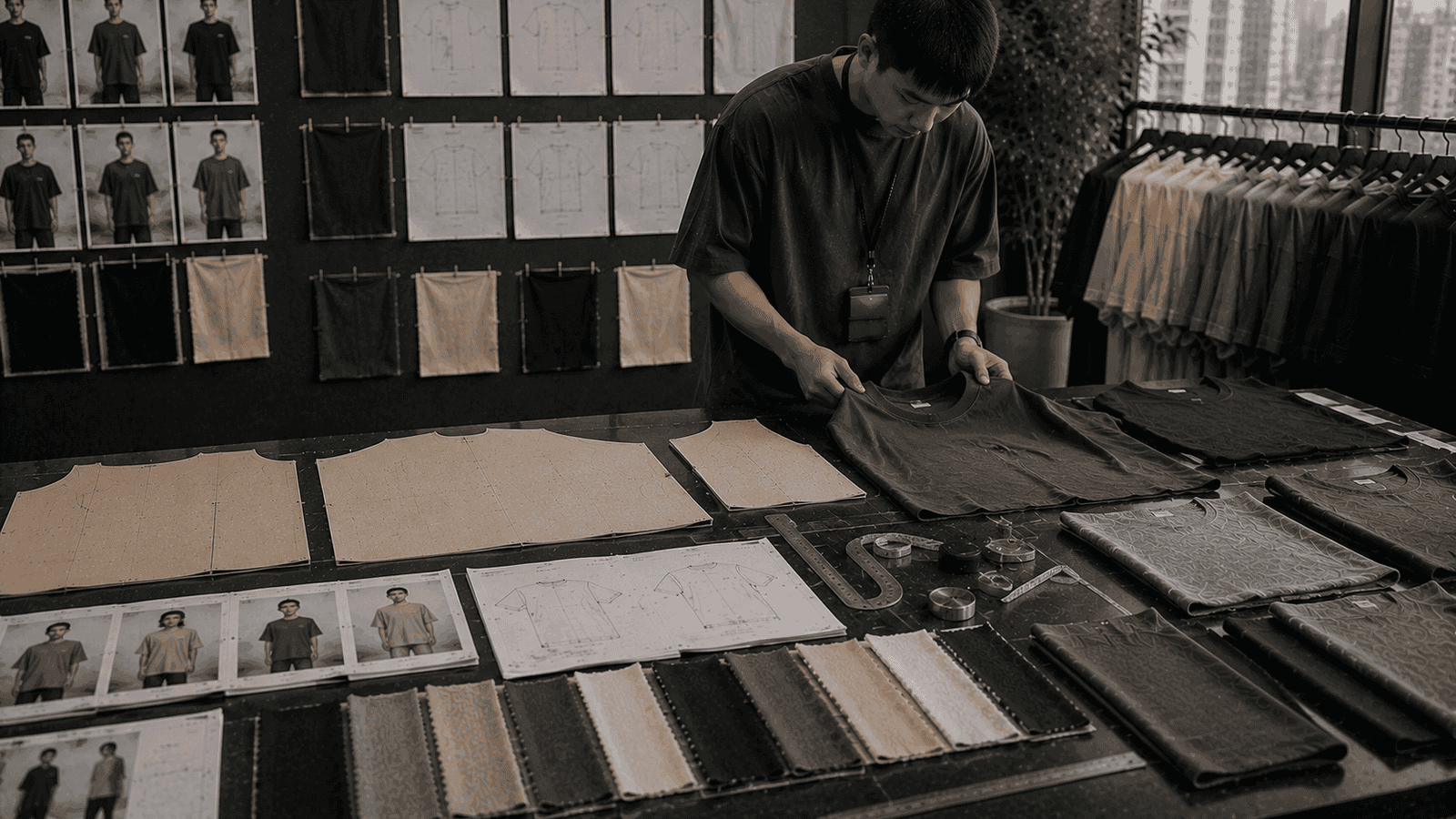
Why Is Sampling One of the Most Important Steps?
Sampling helps brands verify product quality before mass production begins.
What Happens During Sampling?
The sample process usually includes:
- Fabric confirmation
- Pattern development
- Printing tests
- Washing tests
- Fit revisions
Why Sampling Reduces Risk
Sampling helps prevent:
- Incorrect sizing
- Fabric problems
- Poor print quality
- Shrinkage issues
Typical Sample Timeline
| Sample Stage | Estimated Time |
|---|---|
| Fabric Sourcing | 3–5 Days |
| Pattern Development | 2–4 Days |
| Sample Sewing | 5–7 Days |
| Fit Revision | 3–5 Days |
Professional suppliers offering OEM Services usually provide multiple sample revisions before bulk production.
Why Should You Understand MOQ Before Starting Production?
MOQ directly affects startup budgets and inventory planning.
What Is MOQ?
MOQ means:
Minimum Order Quantity
Why MOQ Matters
Lower MOQ allows brands to:
- Reduce inventory risk
- Test new products
- Launch faster
Typical Streetwear MOQ
| Product Type | Typical MOQ |
|---|---|
| Basic Oversized Tee | 50–100 pcs |
| Garment Dyed Tee | 100–200 pcs |
| Puff Print Tee | 100+ pcs |
Why MOQ Sometimes Increases
MOQ may rise because of:
- Custom fabrics
- Multiple colors
- Complex washing
Professional Streetwear Sets Manufacturer suppliers often support flexible MOQ options for startup brands.
Why Are Printing Capabilities So Important?
Printing quality plays a major role in modern streetwear branding.
Popular Streetwear Printing Techniques
Puff Print
Creates:
- Raised texture
- Premium graphic depth
Screen Printing
Best for:
- Vintage graphics
- Large artwork
Silicone Heat Transfer
Ideal for:
- Luxury branding
- Durable logos
Embroidery
Adds:
- Premium detailing
- Luxury appearance
Printing Compatibility Table
| Printing Method | Best Fabric |
|---|---|
| Puff Print | Heavy Cotton Jersey |
| Screen Print | Ringspun Cotton |
| Silicone Print | Dense Cotton |
| Embroidery | French Terry |
Many manufacturers also apply similar branding techniques to products from a Streetwear Sweatshirt Manufacturer.
Why Do Washing Techniques Affect Product Quality?
Garment washing is critical for achieving premium streetwear aesthetics.
Popular Streetwear Washing Methods
Garment Dye
Creates:
- Vintage fading
- Rich color depth
Enzyme Wash
Improves:
- Softness
- Surface texture
Acid Wash
Produces:
- Distressed appearance
- Retro aesthetics
Why Washing Matters
Washing affects:
- Fabric softness
- Color appearance
- Shrinkage
- Product positioning
Washed vs Unwashed Comparison
| Feature | Washed | Unwashed |
|---|---|---|
| Texture | Softer | Crisp |
| Vintage Appearance | Strong | Minimal |
| Shrinkage | Lower | Higher |
Factories producing products for a Streetwear Denim Apparel Manufacturer often specialize in advanced garment washing.
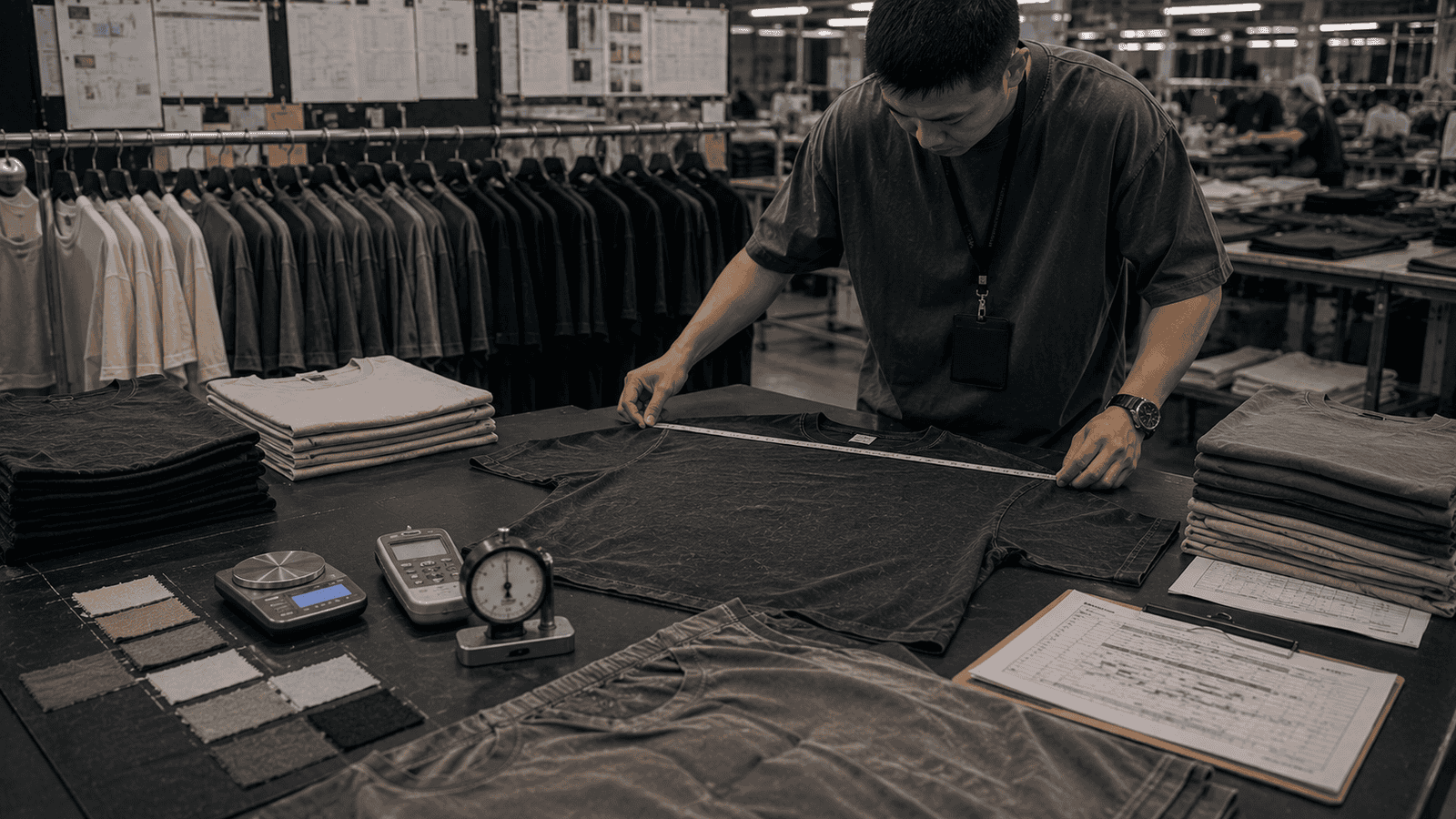
Why Is Quality Control Essential in Streetwear Manufacturing?
Consistent quality is essential for building long-term customer trust.
Common Production Problems
Poor-quality factories may produce:
- Uneven stitching
- Incorrect sizing
- Fabric shrinkage
- Color inconsistency
Professional QC Systems Include
Fabric Inspection
Checks:
- GSM consistency
- Colorfastness
- Fabric defects
Inline Production QC
Monitors:
- Stitching quality
- Print placement
- Measurement accuracy
Final Inspection
Confirms:
- Packaging quality
- Overall garment finish
Typical QC Standards
| QC Area | Industry Standard |
|---|---|
| Shrinkage | ≤5% |
| Measurement Tolerance | ±1 cm |
| Stitching Quality | Clean & durable |
Many factories apply similar quality standards to products from a Streetwear Pants Manufacturer and Streetwear Shorts Manufacturer.
Why Is Communication Important When Working With Manufacturers?
Good communication reduces mistakes and improves production efficiency.
Signs of Good Communication
Reliable manufacturers usually:
- Respond quickly
- Provide updates
- Share production timelines
- Explain technical details clearly
Why Poor Communication Causes Problems
Weak communication often leads to:
- Incorrect samples
- Production delays
- Quality misunderstandings
Questions You Should Always Ask
| Question | Why It Matters |
|---|---|
| Can you customize heavyweight fabrics? | Product differentiation |
| Do you support fit revisions? | Better sizing |
| Can you provide production updates? | Transparency |
| Do you support low MOQ? | Startup flexibility |
Many long-term brands continue working with experienced Custom Streetwear Manufacturer suppliers because of strong communication systems.
Why Should Brands Work With Full-Service Streetwear Manufacturers?
A full-service manufacturer can support long-term brand growth.
Benefits of Full Collection Manufacturing
Professional factories can produce:
- Hoodies
- Sweatshirts
- Jackets
- Shorts
- Pants
- Denim
- Matching sets
Why Product Consistency Matters
Consistent development improves:
- Brand identity
- Fabric matching
- Retail presentation
Common Product Expansion Path
| Product Category | Manufacturing Partner |
|---|---|
| Heavyweight T Shirts | Core supplier |
| Hoodies | Streetwear Hoodie Manufacturer |
| Jackets | Streetwear Jacket Manufacturer |
| Shorts | Streetwear Shorts Manufacturer |
| Denim | Streetwear Denim Apparel Manufacturer |
Conclusion
Working with a private label streetwear t-shirt manufacturer requires careful planning and strong production understanding. From heavyweight fabric sourcing and oversized fit development to MOQ management, printing, washing, sampling, and quality control, every production stage affects your final product quality.
For startup and established brands alike, partnering with an experienced Custom Streetwear Manufacturer can help reduce manufacturing risks, improve consistency, and support long-term streetwear brand growth.